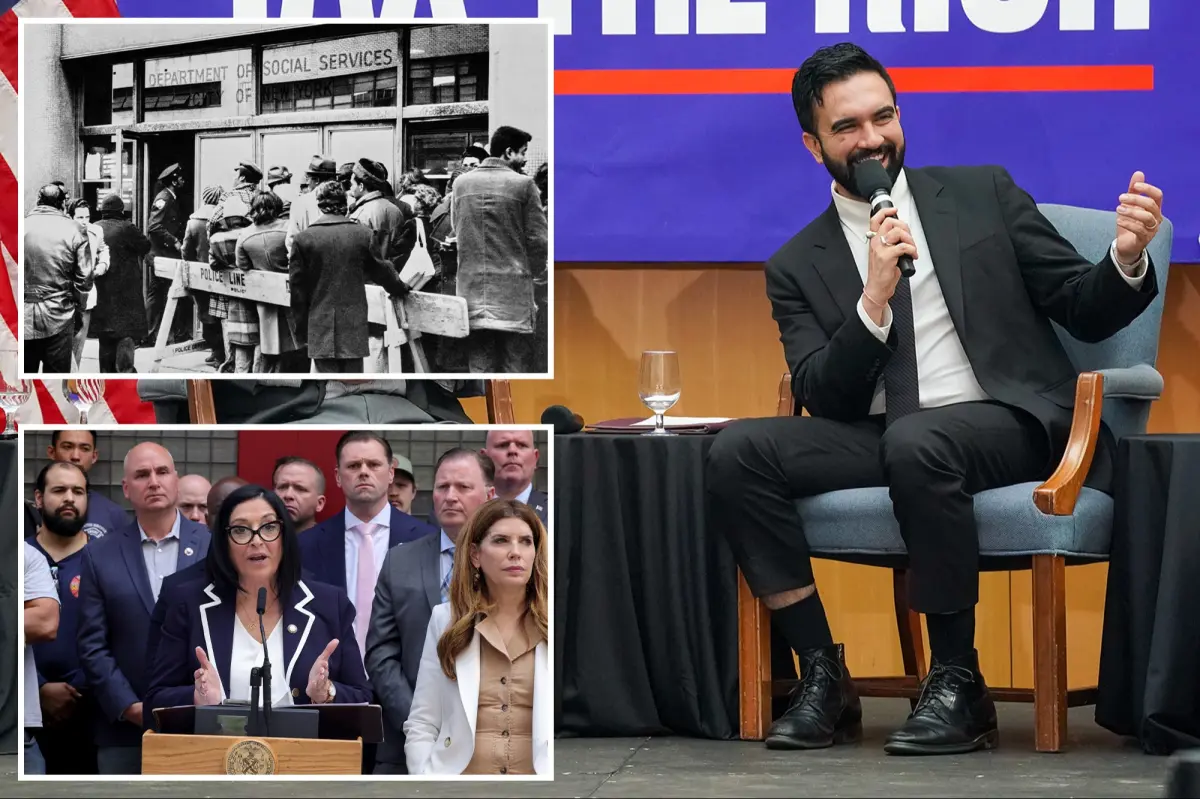
New York City issued cash welfare payments to nearly 865,000 residents over the past year, driving public assistance spending to an unprecedented $2.7 billion, according to records reviewed by The Post.
The Department of Social Services provided aid to 864,999 recipients during the 12-month period ending May 30, marking a 55.7% jump since 2022 and pushing the city’s welfare rolls to levels not seen in about three decades, agency data show.
The cost to taxpayers has climbed even faster. New York City’s cash-assistance budget rose 72.6%, increasing from $1.57 billion in fiscal 2022 to $2.71 billion in the fiscal year that began July 1.
Mayor Zohran Mamdani took office in January with the growing public-assistance burden already in place, inherited from former Mayor Eric Adams. Since then, however, the trajectory has shown little sign of reversing.
Opponents warn the situation could worsen if higher taxes and anti-wealth rhetoric prompt more millionaires, billionaires and employers to leave New York City, potentially shrinking the job base and adding further pressure to the welfare system.
“This is the Communist Playbook 101: make everyone reliant on the government, so the masses have no choice but to support the people signing their checks,” predicted Councilwoman Joann Ariola (R-Queens).
“This is only going to get worse as the Democratic Socialists of America ramp up their tax-the-rich rhetoric and drive even more jobs out of the city. With every job they force out, the far left gets one more person dependent on them. It’s all part of the plan.”
Adams entered office after inheriting an annual public-assistance caseload of 555,311 in 2021, the final year of former Mayor Bill de Blasio’s administration. By the time Adams left office at the end of 2025, the number had surged to 864,608, records show.
When The Post asked the DSS in February 2024 to explain why welfare rolls were rising under Adams, agency officials blamed the economic impact of the pandemic.
They insisted New Yorkers were reeling from soaring rents, food costs and other expenses — coupled with the federal and state government ending eviction moratoriums and payments offered during the height of the COVID-19 era.
Two-and-half years later, the pandemic excuses no longer fly, critics said.
The DSS declined to elaborate on why it believes the problem has worsened or address critics’ concerns that it will become even bleaker under Mamdani.
READ MORE: Four Americans Injured in Deadly Mexico Highway Pileup That Killed at Least 10
“This administration is focused on using every available tool to advance economic justice and better support New Yorkers in need,” the agency said in a statement.
It also touted that 70% of cash-assistance applications are being processed on time this year — a huge improvement from the Adams administration that saw its numbers dip as low as a paltry 14% from July through October of 2022.
Monthly caseloads this year have begun to slightly drop, including May, which saw 576,123 New Yorkers pocket handouts — or 26,391(4%) less than the same month a year earlier, the agency added.
When Rudy Giuliani became mayor in 1994, he inherited an even bigger welfare crisis, and the number of New Yorkers getting monthly cash assistance soared to record 1,160,593 by the time he implemented a series of reforms in March 1995.
He made getting recipients back to work a priority — especially those who preferred collecting checks to clocking in at a job — and pushing welfare reform initiatives like his Work Experience Program, where many recipients helped clean city parks and streets and answered phones in city offices in exchange for temporary assistance.
The monthly numbers plummeted to 497,100 midway through 2001, Giuliani’s final year in office, and the downward spiral continued under his successor, Michael Bloomberg. In December 2013, Bloomberg’s last month in office, 346,398 New Yorkers collected unemployment checks.
In May 2014, under then-Mayor de Blasio, the city’s monthly rolls dropped to 336,403 — its lowest since the early 1960s. However, the monthly recipients rose to 384,523 by the time de Blasio left office at the end of 2021 in part because of policies the far-left pol implemented to help simplify the application process and the economic strains of the pandemic.
The rise in welfare checks comes as Mamdani this week continued to push his “tax-the-rich” agenda — even after the nonpartisan Citizens Budget Commission released a bombshell analysis on Monday showing New York lost the largest share of US millionaires of any state since 2010, resulting in a nearly $11 billion loss in much-needed yearly local tax revenue.
Stephen Eide, a senior fellow at the conservative think tank Manhattan Institute who tracks public assistance, said New Yorkers “should be concerned about welfare growing” further under Mamdani.
“First, you do need a growing economy to move people off the rolls and into jobs,” he said. “A growing economy takes capital. The mayor’s socialist animus towards billionaires begs the question of where that capital’s supposed to come from.
“Second, I don’t think we know that the mayor even thinks historically high welfare rolls is a policy failure, as all his predecessors did. In housing, Mamdani’s definition of policy is getting as many people on subsidized housing as possible. If Mamdani thinks the case of cash assistance is different, he hasn’t said.”
Councilman Phil Wong (D-Queens) ripped the massive caseload, saying it’s a sign “our economy isn’t working for too many New Yorkers.
“Instead of pursuing policies that drive away businesses, jobs, and investment, City Hall should be focused on creating an environment where more people can earn a paycheck, support their families, and no longer need government assistance,” he said.