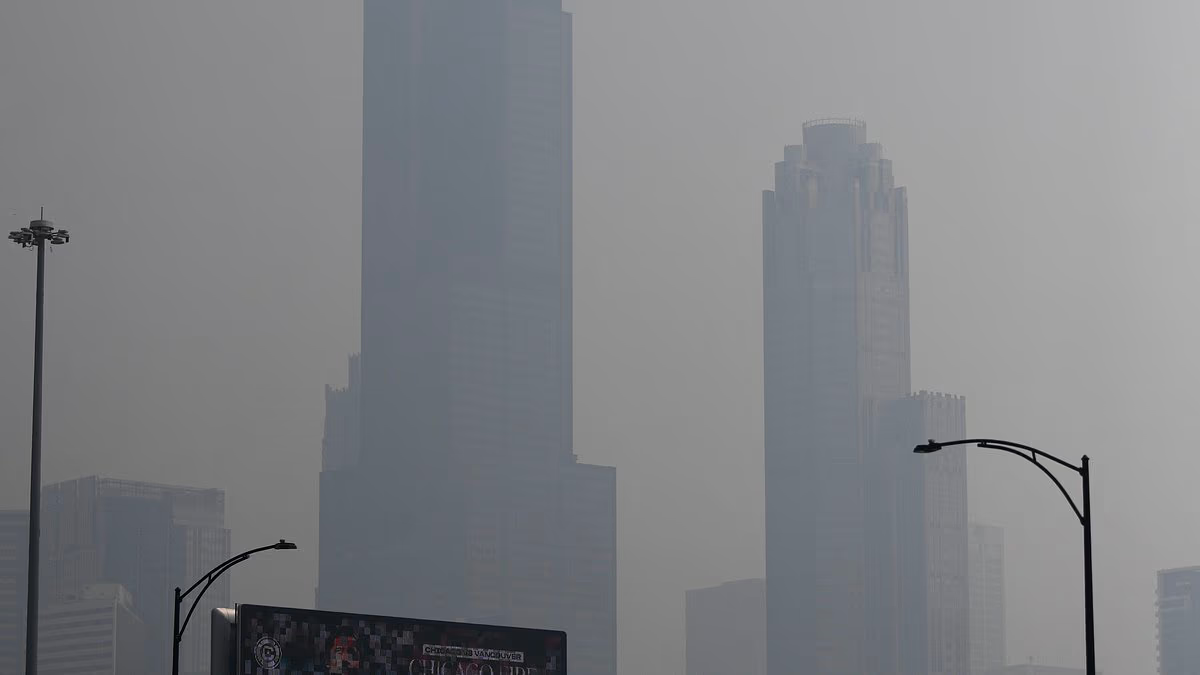


A sweeping air quality emergency is gripping large parts of the US as smoke from massive Canadian wildfires drifts across the border, filling skies with toxic haze. Residents across the Northeast and Upper Midwest have been told to remain indoors where possible and, in some areas, wear masks, as officials cautioned that dangerous conditions could persist until Friday afternoon. In New York, the skyline faded behind a smoky veil, while Chicago authorities shut down every city beach and outdoor pool in an effort to limit exposure to the smog. At least 14 states — including Indiana, Pennsylvania, New Hampshire and West Virginia — have been affected by the wildfire smoke, which has turned the sky an eerie orange in some communities. The crisis intensified as Detroit, Minneapolis and Chicago appeared among the cities with the worst air quality in the world. Detroit ranked first on IQAir’s live global pollution list with a US Air Quality Index, or AQI, of 566, making it the most polluted major city at that moment. Residents described the air as smelling like “a bonfire that you can’t escape,” with smoke reportedly creeping inside buildings. Minneapolis followed with an AQI of 289, while Chicago recorded 259.
Air quality alerts issued as pollution soars

AQI levels from 201 to 300 fall into the “very unhealthy” category, a range in which public health agencies warn that extended exposure can affect everyone, not just vulnerable groups. The three US cities even outpaced major pollution hot spots in South Asia, including parts of India and Pakistan, where average annual pollution levels are often 15 to 20 times above recommended safety limits. Health experts say the wildfire smoke entering the US is especially concerning because it carries PM2.5 — extremely fine particulate matter that can travel deep into the lungs and potentially pass into the bloodstream. State and local officials in Detroit, Minneapolis and Chicago have all issued air quality alerts, urging people to cut back on outdoor activity until the smoke begins to clear.
Smoke triggers health concerns across Midwest

Across the affected regions, Americans reported symptoms including headaches, stinging eyes and scratchy or irritated throats. Rachel Philips wrote on Facebook that the smoke had nearly erased downtown Chicago from view. “This is far worse than the summer two and three years ago,” she said. “It hurts to breathe, and I don’t have health issues!” The worsening conditions come as hundreds of wildfires continue to burn across Canada, pushing smoke into heavily populated US communities. Other impacted states include Illinois, Vermont, New Jersey, Massachusetts, Connecticut, Minnesota, Michigan and Rhode Island.
Air quality alert blankets Michigan

Michigan has been placed under a statewide air quality alert as thick plumes from Canadian wildfires spread across the Upper Peninsula and moved steadily south toward the Indiana line. The advisory includes major cities and communities such as Detroit, Ann Arbor, Flint, Grand Rapids, Lansing, Kalamazoo, Saginaw, Traverse City, Marquette and much of northern Michigan. Residents were advised to avoid demanding outdoor exercise and monitor for symptoms such as wheezing, coughing, dizziness, chest tightness, and burning sensations in the eyes, nose or throat. Officials also urged people to keep windows closed and, when possible, run central air conditioning with a MERV-13 filter or better to help keep smoke particles out of homes. Minnesota is also facing serious conditions, with some areas reaching the maroon, or hazardous, air quality category.
Record smoke triggers health warnings

The Minnesota Pollution Control Agency said thick smoke had already pushed hourly air quality readings beyond previous records in the Twin Cities, with small traces of ash also detected. Authorities warned that pollution levels in central and northeastern Minnesota were likely to affect everyone and recommended that the public avoid all outdoor physical activity. Local resident Tammy Johnson wrote on Facebook: “Instant headache anytime I stepped outside, and then it would take 20 to 30 minutes to resolve [once] back in the house. I have never experienced that before with wildfire smoke that we have had the last few summers.”
Chicago struggles as thick smoke lingers

In northern Illinois, the state Environmental Protection Agency issued a red air pollution action day for Rockford and all six Chicago-area forecast zones. Chicago resident Michelle Turner told ABC7: “This smoke that is in the air, it’s very irritating. You can hardly breathe.” She added that her eyes and throat had been burning throughout the day, even while she was wearing a mask. The National Weather Service said the region was positioned along the edge of a dense plume of low-level smoke moving south from Canada, though forecasters noted there was still uncertainty about how far the smoke would spread.
Air quality alerts expand across Midwest

The alert covered Chicago, Evanston, Joliet, Aurora, Naperville, Waukegan, Rockford and nearby communities, and was expected to remain in effect until midnight Thursday. People in those areas were urged to limit long periods of outdoor activity and heavy exertion, while children, older adults and anyone with respiratory conditions were told to avoid those activities altogether. Parts of neighboring Indiana — including Lake, Porter, Newton and Jasper counties — were also placed under an air quality action day as PM2.5 pollution was forecast to reach unhealthy levels. The advisory included Gary, Hammond, Merrillville, Portage, Valparaiso and communities just south and east of Chicago. Ohio, meanwhile, issued a statewide advisory, warning that wildfire smoke from Canada would likely push air quality into the range considered unhealthy for sensitive groups.
Maroon and code red alerts grip region

Northeastern Ohio was expected to see some of the most hazardous air, with a maroon alert issued for counties near Cleveland, Akron and Lake Erie. Pennsylvania was also placed under a statewide Code Red alert on Thursday, meaning air quality was considered unhealthy for everyone, as smoke from Ontario and Minnesota swept into the state from north to south. Officials said all residents could feel health effects, while people in sensitive groups could face more serious complications. The smoke was forecast to remain into Friday, when Pennsylvania’s alert was expected to be downgraded to Code Orange, a level considered unhealthy for sensitive groups.
Air quality alerts expand across Northeast

New York issued fine-particle advisories across much of the state, including New York City, Long Island, the Hudson Valley, Albany, Syracuse, Buffalo, Rochester and communities near the Canadian border. Forecast AQI readings exceeded 200 in parts of western New York, placing the pollution in the very unhealthy category. Alerts also stretched across New England, covering all or portions of Vermont, New Hampshire, Massachusetts, Connecticut and Rhode Island, as well as northern New Jersey. West Virginia’s northern counties, including communities around Wheeling and Weirton, were also placed under a Code Orange alert due to elevated particle levels from Canadian wildfire smoke.