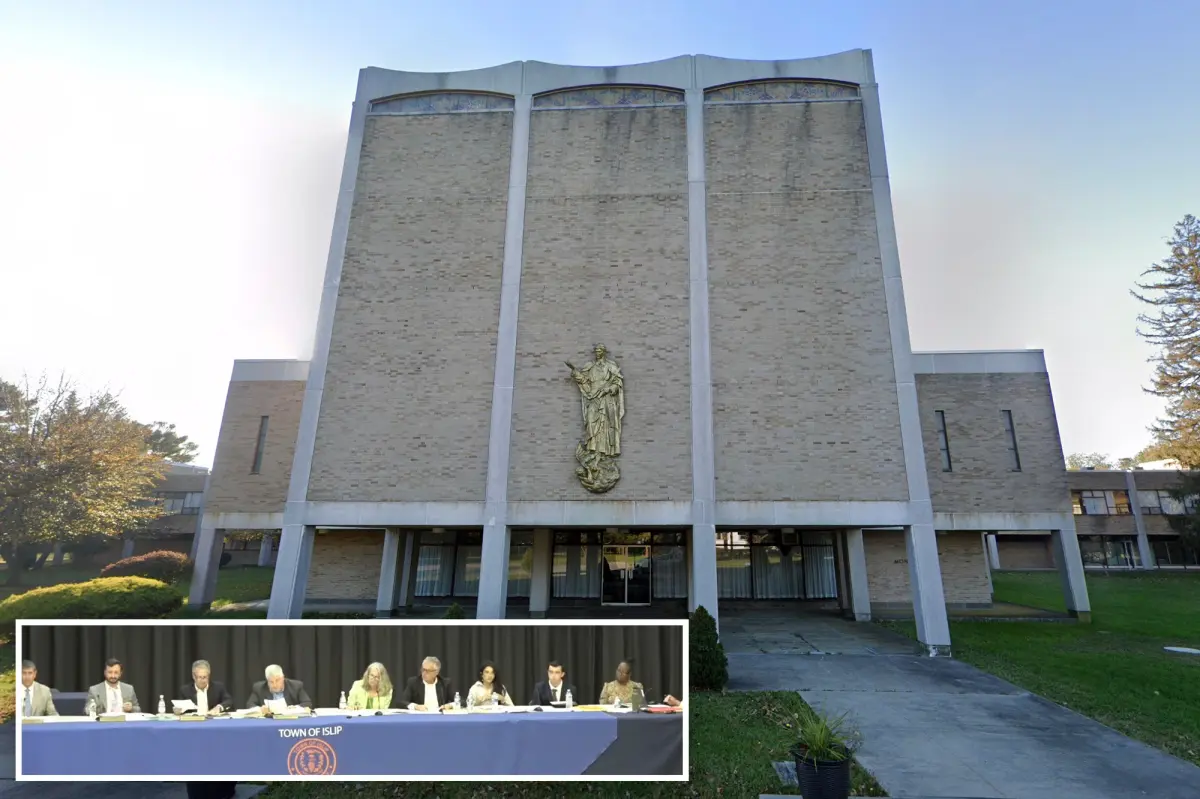

Long Island residents are mounting a campaign against a proposed Muslim boarding school for boys in Bay Shore, where plans call for housing up to 120 teenage students on a quiet suburban block.
Homeowners in the Saxon Avenue area argue that an overnight dormitory would violate local zoning rules for the 13-acre waterfront property, which previously served as a Catholic seminary.
“The proposed use by the new property owner is far more intensive than what is appropriate for a quiet residential neighborhood,” Kevin Colgan, an Islip resident who leads the neighborhood opposition group “Saxon Says No,” said in a statement.
“This is about protecting the integrity of our zoning laws — not opposing any individual or organization — zoning laws exist to preserve the character, integrity, and quality of life within our neighborhoods while ensuring that land uses are appropriate for their surroundings,” Colgan said.
The opponents are urging the town of Islip’s Zoning Board of Appeals to block the plans for the site, which changed hands in June.
The United American Muslim Association, a group partly based out of the Suleymaniye mosque in Dix Hills, purchased the expansive property from the Roman Catholic Montfort Missionaries for $5 million.
MORE STORY: Brett Eldredge Secret Wife Rumors: The Truth About the Country Star’s Love Life
During Tuesday’s zoning board meeting, several board members indicated they believe the proposed dormitory is permitted under town law. The session stretched for more than five hours as hundreds of residents filled Town Hall to voice concerns.
“When my family chose to purchase this home 10 years ago — we relied on the zoning protections when making one of the largest investments of our lives — a community of single-family homes where the zoning was intended to preserve its residential character,” said Anna Chan, who lives across the street from the proposed school.

Locals speaking at the meeting said they felt the school’s opening would hurt the integrity of the neighborhood, and that their residential area is no place for a school of this scale.
Most complaints centered around their belief that a boarding school, regardless of any religious affiliation, shouldn’t be opened in a residential neighborhood as it would cause an increase in noise and create traffic jams, as other residents had unanswered questions regarding a daycare center for small children that would be opening with the proposed school.
“A boarding school with the noise that 120 teenage boys can generate in a recreational area — would you want that in your backyard?” asked Isla Belkitis, who lives near the site.
Supporters of the school, along with attorney Samuel L. Bifulco, who represents The United American Muslim Association, said the proposal under town code is perfectly legal, and that strict rules on the students would keep them from causing a nuisance.
The nonprofit’s goal, he said, is to open a school on the shuttered property to provide a “comprehensive spiritual and academic training of its students,” including full-time Islamic-centered schooling, early childhood education and community programs.