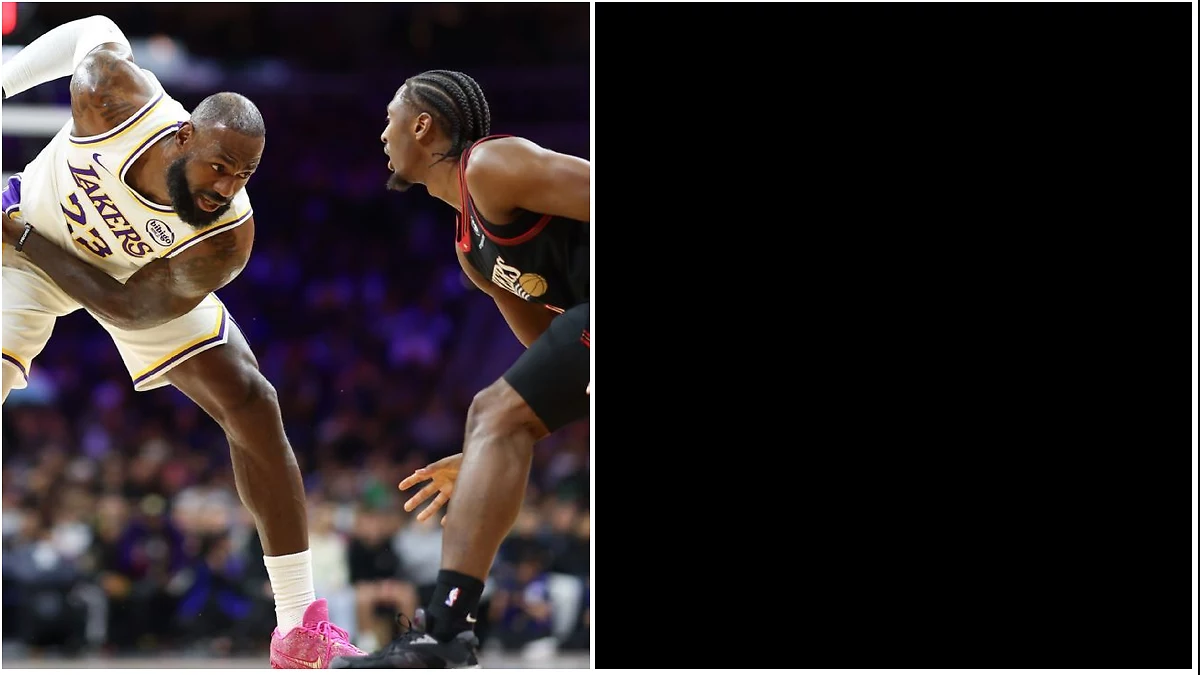

LeBron James’ move to the Philadelphia 76ers landed as a genuine NBA shocker, and by every indication, it was not a choice he made lightly. James took nearly a month to reach a final decision before notifying the Los Angeles Lakers on June 30 that he would not be coming back. Yet based on his own comments and those familiar with his thinking, the reasoning behind the move was ultimately straightforward.
That does not mean the decision arrived without complications. For James, the 76ers and the wider NBA landscape, his jump to Philadelphia immediately raised a long list of questions.
Here is an attempt to sort through as many of them as possible:

Why did James pick Philadelphia?
At the center of James’ decision is his belief that the 76ers give him the strongest path to winning the 2027 NBA championship. He made that point clear in a statement on X announcing the move: “I believe I can help make the Philadelphia 76ers a championship team and I am so excited to energize a new fan base and start this incredible journey one last time.”
When Klutch Sports CEO Rich Paul said in early July that James was searching for “basketball happiness,” the phrase was open to plenty of interpretation. It could have pointed in several directions. In the end, however, James defined it himself: at this stage of his career, basketball happiness means having a real chance to win right away.
Couldn’t he have won immediately with Cleveland?
There was certainly an argument that Cleveland could have offered a similar opportunity. A Cavaliers starting lineup featuring James, Donovan Mitchell, James Harden, Evan Mobley and Jarrett Allen would have been formidable, and perhaps strong enough to challenge what Philadelphia can build around James, Tyrese Maxey, VJ Edgecombe, Jaylen Brown and Joel Embiid.
James’ own words again help explain the choice: “I’m not going for money. I’m not going for family. What am I really playing for at this point? I still want to sacrifice. I still want to work. I still want to grind. I still want to compete, to win and to have a chance at the feeling of winning.”
The fact that money was not a driving force mattered, especially for the Cavaliers, who, like the 76ers, are operating with limited financial flexibility. But James’ acknowledgment that family considerations were not central to the decision also worked against Cleveland. For weeks, some speculation around “basketball happiness” included the possibility of returning home. In the end, that was not the determining factor.
If the Cavs traded for Brown, would it have made a difference?
The 76ers’ acquisition of Brown absolutely made a difference for them. Before that deal, it was unreasonable to believe they’d have made James’ top five destinations, much less been his choice. If the Cavs had made that deal, which likely would’ve taken a package that included Mobley to get the Boston Celtics interested, it would’ve changed their hand.
It is not as simple as saying Brown being on the roster was the entire difference, however.
Maxey was an unquestionable key factor in the 76ers’ landing James. Maxey had a strong relationship with James, as both are represented by Klutch Sports. With James joining a new team that has lots of egos and needs, having a connection with the point guard was an edge for Philly.
Some will say Harden’s role as Cleveland’s point guard affected James’ decision, but there is more nuance than that. It’s not that the Cavs having Harden was a factor, sources said, but rather who the Cavs did not have. To get Harden from the LA Clippers in February, the Cavs traded Darius Garland, a Klutch-repped point guard with whom James has had a yearslong relationship.
In the end, there were three strikes against Cleveland: Family not being an issue in LeBron’s choice, the front office not making a deal for Brown and the Cavs’ roster not featuring Garland. To say it was one of these factors more than the other might be missing the big picture.
1:38

Wilbon puts all the pressure on Embiid in Philly with LeBron
In James’ statement, he thanked the Lakers, something he had done before. He also had messages for Cleveland and Miami: “Thank you LA. Miami I’ll forever love and Northeast Ohio will always [be] home.”
It appears the final three teams on his list were Cleveland, Miami and Philadelphia, as ESPN’s Shams Charania had reported in recent days. The Heat had a compelling case after trading for Giannis Antetokounmpo. They also have James’ 2024 Olympic teammate, Bam Adebayo, on the roster. Paul told ESPN’s Ramona Shelburne on Friday that, for a time, he believed James was headed to Miami.
The Heat, however, are a little thin after they traded four young players — Tyler Herro, Kel’el Ware, Jaime Jaquez Jr. and Kasparas Jakucionis — for Antetokounmpo and lost All-Star Norman Powell in free agency. James’ focus on picking the team best positioned to win a title might have negatively affected the Heat’s standing. (And no, their YouTube gaffe didn’t play a role in this decision.)
What about rumors of James wanting suitors to trade for former teammates Anthony Davis or Kyrie Irving?
The conversations had with teams and players were mostly one way: James and Paul seeking information and getting a feel, not making requests, sources said. James, however, seems to have done due diligence by talking to star players such as Embiid.
For example, would the Golden State Warriors trading for Davis really have changed James’ thinking? The Sixers’ deal for Brown did, so the Warriors landing Davis sure seems as though it could have. But the Washington Wizards are not interested in moving Davis, and the Dallas Mavericks also intend to keep Irving, making this concept moot.
Did James really wait longer because he was annoyed at commissioner Adam Silver pressuring him to decide so the league could make the schedule?
This is a firm no, according to sources. Silver’s comments at Fanatics Fest in New York City last week might have been mildly annoying to James, but they did not affect his process.
Editor’s Picks
2 Related
Considering Sixers-Celtics, Sixers-Knicks, Sixers-Cavs, Sixers-Heat and Sixers-Lakers could all be deemed super-premium national television games, there are no complaints from the NBA or its media partners about how this saga played out. James will also be playing most of his games in the Eastern Time Zone, which should boost ratings.
Still, Silver might want to consider sending James a case of his favorite golf balls.
Why did this news seem to come out of nowhere?
Because James was extremely disciplined in keeping his circle tight. He also didn’t finalize his choice until late Thursday, sources said, after spending a few days in Los Angeles with family and Paul. The teams were largely in the dark until the end. (There were multiple times over the past few weeks that executives in the running for James reached out to see what I was hearing.)
No team was told it was out of the running; each found out like the rest of us.
Is this truly James’ last decision?
That is what he says and, at age 41, it seems likely. But he wrote in his 2014 letter in Sports Illustrated that “I always believed that I’d return to Cleveland and finish my career there. I just didn’t know when.” Then he backed it up by saying: “I’m not going anywhere. I don’t have the energy to do it again.”
He has since played 12 seasons and switched teams twice. Let’s all just enjoy the ride.