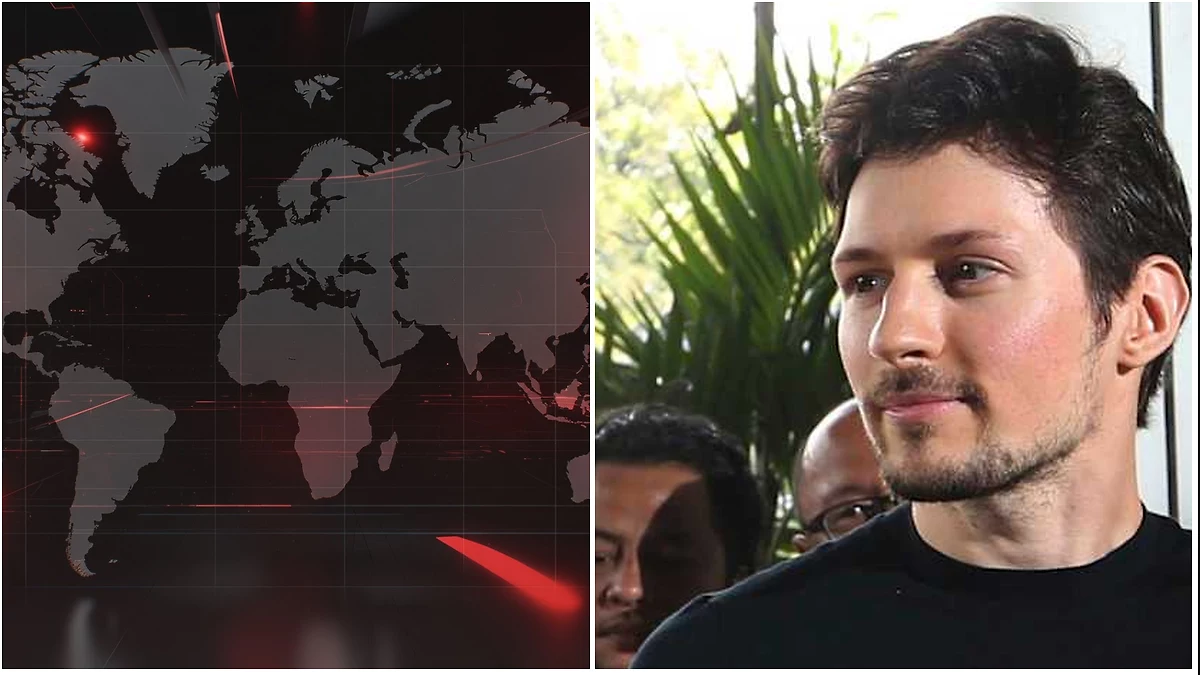

Russia’s leading domestic security service said Wednesday that Pavel Durov, the founder of the messaging platform Telegram, has been charged with aiding terrorism and added to an international wanted list.
The case against Durov, who was born in Russia and launched his career there before relocating abroad, comes as Russian authorities continue tightening restrictions on Telegram, one of the country’s most widely used messaging apps. The move fits into a broader Kremlin campaign to assert greater control over the internet, an effort that has accelerated since Moscow began its full-scale invasion of Ukraine in February 2022.
In a statement, the Federal Security Service, or FSB, alleged that Telegram’s administrators failed to remove “numerous channels, chats and bots” that it said are “actively used by Ukrainian intelligence agencies, terrorist, and extremist organizations to prepare and coordinate acts of sabotage and terrorism, mass murder, and cyberfraud” inside Russia, leading to “numerous human casualties.”
The FSB also claimed Ukrainian security services used a popular Telegram dating chat bot to entice and recruit Russians for “sabotage and terrorist activities.” According to the agency, 46 users of the bot, ages 12 to 22, have been detained across Russia since July 2025.
Durov said earlier this year that Russian authorities had opened a criminal investigation into him, accusing them of inventing pretexts to curb access to Telegram in what he described as an effort to “suppress the right to privacy and free speech.”
If found guilty in Russia, Durov could face a sentence of up to life in prison.
Under President Vladimir Putin, Russian officials have pursued a wide-ranging strategy to bring the internet to heel. That campaign has included restrictive legislation, bans on websites and platforms that refuse to comply with government demands, and expanded technical capabilities to monitor and shape online traffic.
Several major social media platforms, including Facebook, Instagram and X, are banned in Russia. YouTube has been slowed, messaging services such as Signal and Viber have been blocked, and the country’s most popular messaging apps — WhatsApp and Telegram — have faced restrictions.
While it’s still possible to circumvent some of the restrictions by using virtual private network services, many of them are routinely blocked, too.
At the same time, Russia actively promotes the “national” messaging app known as MAX, which critics say could be used for surveillance. The platform is touted by developers and officials as a one-stop shop for messaging, online government services, making payments and more. It openly declares it will share user data with authorities upon request, and experts also say it doesn’t use end-to-end encryption.
Durov has faced criminal investigations elsewhere. In 2024, he was arrested in Paris over allegations that his platform was being used for illicit activity, including drug trafficking and the distribution of child sexual abuse images.
___
This story has been corrected to show the potential penalty is life in prison, not 15 years.