
Outrage over NY bills that could free convicted killers
Jonathan Fahey, a former deputy assistant secretary at the Department of Homeland Security, spoke out about anti-ICE demonstrations in Brooklyn that reportedly obstructed hospital entrances, sharply criticizing NYC Mayor Mamdani’s response. Fahey also raised alarms over proposed New York legislation that he says could open the door for violent offenders — potentially including notorious serial killers such as David Berkowitz, the “Son of Sam” — to seek release under an “elder parole” measure for incarcerated people age 55 and older. The debate over these New York parole bills has intensified concerns about public safety across the state.
David Berkowitz, the infamous New York murderer known as the “Son of Sam” and the .44-caliber killer who once terrorized the city while sending taunting letters to celebrated columnist Jimmy Breslin, says that nearly five decades after his deadly rampage began, he no longer has faith in the media.
Berkowitz’s first known victim was 18-year-old Donna Lauria, who was shot to death in the Bronx on July 29, 1976, as she was getting out of an Oldsmobile.
Berkowitz declined a request to be interviewed for this report, communicating through Keith Rovere, host of the “Lighter Side of True Crime” podcast.
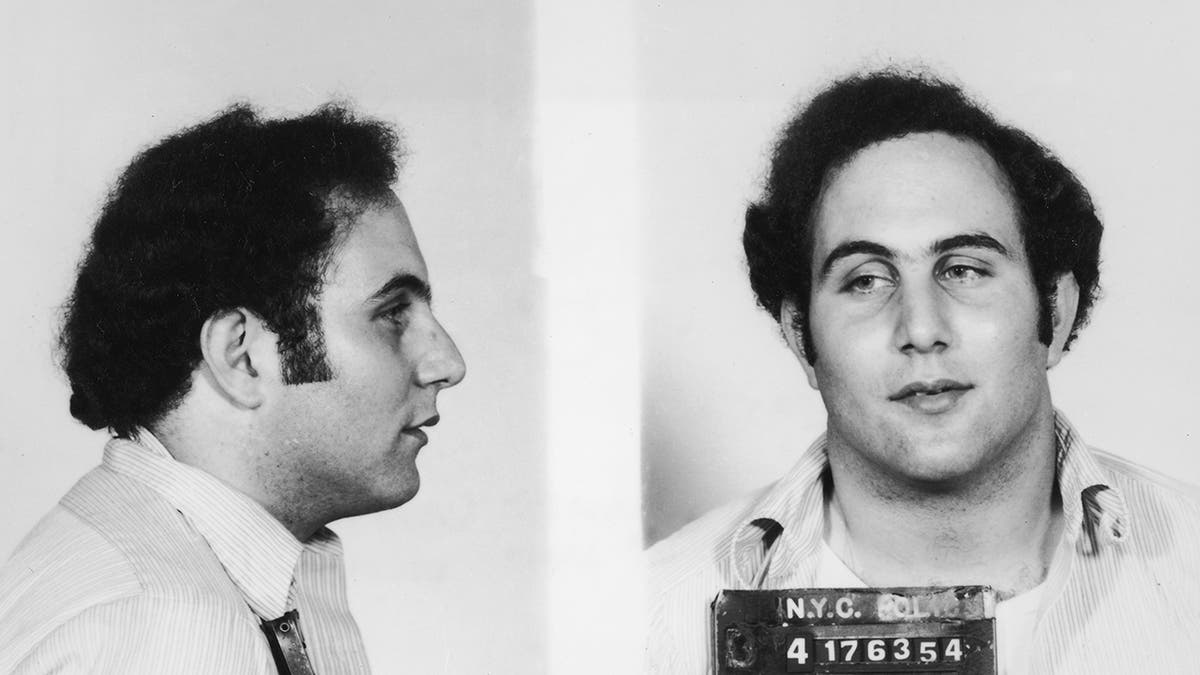
A police mugshot shows front and profile views of convicted New York City serial killer David Berkowitz, widely known as the “Son of Sam.” (Hulton Archive/Getty Images)
“I don’t trust the media,” Berkowitz wrote in a letter to Rovere that was shared with INC News. “They will twist and distort whatever I say. Even recently they twisted my words concerning some changes in New York’s parole law which, in this instant, had nothing to do with me.”
At the center of the controversy are proposals under consideration by New York lawmakers that would establish an elder parole process and eliminate sentences of life without the possibility of parole.
“They riled up a victim with a false information and a distortion, thus creating the victim needless grief and pain, and more,” Berkowitz wrote. “This was not the first time. If the media wishes to know what I’ve been doing with my life, all they have to do is visit the website which has probably over a thousand pages of my prison writings and various videos, interviews and more, which viewers could easily access. Ariseandshine.org.”
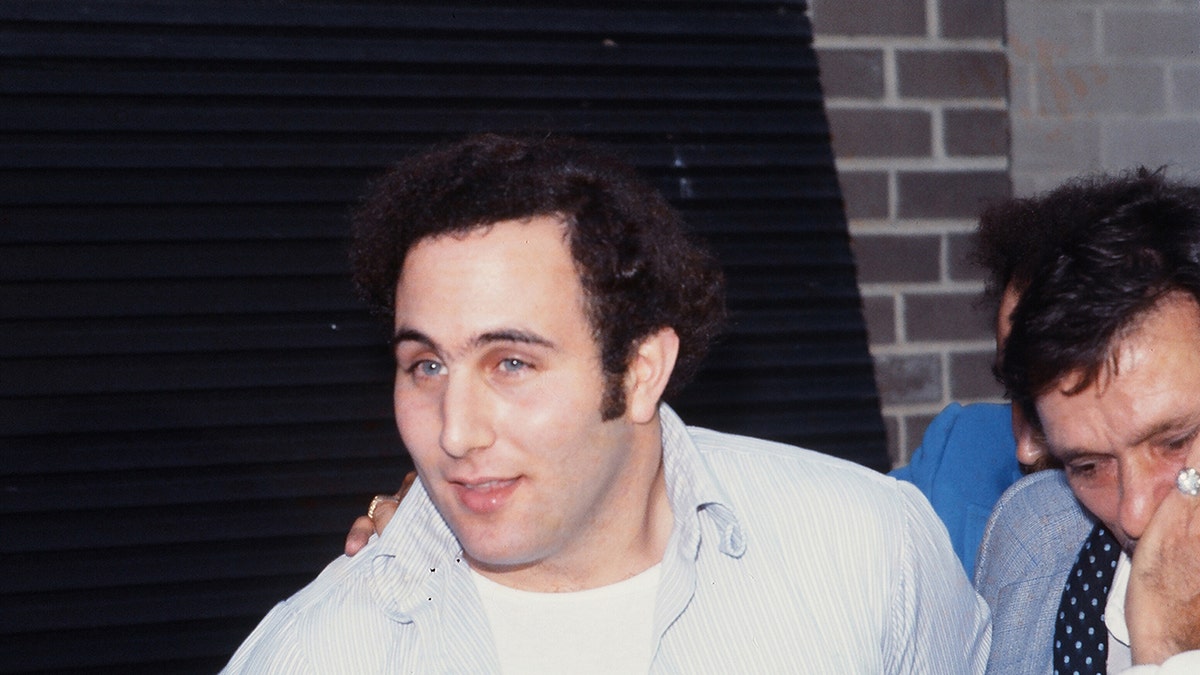
Police officers escort American accused (and ultimately convicted) serial killer David Berkowitz (left), known as the Son of Sam, into the 84th precinct station, New York, New York, Aug. 10, 1977. (Robert R. McElroy/Getty Images)
In May, Berkowitz skipped a parole hearing and wrote in a letter to the New York Post that he wasn’t trying to get out.
“The only place I’m looking forward to going, is to heaven to be with the Lord,” the outlet quoted him as writing.
The Post asked “Son of Sam” survivor Robert Violante, 68, for a reaction:
“I sincerely doubt he is going to heaven,” he said. “He is lucky he is not already in hell.”
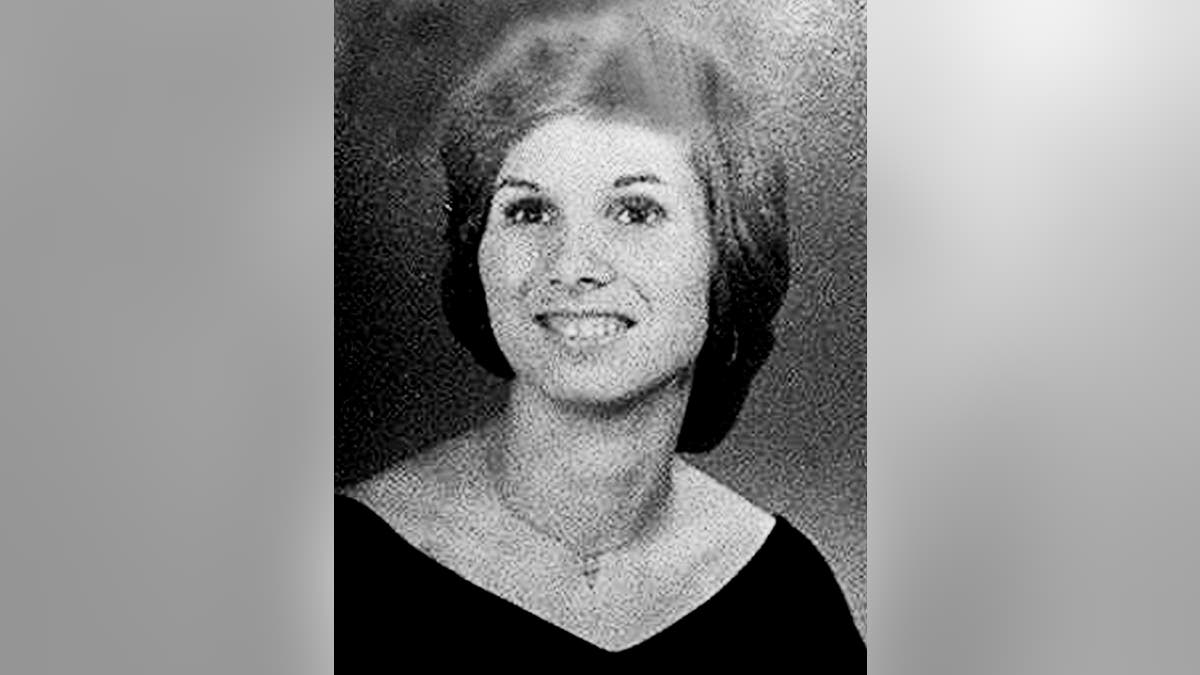
Donna Lauria, first victim of David Berkowitz. (NY Daily News Archive via Getty Images)
Violente survived a gunshot wound to the head on July 31, 1977. His date, 20-year-old Stacy Moskowitz, did not. She was Berkowitz’s final victim.
That was a year and two days after the first murder — Lauria’s.
Her friend and the car’s owner, 19-year-old Jody Valenti, was wounded but survived.
New York City saw a cool night, with lows in the 60s, after clouds and rain rolled in to break up scorching temperatures from the day before, according to Almanac.com. The Mets lost in extra innings to the Pittsburgh Pirates, 2-1. The Yankees had a day off after toppling the Boston Red Sox, 6-4.
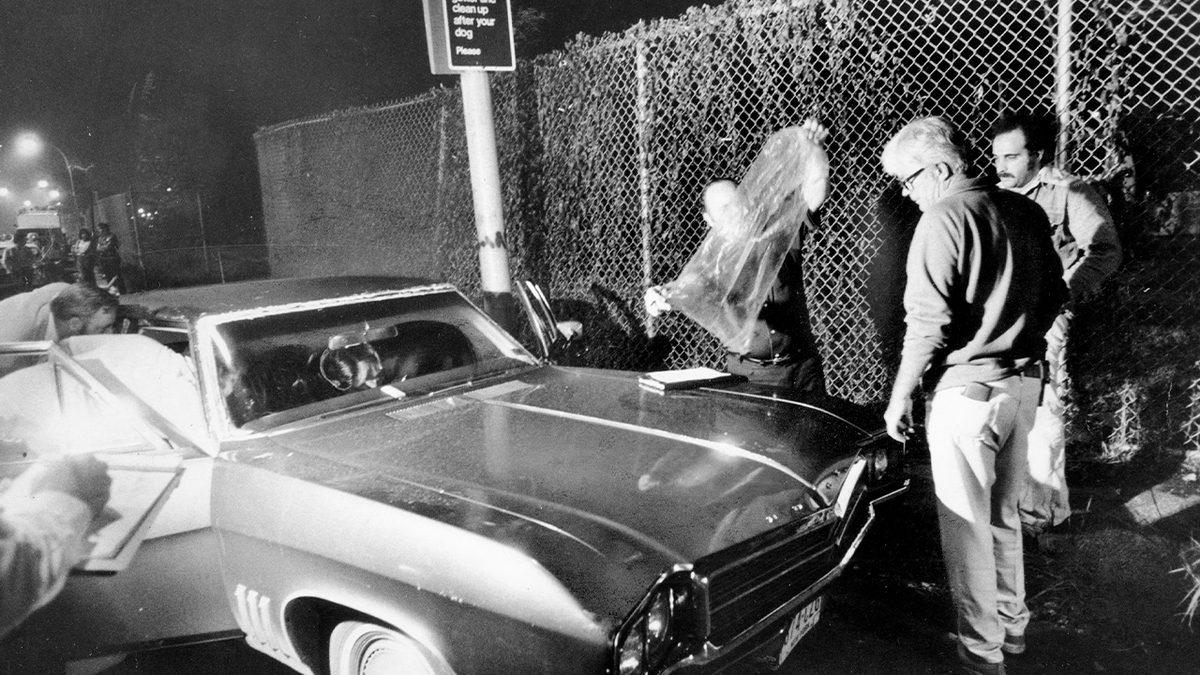
A police officer leans over in the front seat of Robert Violante’s car on service road of Shore Parkway across the street from a park between Bay 14th and 16th streets in Brooklyn. Violante and his date, Stacy Moskowitz, both 20, became the 12th and 13h victims of the “Son of Sam” as they sat in a car at 2:35 a.m. Moskowitz later died from her injuries. Violante lost an eye but survived. (Dan Godfrey/NY Daily News Archive via Getty Images)
ALSO READ: Why Trump Is Lashing Out at Netanyahu as Their Alliance Frays
The shooting would become known as the first of what police initially called the .44-caliber killings. They terrified New Yorkers for a year. Young couples shied away from sitting in parked cars. Young women cut and dyed their hair, believing that the killer was targeting people with long, dark locks.
Valenti provided a crucial description of her attacker — a White male in his 30s with curly dark hair.
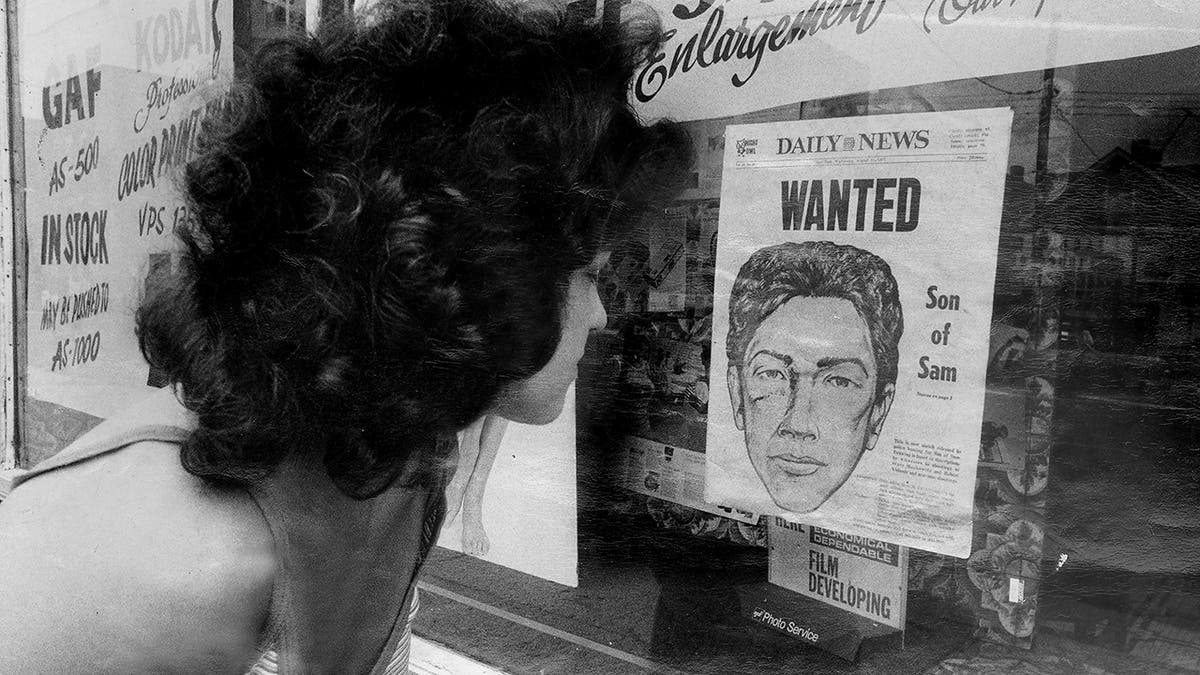
Marielena Maddalena studies sketch of “Son of Sam” at Sheepshead photo store in Brooklyn. (Charles Frattini/NY Daily News Archive via Getty Images)
Still, it took months before police pieced together a pattern now known as the “Son of Sam” murders, when ballistic evidence linked the same gun to the July shooting and four more.
At that point, it was March 8, 1977, and Berkowitz had killed three and injured four.
In the lead-up to the one-year mark, he sent a note to the former New York columnist Jimmy Breslin, whom he had been taunting with letters signed, “Son of Sam.”
“Tell me, Jim, what will you have for July Twenty-Ninth?” he wrote to Breslin, according to one of his 1977 Daily News columns. “You can forget about me if you like because I don’t care for publicity. However, you must not forget Donna Lauria and you cannot let the people forget her, either. She was a very sweet girl but Sam’s a thirsty lad and he won’t let me stop killing until he gets his fill of blood.”
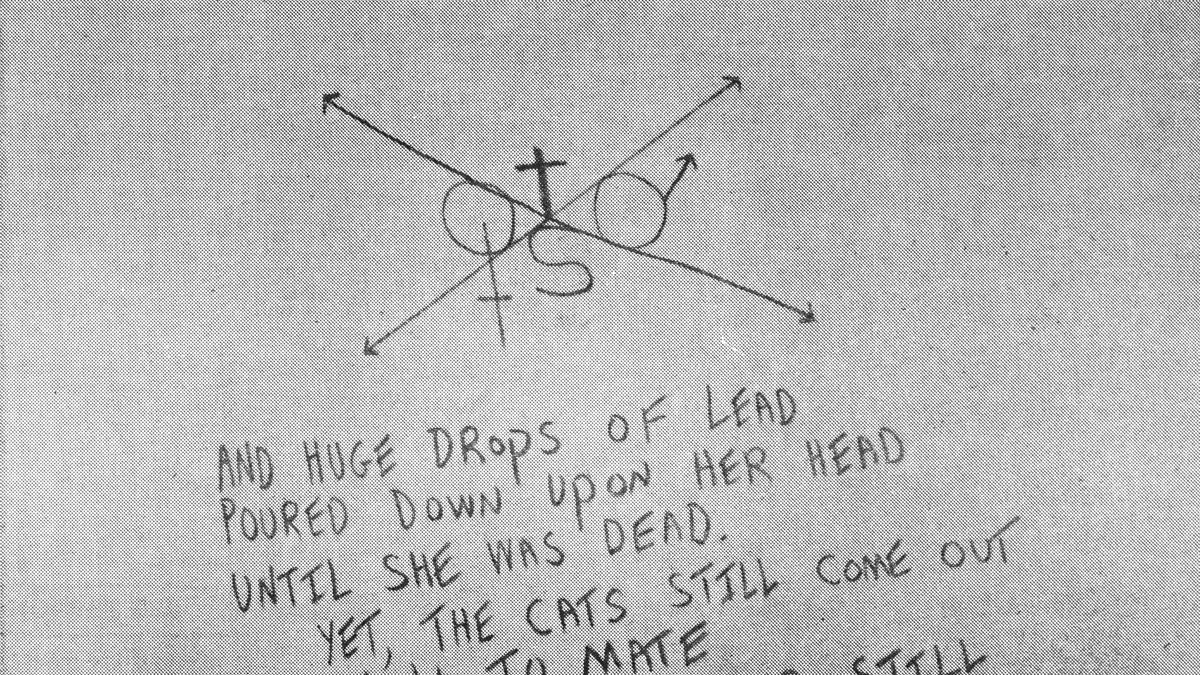
This note was found by police in the 1970 Ford Galaxy owned by David Berkowitz when they arrested him, late Aug. 10, 1977, as he sat in the car in front of his Yonkers, New York home. It is written in the style of the .44 caliber killer. (Getty Images)
He went on to warn that while he’d been quiet, he hadn’t been inactive.
“I am still here,” he wrote. “Like a spirit roaming in the night. Thirsty, hungry, seldom stopping to rest; anxious to please Sam. I love my work.”
Berkowitz’s letters showed the killer was following news coverage of the case, mocked police and cemented the “Son of Sam” moniker in place of the .44-caliber killer.
“I believe Berkowitz was focused on revenge, jealousy and attention, along with the feeling of power,” said John Kelly, a criminal profiler and the president of STALK Inc. “He felt he was unlovable and acted out his rage on couples who could share a romantic emotional moment. Something he felt he could never have.”
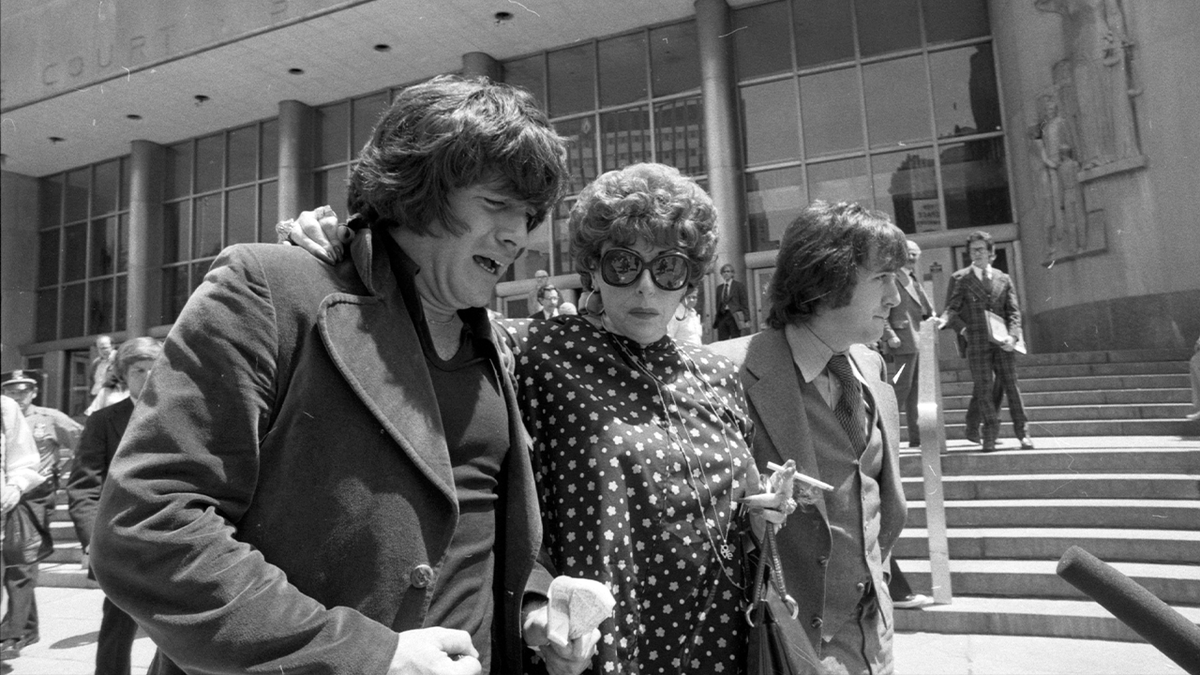
Still crying in rage, Danny Carrique leaves court in Brooklyn, New York, with his friend, Neysa Moskowitz, the mother of David Berkowitz murder victim, Stacy Moskowitz, on May 23, 1978. (Dan Jacino / New York Daily News via Getty Images)
Though the night of July 29 came and went without a new victim, another shooting two days later proved key to Berkowitz’s arrest. Investigators, looking for suspicious vehicles in the area, found a parking ticket issued nearby. That led police to his door in Yonkers. He was arrested on Aug. 10, 1977.
By then, the shootings had killed six and injured seven.
When searching his house, detectives found evidence that he had been closely following other crimes as well.
According to an FBI publication from July 1980, Berkowitz kept notes on hundreds of fires near New York City in the years before his arrest. Police found handwritten notes about 1,411 incidents, with details including the weather, street name and firefighters’ response.
“He’s one of the few serial killers that I know that I believe has completely changed his ways,” said Rovere, a former prison pastor and the host of the “Lighter Side of True Crime” podcast who has been trading letters with Berkowitz for years.
Serving a life prison sentence, Berkowitz now claims to be a born-again Christian and calls himself the “Son of Hope.” His letters are now signed “Bro[ther] David” or, occasionally, with his full name. Most are typed, no longer handwritten.
He spends some of his time producing illustrated religious pamphlets and posts content on his website and working on his prison ministry.