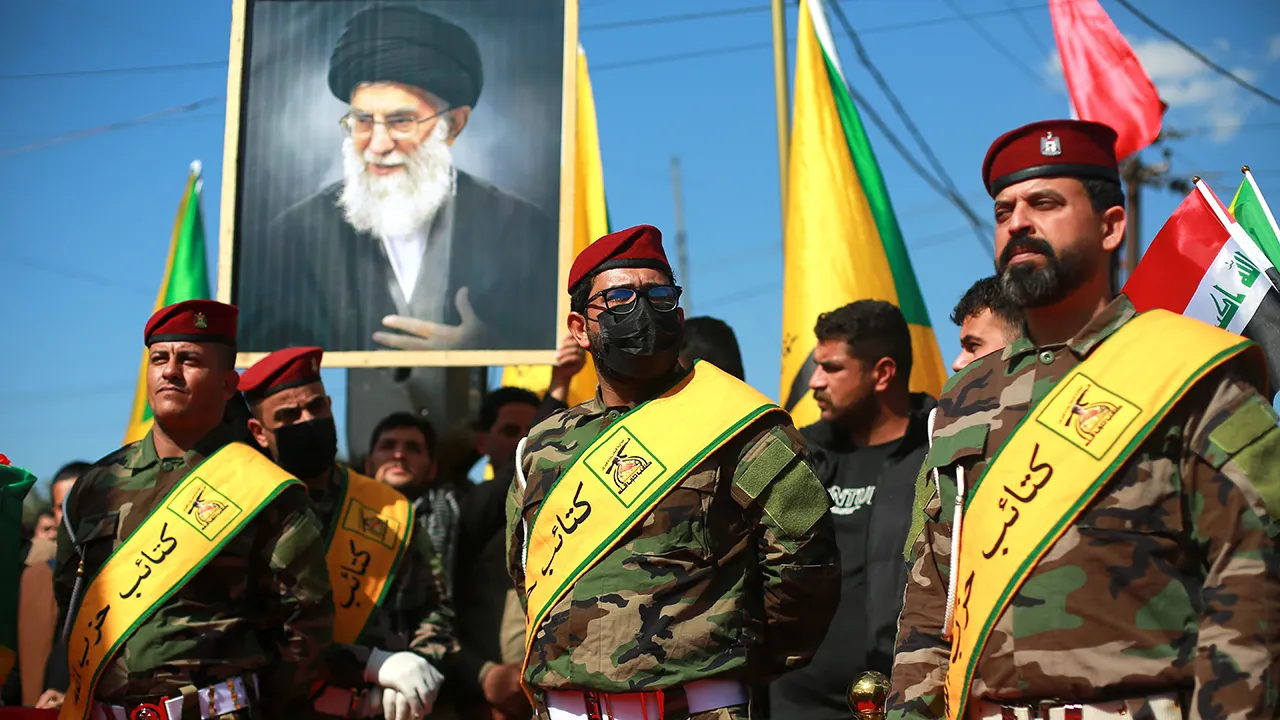

Elizabeth Tsurkov, an Israeli-Russian researcher held for 903 days by the Iran-backed Iraqi militant group Kata’ib Hezbollah, told News Outlet that the first four and a half months of her captivity were spent inside the militia’s stronghold of Jurf al-Sakhr — the same territory Iraq’s Trump-backed prime minister has now ordered government forces to retake.
Tsurkov, a senior nonresident fellow at the New Lines Institute for Strategy and Policy, said the group converted a private family residence in Jurf al-Sakhr, south of Baghdad, into a detention site.
“This is where I was held for 4.5 months,” Tsurkov said in an interview with News Outlet, recalling the early period of her abduction after she was seized in Baghdad in March 2023. “I was held in a private home of a family that was taken over by Kata’ib Hezbollah and turned into a prison,” she said.
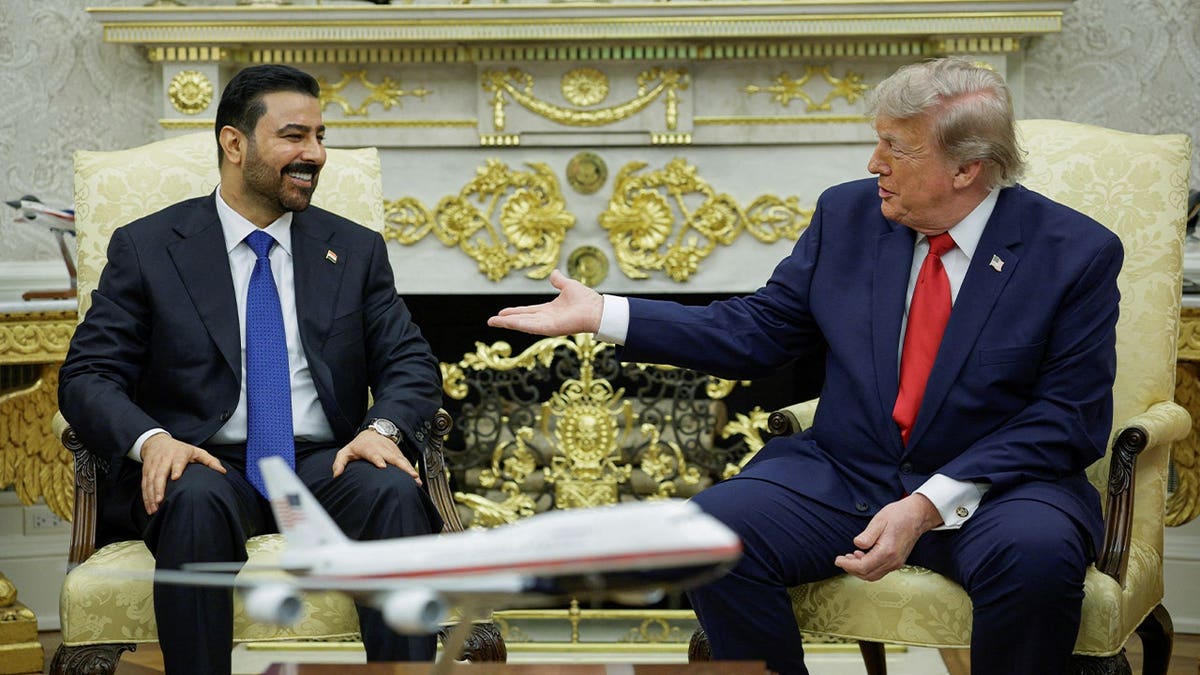
U.S. President Donald Trump gestures toward Iraqi Prime Minister Ali al-Zaidi during a bilateral meeting in the Oval Office at the White House in Washington, D.C., on July 14, 2026. (Evan Vucci/Reuters)
Tsurkov was released in September 2025 after negotiations and sustained pressure from the Trump administration. She said any government effort to reclaim Jurf al-Sakhr must extend well beyond dismantling alleged oil-smuggling networks.
Iraqi authorities, she argued, should search the wide-ranging area — including nearby towns and villages — for “secret prisons,” “mass burial sites” and “storage facilities for weapons.” They should also ensure that confiscated homes are returned to their lawful owners.
Her account comes as Iraqi Prime Minister Ali al-Zaidi, who has received strong public support from President Donald Trump, directs Iraqi security forces into Jurf al-Sakhr, also called Jurf al-Nasr. The area has been a stronghold of Kata’ib Hezbollah, which the United States designates as a terrorist organization, since 2014.
AFP reported Nov. 16 that Baghdad had set a withdrawal deadline for the militia. A security source identified Friday as the target date.
The move followed a Reuters investigation published Monday that cited Iraqi officials accusing Kata’ib Hezbollah of diverting hundreds of millions of dollars in state-owned oil since 2021. The government has dismissed nine security and administrative officials and sent suspects to the judiciary. Kata’ib Hezbollah has denied the allegations.

Elizabeth Tsurkov, an Israeli-Russian researcher held hostage for 903 days by the Iran-backed Iraqi militia Kata’ib Hezbollah, was released in September 2025. (Yuri Gershberg)
For Tsurkov, however, the stakes involve far more than oil revenue.
She described Jurf al-Sakhr as territory effectively beyond the Iraqi government’s reach since 2014. That year, Iran-backed militias helped expel ISIS from the region but blocked its largely Sunni population from returning.
Tsurkov estimated that between 120,000 and 180,000 people were displaced from the district and surrounding communities. “If Iraqis are allowed to return to their homes, this would signal … restitution of state sovereignty,” she said.
She said Baghdad is framing the current operation as an anti-corruption campaign rather than a bid to dismantle Kata’ib Hezbollah’s broader military infrastructure.
The group maintains bases elsewhere in Iraq and has access to border crossings with Iran, Tsurkov said. Those links could allow it to replenish its weapons even if it loses control of Jurf al-Sakhr.
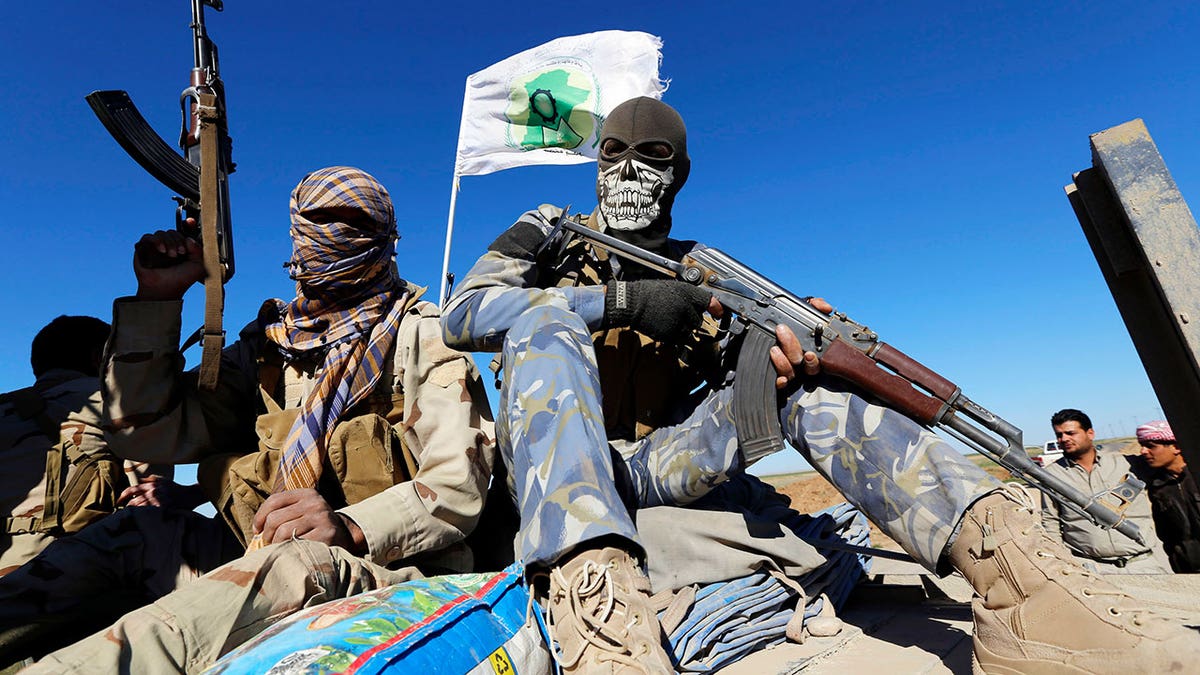
Masked Iran-backed Shi’ite fighters carry weapons in Iraq’s Al Hadidiya, south of Tikrit, while traveling toward the Islamic State-controlled town of al-Alam ahead of an offensive in March 2015. (Reuters/Thaier Al-Sudani)
Michael Knights, head of research at New York-based strategic consultancy Horizon Engage and an adjunct fellow at the Washington Institute for Near East Policy, said he doubted Baghdad was prepared to confront the militias at a fundamental level.
“It’s going to be very difficult to tell the difference between a real crackdown on Iran-backed militias and a fake one,” Knights told News Outlet.
Previous Iraqi governments have announced similar campaigns, only to release detainees or allow armed groups to preserve their influence through renamed security structures.
In June 2020, then-Prime Minister Mustafa al-Kadhimi ordered the arrest of 14 Kata’ib Hezbollah members. Armed supporters of the militia later flooded Baghdad’s heavily fortified International Zone and demanded their release. Most of the detainees were eventually freed, according to a U.S. government inspector general report.
In November 2021, Kadhimi survived an explosive-drone attack aimed at his residence. Reuters reported that security officials linked the assault to Iran-backed militias, though no group claimed responsibility.
Knights said Iraqi counterterrorism forces are better trained and equipped than Kata’ib Hezbollah. The more serious threat, he argued, is the militias’ ability to retaliate against officials and their families.
“It’s not about equipment or even training,” he said, pointing to the danger faced by commanders and relatives who challenge the armed groups.
In a Nov. 16 analysis for the Middle East Forum, researcher Ali Mahmoud described competing corruption accusations involving Kata’ib Hezbollah and Asa’ib Ahl al-Haq, including allegations tied to companies connected to the families of militia leaders.
Mahmoud also reported that Baghdad’s initial inspection of Jurf al-Sakhr required negotiations with senior militia commanders, underscoring the limits of the government’s authority.
DON’T MISS: Nvidia Executives Accused of Selling $2B in Stock Amid CEO Spy Claims

Mourners from Shi’ite group Kata’ib Hezbollah carry a fighter’s coffin during a funeral in Najaf on June 20, 2014. (Ahmad Mousa/Reuters)
Tsurkov, who has spent years studying Iraqi armed groups, said her captivity provided an unusual window into Kata’ib Hezbollah’s internal culture.
“I interacted with about 45 different individuals across basically three different prisons,” she said. She later supplemented those observations with interviews involving former militia members and others familiar with the communities from which they were recruited.
She concluded that the organization includes a small number of deeply committed Iranian loyalists alongside a much larger contingent motivated mainly by salaries, status and the power they wield. “They enjoy having power over others,” she said of what she witnessed among her captors.
Some members adhere to Iran’s revolutionary ideology, but Tsurkov said many joined after the main battles against ISIS ended. They were drawn by government-funded salaries and relatively stable employment. “They’re not interested in dying in the service of the Iranian regime,” she said of many rank-and-file fighters.
She separated those recruits from a smaller, ideologically committed core of better-trained operatives whom Iran can deploy for complex military operations.
That divide, she said, could give Baghdad a way to curb militia influence without triggering a full-scale confrontation. One option would be to integrate some fighters into the regular Iraqi army under independent commanders, offering them alternative employment while dismantling their existing chains of command.
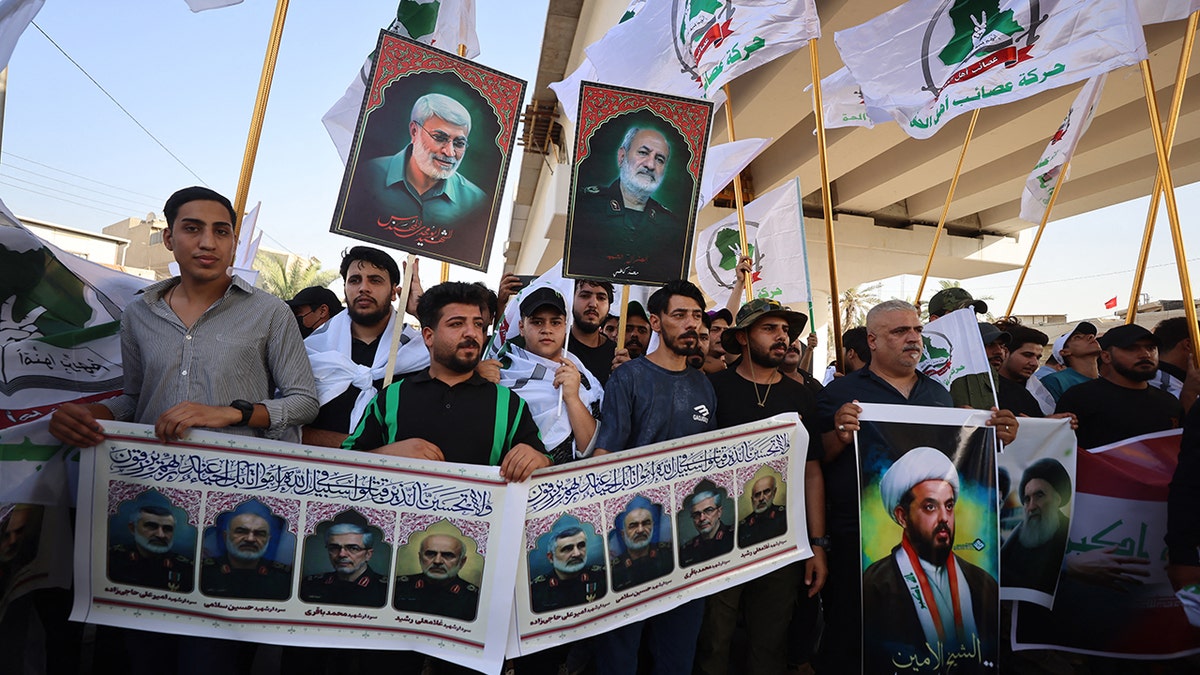
Supporters of Iraqi pro-Iran groups hold images of Iranian Revolutionary Guard commanders killed in Israeli airstrikes in Tehran during a protest near Baghdad’s Green Zone, home to the U.S. embassy, on June 16, 2025, amid escalating tensions between Israel and Iran. (Photo by Ahmad Al-Rubaye/AFP via Getty Images)
Iran’s influence remains entrenched
Knights said the current campaign appears focused mainly on Kata’ib Hezbollah’s more confrontational Abu Hussein faction, while a separate wing linked to senior commander Abu Fadak has largely escaped scrutiny. Both factions, he said, ultimately remain answerable to Tehran.
He also questioned whether disrupting a single oil-smuggling operation would seriously damage the group’s finances, noting its broad investments in hotels, real estate and other businesses.
The contradictions confronting Iraq’s government are perhaps most visible in recent high-level appointments and in Iran’s reported choice for its next diplomatic envoy to Baghdad, Knights said.
On Oct. 15, Iraq’s parliament approved Laith al-Khazali, a senior figure in the Iran-backed Asa’ib Ahl al-Haq militia, as one of three deputy prime ministers. The United States designated him and his brother, Qais al-Khazali, the militia’s leader, as specially designated global terrorists in 2020. Washington has accused the organization of attacks against U.S. and coalition forces, according to al-Monitor.
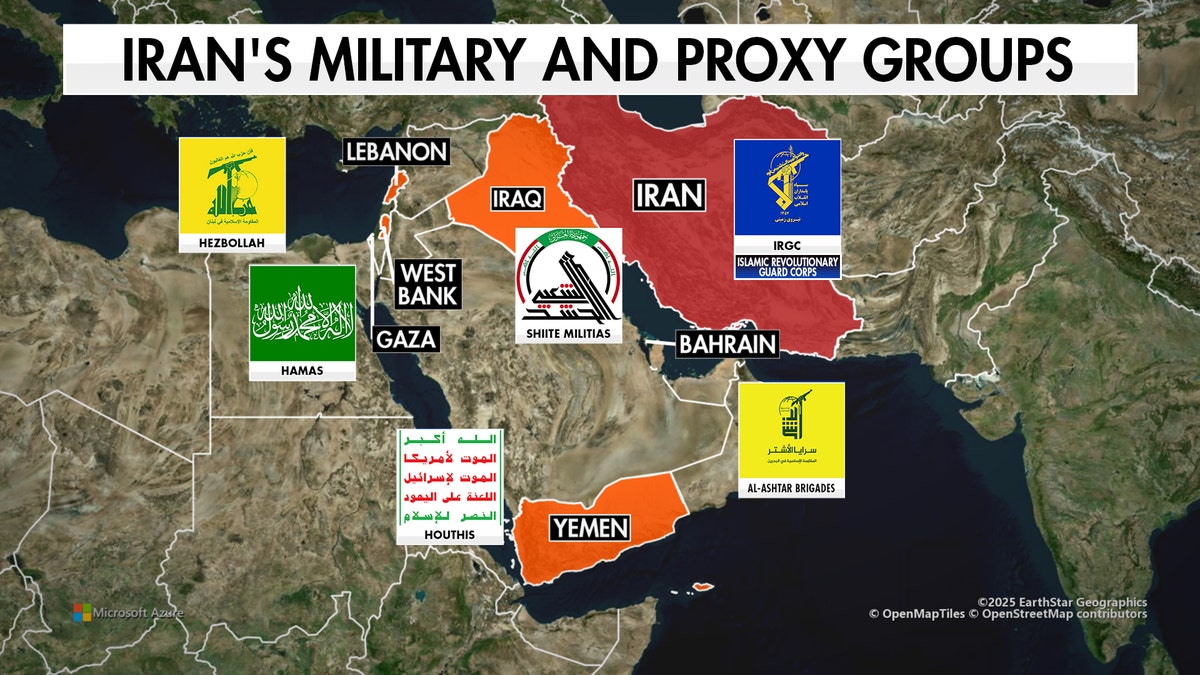
A map depicting Iran’s proxy terrorist groups across the Middle East. (Fox News)
Another newly appointed deputy prime minister, Muhsin al-Mandalawi, is the brother of two Iraqi businessmen sanctioned by the U.S. Treasury Department on Sept. 10 for facilitating financial transactions that benefited Iran. Knights also cited Iran’s reported selection of Abdolreza Meskarian, a senior Islamic Revolutionary Guard Corps Quds Force commander, as its next ambassador to Iraq.
Alhurra reported Nov. 9, citing an Iraqi Foreign Ministry source, that Tehran had nominated Meskarian. He leads the Quds Force’s Ramadan Headquarters, a unit involved in coordinating with Iran-backed armed groups in Iraq. Neither government had formally confirmed the nomination.
Knights said the developments raise basic questions about Baghdad’s willingness to confront Tehran’s influence. “I think on balance, we’re still in a pretty bad place in Iraq when it comes to militias,” he said.

Members of Kata’ib Hezbollah attend the funeral of fighters killed in a U.S. airstrike in Iraq’s Babil province, southwest of Baghdad, in March 2026. (DPA / Picture Alliance via Reuters.)
Tsurkov agreed that an operation carried out primarily to reassure Washington could be exposed as hollow if displaced families remain unable to return home.
She called the broader disarmament deadline — already extended to June 2027 — “utterly unrealistic,” saying Iraq’s security institutions would need years of reform before they could reliably challenge the militias.
“I tend to think it will not be real,” she said of the current operation, while acknowledging that genuine government control would represent a significant breakthrough.
For the former hostage, the clearest test is whether Iraq’s military simply enters Jurf al-Sakhr or whether the territory genuinely returns to civilian rule.
“It’s either the state is there, and people can return or not,” she said.

Damaged structures at the site of an airstrike on a Popular Mobilization Forces base in Mosul, Iraq, on Wednesday, July 29, 2026. (AP Photo/Farid Abdulwahed)
Knights also doubts the operation will produce lasting change, suggesting Baghdad could reach an agreement that lets the government declare victory without substantially weakening Kata’ib Hezbollah. Even so, he acknowledged that the confrontation might become the first stage of a wider effort, despite his doubts that this operation alone will be decisive. “Every great journey starts with the first step,” he said.


