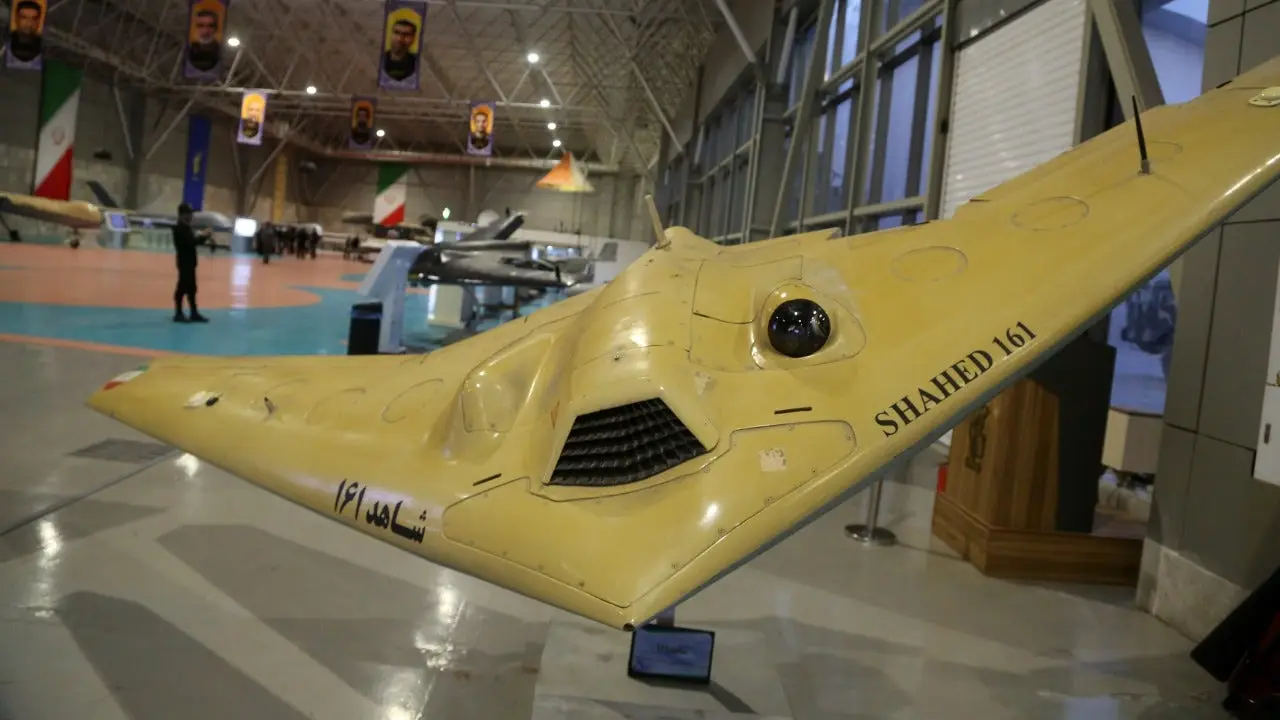

Iran launched drones toward what it described as a U.S. military radar installation in Bahrain on Tuesday, marking the third strike in five days following an approximately two-month pause in hostilities, Reuters reported.
Iran’s Islamic Revolutionary Guard Corps (IRGC) said the attack targeted the radar system at Sheikh Isa base in Bahrain, where the U.S. Fifth Fleet is headquartered.
Bahrain said its air-defense systems intercepted the incoming drones after authorities issued a security alert advising residents to take shelter. Officials later announced that the threat had passed, and reported no deaths or injuries.
U.S. Central Command (CENTCOM) said the Iranian drones failed to reach their intended target. The aircraft were “intercepted without any damage to U.S. equipment or injury to American personnel,” the command said.

An Iranian drone is displayed in Tehran, Iran, on Nov. 9, 2026. (Fatemeh Bahrami/Anadolu via Getty Images)
The attempted attack came after Bahrain intercepted another wave of Iranian drones on Sunday. At the time, the IRGC said six drones had been directed at a radar system at the Al-Riffa helicopter base.
That operation followed Friday’s initial attempt to strike a U.S. radar installation in Bahrain, the first major attack after the two-month lull. CENTCOM said U.S. forces destroyed both drones involved in that incident, with no casualties or injuries reported.
KEEP READING: Trump’s Out-of-Touch Response as Americans Turn to Doomsday Prep
Reuters previously reported that President Donald Trump told advisers he might not launch another attack on Iran if the IRGC and the Houthis, an Iran-backed terrorist group in Yemen, carried out no further provocations.

President Donald Trump attends a multilateral meeting with delegations from Japan, India and Australia at the Solaire Hotel on Nov. 17, 2026, in Manila, Philippines. (Win McNamee/Getty Images)
Trump has said the U.S. naval blockade of Iran will remain in place, tightening pressure on the country’s economy. He said the blockade would continue as long as Tehran attempts to disrupt shipping through the Strait of Hormuz.
Tanker attacks in the strait have increased in recent days. The waterway remains one of the world’s most important routes for transporting global energy supplies.

Commercial vessels are seen anchored between Iran’s Qeshm and Larak islands amid disruptions to maritime traffic in the Strait of Hormuz, Iran on Sept. 11, 2026. (Fatemeh Bahrami/Anadolu via Getty Images)
Oman and Iran have held discussions on managing commercial shipping through the strait, which carried about one-fifth of the world’s daily oil supplies before the conflict began.
The United States has not participated in the bilateral negotiations. Trump has indicated that Washington would oppose any transit agreement reached without U.S. involvement if it grants Tehran control over the waterway.


