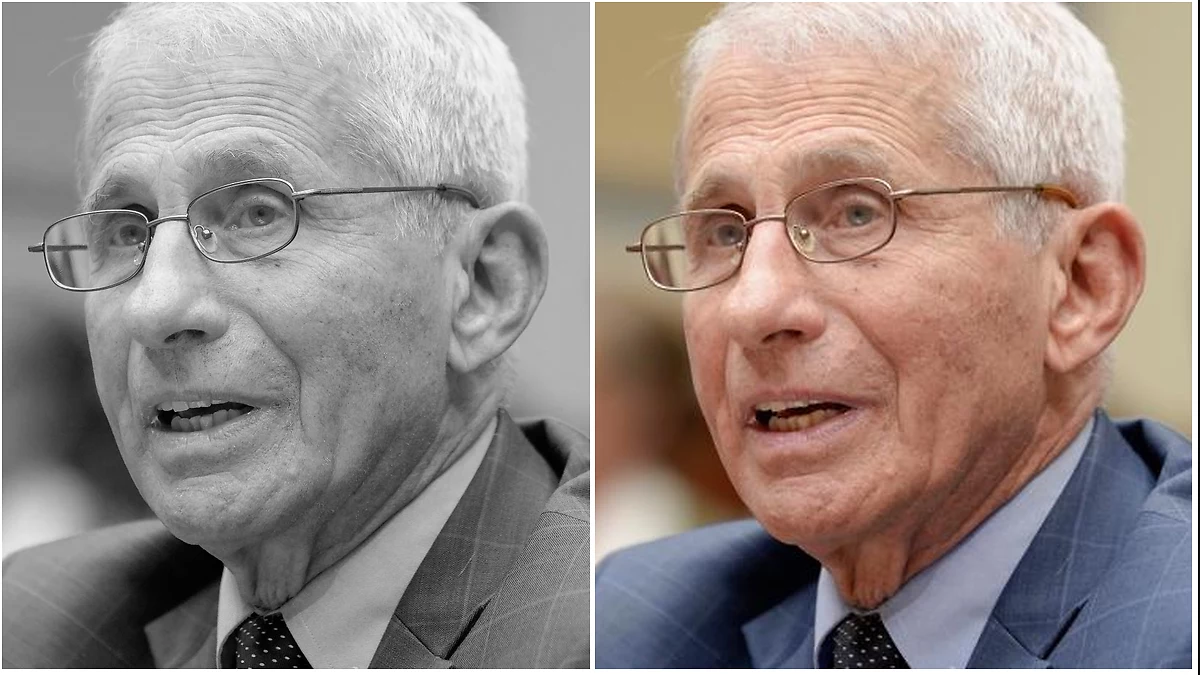

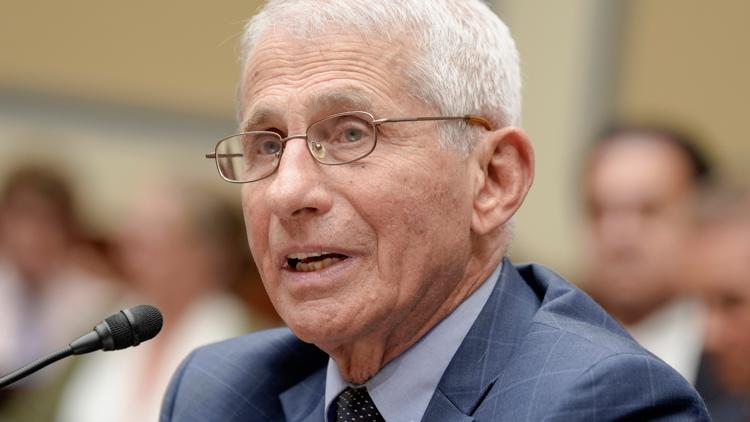
Dr. Anthony Fauci, the prominent U.S. infectious disease expert who became one of the public faces of America’s COVID-19 response, is once again headed into a clash with a Republican senator scrutinizing how the coronavirus pandemic began.
WASHINGTON — Fauci, whose decades in public health culminated in a central role during the nation’s fight against COVID-19, is expected to return to Capitol Hill for another confrontation over the still-debated origins of the virus.
Sen. Rand Paul, R-Ky., has subpoenaed Fauci to testify before a Senate committee on Wednesday. The move is the latest chapter in Paul’s long-running claims that the retired infectious disease official misled the public during the pandemic — accusations Fauci has dismissed as “preposterous.”
Ahead of the hearing, Paul made public more than 1,000 pages from Fauci’s personal diary spanning the pandemic era. Citing passages that touched on early attempts to determine where the virus came from, Paul alleged on X that Fauci’s private notes and his public statements presented “two different stories.”
Several of those entries, however, appear to echo uncertainty Fauci had already described in his 2024 memoir and in interviews during the crisis, when scientists worldwide were urgently trying to understand a dangerous new virus and identify ways to slow its spread before vaccines became available.
Still, the newly released diary pages are expected to deepen an already sharp political divide. Years after COVID-19 first upended daily life, Fauci remains a lightning rod for critics who associate him with mask requirements and other public health measures they viewed as government overreach, even as the virus was killing hundreds of thousands of Americans.
Fauci’s legal team previously pushed back forcefully in a letter to Paul, describing the senator’s allegations as “absolutely baseless” and accusing him of pursuing an “obsessive and groundless vendetta.”
In the run-up to the unusual Senate hearing, many scientists rallied behind Fauci. It will mark the second time since leaving government service in 2022 that the longtime National Institutes of Health figure has appeared before Congress to address questions about COVID-19 origins. Though the pandemic made him widely known to the American public, Fauci had spent decades helping guide the country through major health threats, including HIV, Ebola and the 2001 anthrax attacks, while advising seven U.S. presidents.
In a public letter, more than 150 infectious disease experts and other scientists wrote that “no credible evidence has been produced to support these absurd charges” and that they are “urging our elected representatives in Congress stop these witch-hunts.”
The expected crux of Wednesday’s hearing: whether NIH-funded research in China may have played any role in how the pandemic started.
Many scientists believe the virus most likely emerged in nature and jumped from animals to people, coming to light when it spread at a wildlife market in the Chinese city of Wuhan. There’s no new scientific information supporting that the virus might instead have leaked from a laboratory, a theory Paul champions. A GOP-led subcommittee that studied the question in 2024 did not find any evidence linking Fauci to wrongdoing.
Fauci has long said publicly that he was open to both theories, but that there’s more evidence supporting COVID-19’s natural origins, the way other deadly viruses including coronavirus cousins SARS and MERS jumped into people.
Republicans also have accused Fauci of lying about whether his agency funded “gain of function” research — the practice of enhancing a virus in a lab to study its potential real-world impact — at a lab in Wuhan.
NIH for years gave grants to a New York nonprofit called EcoHealth Alliance that used some of the funds to work with a Chinese lab studying coronaviruses commonly carried by bats. But the definition of “gain of function” covers both general research and especially risky experiments to “enhance” the ability of potentially pandemic pathogens to spread or cause severe disease in humans. Fauci has previously stressed he was using the risky experiment definition and that “it would be molecularly impossible” for those bat virus experiments to have turned into the pandemic virus.
The Trump administration last year paused some federally funded gain-of-function research and on Tuesday announced new rules to tighten oversight.
The Associated Press Health and Science Department receives support from the Howard Hughes Medical Institute’s Department of Science Education and the Robert Wood Johnson Foundation. The AP is solely responsible for all content.
Copyright 2025 Associated Press. All rights reserved. This material may not be published, broadcast, rewritten, or redistributed.