
At least 72 migrants have died after a desperate and disorderly attempt to enter Spain’s North African enclave of Ceuta, transforming the latest European border crisis into a humanitarian catastrophe and reviving fierce arguments over immigration policy across the continent.
Spanish authorities spent the weekend combing the waters off Ceuta for more victims after an estimated 50,000 to 60,000 migrants, most of them young men, surged into the small Spanish territory bordering Morocco. Officials said many died by drowning during the crossing, while others were crushed in a stampede near a breakwater barrier.
The mass arrival stretched over several days and briefly swelled Ceuta’s population of about 84,000 by more than half. By Sunday, many of those who had crossed had gone back into neighboring Morocco, though others remained inside the city or sought to evade Spanish authorities.
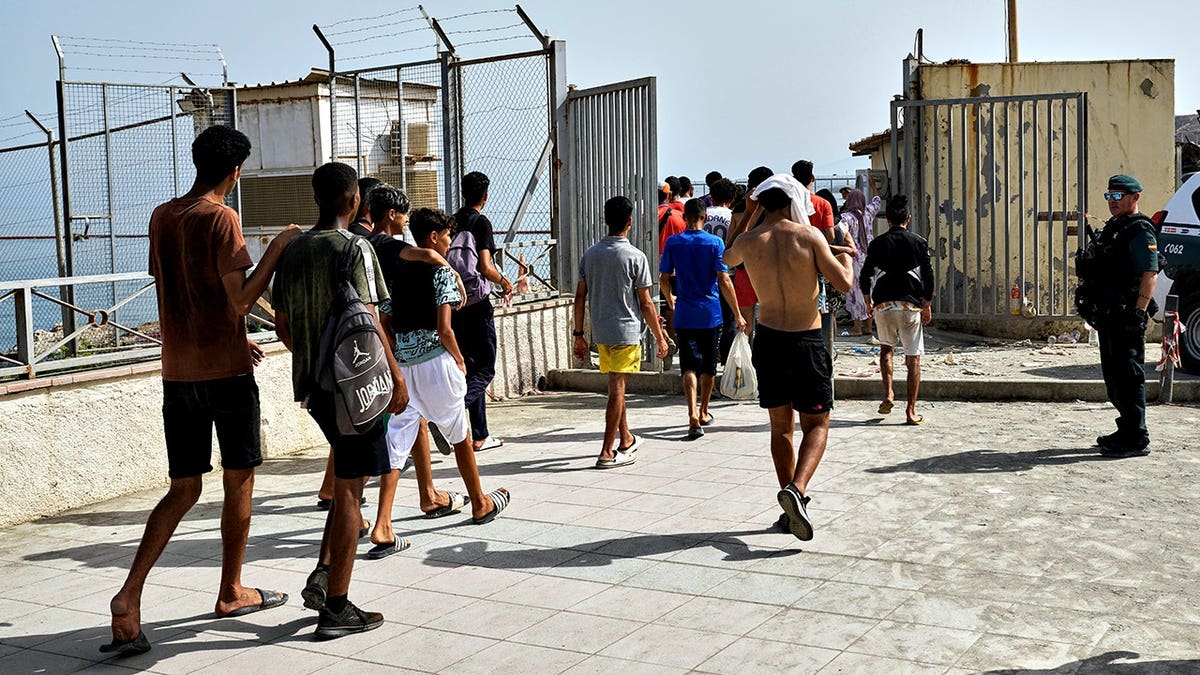
Migrants who crossed into Spain return to Morocco from the Spanish enclave of Ceuta, Saturday, Aug. 1, 2026. (AP Photo/Bernat Armangue)
The mounting death toll has sharpened the political confrontation over migration in Spain and beyond, with far-right figures demanding stronger border controls and the expulsion of migrants still in the enclave.
Santiago Abascal, the leader of Spain’s nationalist Vox party, traveled to Ceuta on Sunday and sharply criticized the Spanish government. He described the migrant influx as “an invasion” and accused officials of failing to defend the country’s borders.
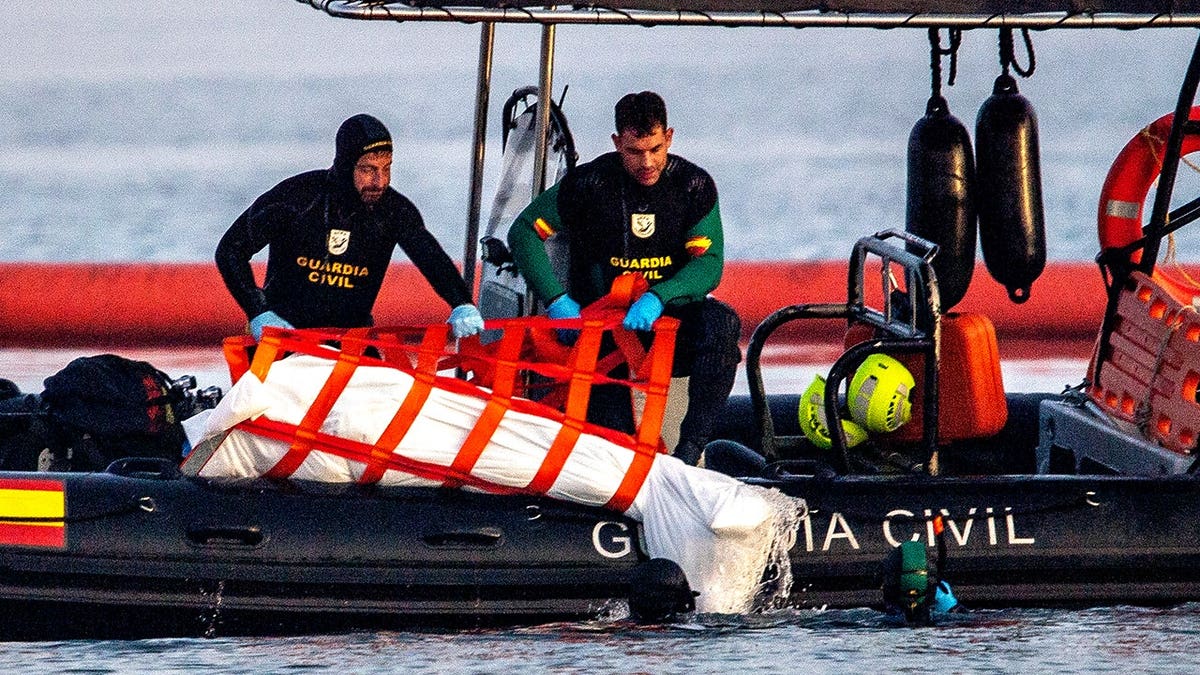
Guardia Civil officers recover the body of a migrant from the water in the Spanish enclave of Ceuta, Saturday, Aug. 1, 2026. (AP Photo/Antonio Sempere)
The strain was visible on Saturday as well, when European Parliament member Alvise Pérez was confronted by angry counterprotesters during a rally in Ceuta. Pérez ultimately sought refuge inside a nearby bar before police escorted him from the scene.
Many local residents expressed sorrow over the loss of life, even as the political debate intensified.
“It pains me deeply that young people are dying at sea. It’s not right that, in the year 2026, women with children as young as two months old should be crossing the sea only to die,” Karima Abenaz, a French national in Ceuta with family in Morocco, told Reuters.
“In Morocco, there’s food, there’s everything we need,” she said. “If we don’t have a decent job, we should go on strike and demand our rights from the government. We shouldn’t be dying at sea. It’s not right.”

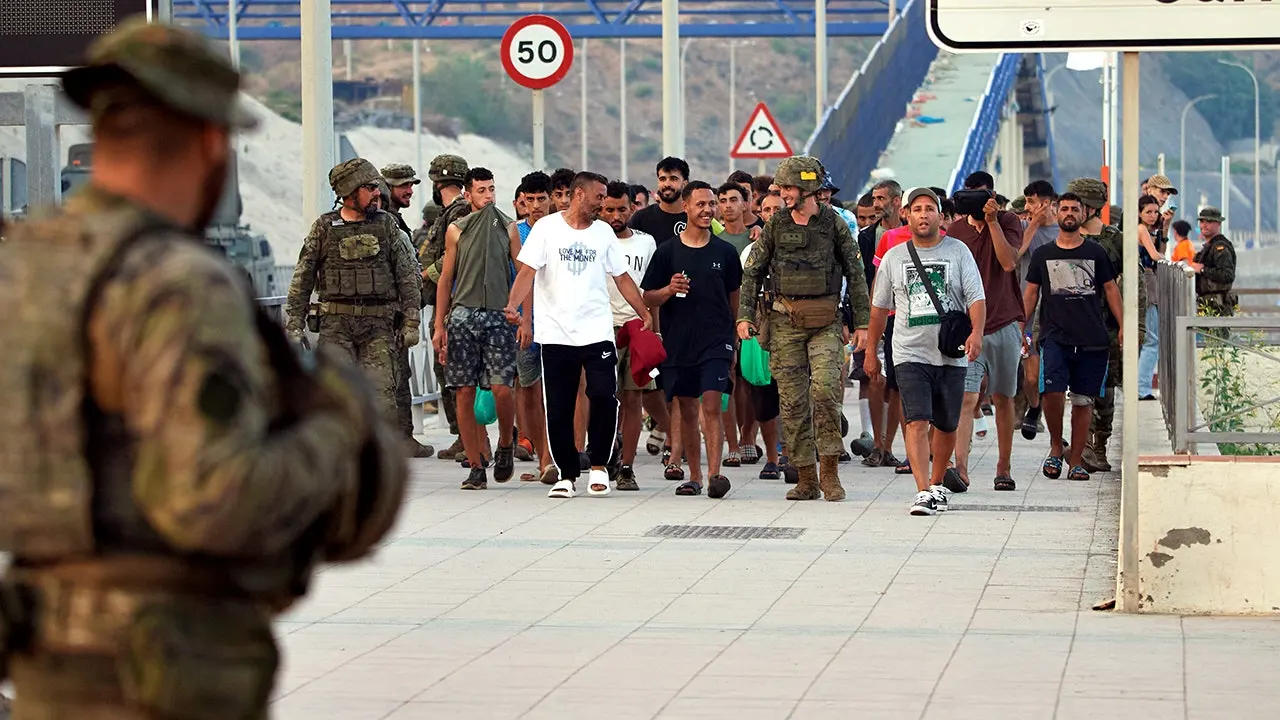
Escorted by the Spanish army, migrants who crossed into Spain return to Morocco from the Spanish enclave of Ceuta on Saturday, Aug. 1, 2026. (AP Photo/Antonio Sempere)
Other local residents said the migrants themselves should not be blamed.
Mohamad Abdelkader Driss, a waiter in Ceuta, told The Associated Press that responsibility lies with the authorities.
“If you open the border, of course everyone comes in, but the young men aren’t to blame. The authorities are responsible,” he said.
Others said the events had tested Ceuta’s reputation as a city where Christian, Muslim, Jewish and Hindu communities have long lived side by side. Some also voiced concerns about security and questioned whether another mass crossing could happen again.
The U.S. State Department on Saturday raised its Travel Advisory for Ceuta to Level 3: Reconsider Travel in response to the surge, warning that the “massive and uncontrolled arrival of migrants from Morocco to Ceuta may lead to unpredictable and dangerous security situations.”