
Drone footage showing Solomon’s pools
Drone footage reveals the vast, 2,000-year-old reservoir complex that once helped quench Jerusalem’s thirst and is now caught in a heated debate over archaeology, cultural heritage and political control. (Video by Yehoshua Sigala.)
Solomon’s Pools, an ancient water system constructed more than two millennia ago to serve Jerusalem, have emerged as the focus of a contemporary political clash. Leaders in the nearby Israeli town of Efrat say the Palestinian Authority has failed to properly protect the landmark since the site came under Ramallah’s jurisdiction after the 1993 Oslo Accords.
The site, made up of three massive reservoirs situated between Efrat and Bethlehem, south of Jerusalem, is widely dated by archaeologists to the Hasmonean era in the second century B.C. Originally designed to channel water to Jerusalem during the Second Temple period, the system was later enlarged by Herod the Great, who ruled from 37 to 4 B.C., to supply his palace-fortress at Herodium.
“Solomon’s Pools are not only the history of the Jewish people in the Land of Israel and the source of Jerusalem’s living water, but also the future of Efrat in our ability to exercise our sovereignty, preserve Efrat’s development space and sustain tourism for all religions in the area between Jerusalem and Hebron,” Efrat Mayor Dovi Shefler told News Outlet.
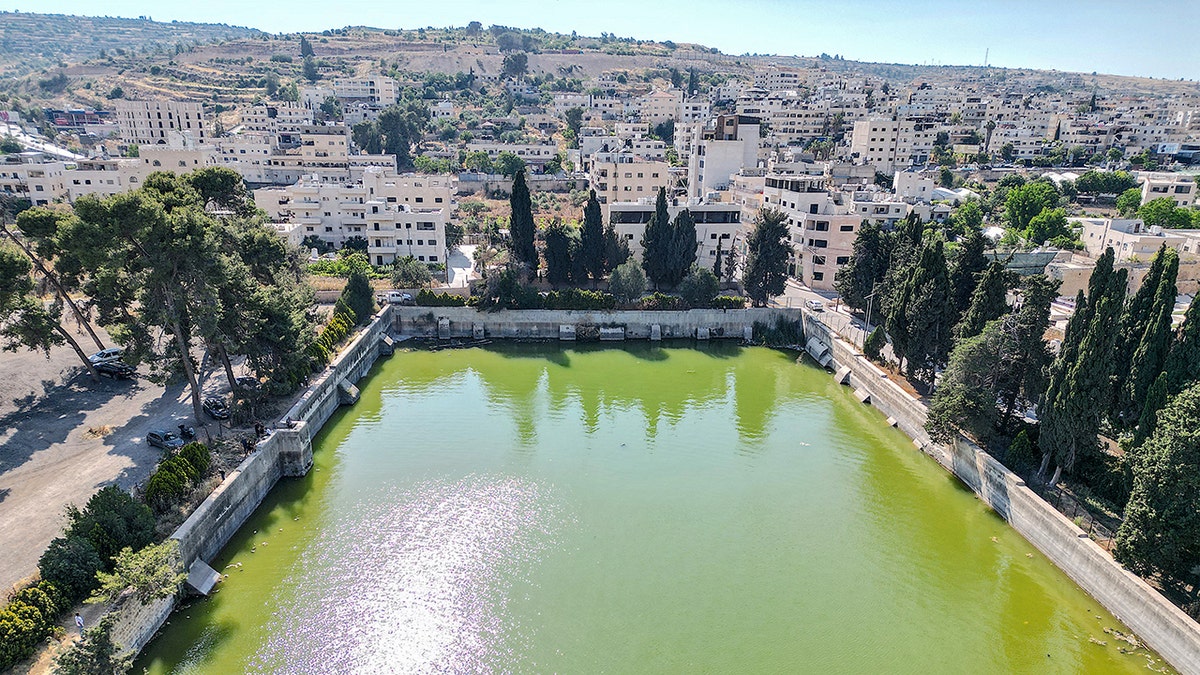
An aerial view shows one of the reservoirs at the ancient Solomon’s Pools site. (Hazem Bader/AFP Via Getty Images)
Together, the three reservoirs can hold roughly 288,000 cubic meters of water, equal to more than 10 million cubic feet. For centuries, the pools were fed by the Arrub and el-Biyar aqueducts, along with rainfall, creating a year-round water source for Jerusalem. During the British Mandate period, the site was extensively restored and became popularly known as “Jerusalem’s beach,” a status that lasted until the Oslo Accords reshaped control of the area.
Those accords divided the West Bank into Areas A, B and C. Solomon’s Pools fall within Area A, where the Palestinian Authority holds civil and security responsibility.
Yonatan Marcus, chief of staff for the Efrat Municipality, told News Outlet that during the Oslo negotiations, then-Prime Minister Yitzhak Rabin insisted the pools should stay under Israeli control, along with other major Judeo-Christian archaeological and religious sites, including Rachel’s Tomb in Bethlehem.
However, during the mapping process, he said, the words “Solomon’s Pools” remained within Area C on zoomed-out maps, while the reservoirs themselves ultimately mistakenly fell inside Area A.
Marcus said under Palestinian Authority control, things changed for the worse. “When you visit today, you can see that the place is neglected. Much of it has been destroyed. There are signs everywhere in Arabic stating that swimming is not permitted because the pools are filled with sewage water,” he said.
He added that the sewage contamination was not natural, with wastewater deliberately diverted into the pools, replacing the fresh water that flowed there until the Oslo Accords. He said this occurred despite the PLO’s commitment under the agreement to protect historical sites in Area A.
“Our main goal is to protect these magnificent pools. It’s not just about Jewish history; it’s about Judeo-Christian history and whoever believes in the people of the Bible who walked here,” he said.
ALSO READ: Tatiana Totmianina Unfall: Is She Paralyzed From 2004 Accident?
He described the reservoirs as the largest archaeological pools in Israel, saying they occupy a strategic location between the Western Wall and the Cave of the Patriarchs and Matriarchs along Route 60, known as the Biblical Highway.
Although the pools are located in Area A, Marcus said visits by Israelis take place only on coordinated tours secured by the IDF’s Judea and Samaria Division, as permitted under the Oslo Accords.
He noted that visits by Israeli officials, including Finance Minister Bezalel Smotrich, have prompted improvements, saying the Palestinian Authority removed about 200 bags of garbage from the site following years of neglect.
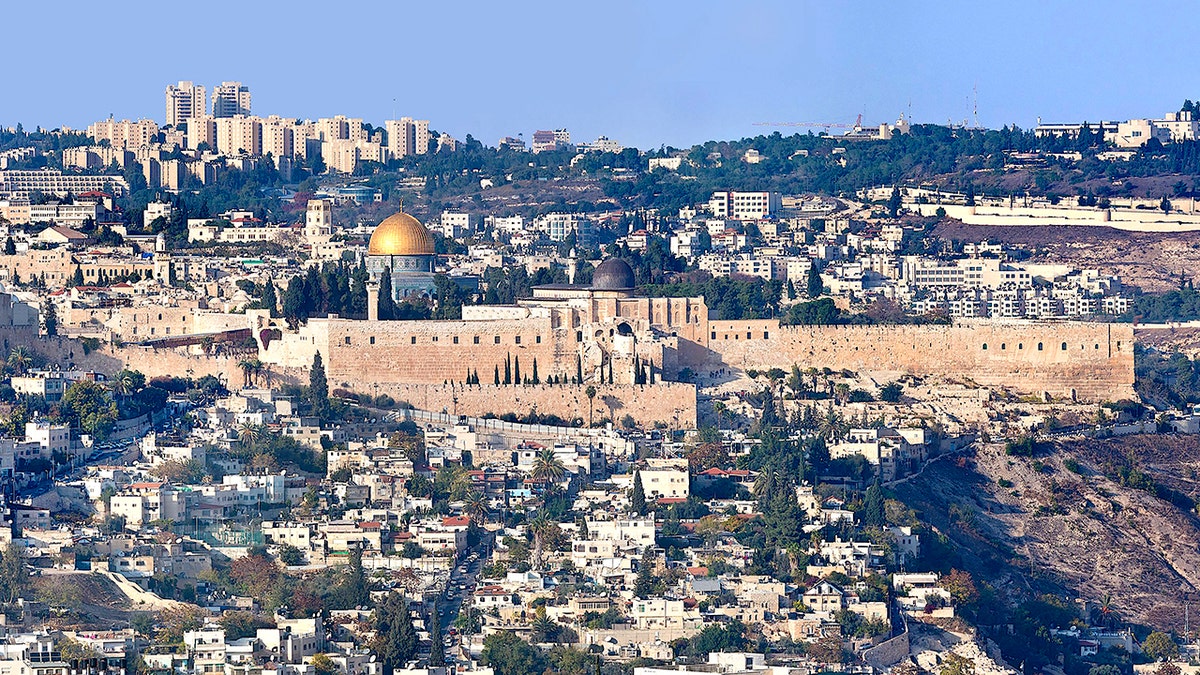
Panoramic view of the Old City of Jerusalem, Israel, viewed from Haas Avenue in late afternoon. (Planet One Images/UCG/Universal Images Group via Getty Images)
“If the pressure of our coming here is going to make them take care of the site, then wonderful. In the end, our goal is for it to be preserved,” he said.
Ahmad Fattouh, a spokesman for Palestinian Authority President Mahmoud Abbas’s Fatah faction, rejected the allegations.
“It’s absolutely audacious that the leadership of the colonial settlement of Efrat claims to be concerned about the condition of Burak Sulaymān’s pools when they are the very reason behind its declining water levels,” Fattouh told News Outlet. He said Israeli locals diverted the springs that feed the pools and argued that the Palestinian Authority has restored the site and developed it as a tourist destination.
Fattouh also accused Israeli officials of using the issue to justify taking control of the site, saying Smotrich’s visit showed that the pools were not completely dry, contrary to claims by Efrat officials.
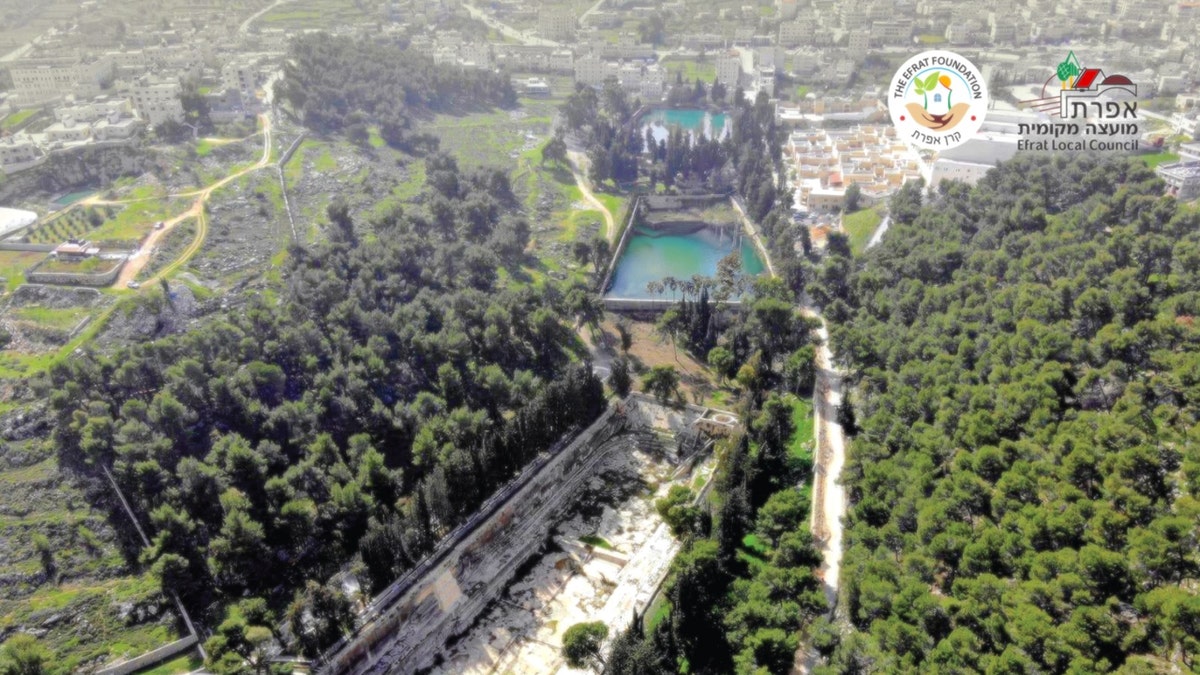
Solomon’s Pools, a series of ancient reservoirs south of Jerusalem near Bethlehem, have supplied water to Jerusalem for centuries and are at the center of an ongoing dispute over heritage, sovereignty and preservation. (Yonatan Marcus/Efrat municipality )
Yishai Fleisher, international spokesman for Hebron, said the pools are akin to rediscovering a lost part of the Jewish Temple, as they supplied Jerusalem with water for some 2,000 years.
He said preserving the site begins with attracting visitors, producing educational videos, improving access along the new road from northern Efrat, hosting senior Israeli officials and establishing a permanent presence with cameras, patrols and farms.
“Since the story started breaking, the P.A. is trying to build a mosque there. The goal of the P.A. is to stop Israeli presence in Judea and Samaria and the Land of Israel. They are not about developing anything for its own sake,” Fleisher claimed to News Outlet.
Fleisher, who is an influential voice among the Israeli right, called for a radical change in policy. “What we really have to do is dismantle the P.A. and assert sovereignty over Judea and Samaria. In the meantime, the line should be redrawn so that Solomon’s Pools, which are essentially archaeological sites, are placed under Israeli control in Area C,” he said.