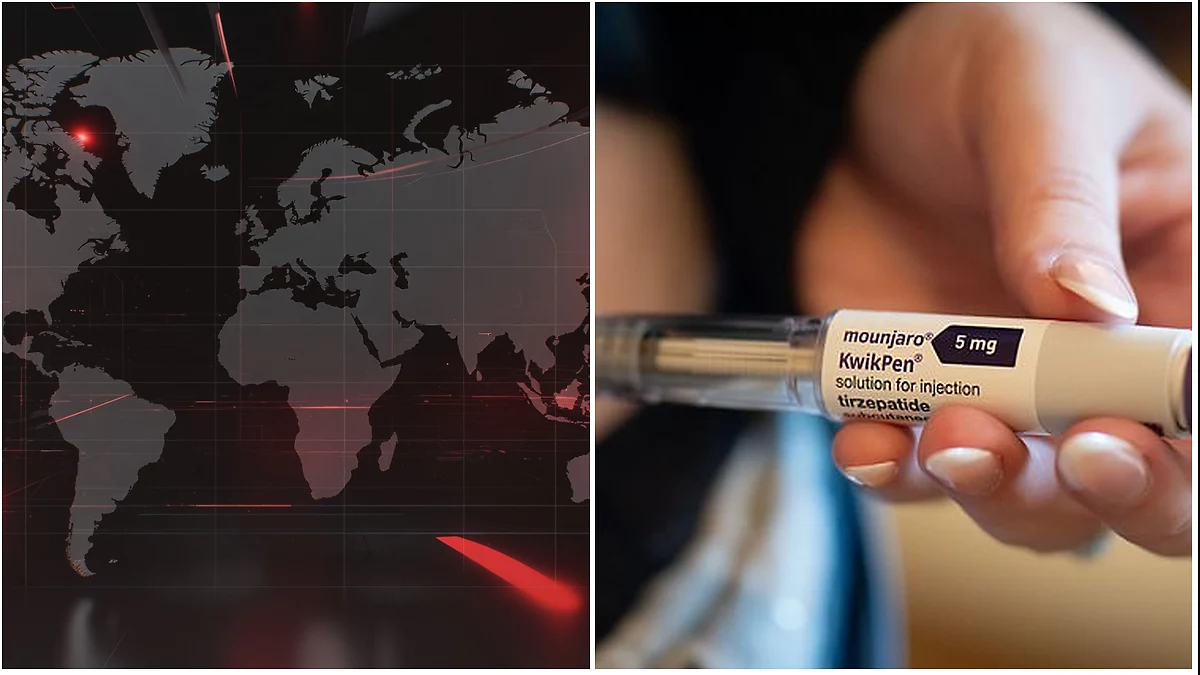

Weight loss injections including Mounjaro and Wegovy have been linked to at least 216 deaths in the UK, the Daily Mail can reveal.
Most of the reported deaths involved people who had taken tirzepatide, the active ingredient in Mounjaro, a slimming jab often described as the “King Kong” of weight loss injections.
Official government data also points to a sharp increase in reported fatalities, with annual deaths associated with the jabs rising by 300 per cent between 2024 and 2025 — from 22 to 94.
Since the earliest recorded figure in 2010, a total of 150,000 adverse reactions have been associated with the drugs, including 18,000 classed as serious or fatal.
Many of the reported side effects involve the gastrointestinal system, including pancreatitis, an inflammation of the pancreas, and gastroparesis, a condition sometimes referred to as stomach paralysis.
The figures, drawn from an analysis of official drug safety records, emerged just days after an inquest heard that 73-year-old British grandmother Caroline Savage died after increasing her dose of Mounjaro.
Her death was attributed to faecal peritonitis, a serious condition in which bacteria enter the abdomen through a hole in the bowel.
The condition can rapidly lead to life-threatening sepsis and is fatal in around half of those who develop it.

Weight loss jabs like Mounjaro and Wegovy have been linked to at least 216 UK deaths
The inquest heard that the slimming injections may increase pressure in the intestines in those with certain underlying conditions, increasing the risk of a hole forming – known medically as perforation.
Experts have warned that patients should be aware of this lesser-known complication.
Penny Ward, a pharmaceutical expert from King’s College London, said that the jabs can cause the gut to work slowly, triggering a back-up of waste products that put pressure on the sensitive bowel lining, increasing the risk of a tear.
She explained that because this is ‘not common’ it is a lesser known potential side effect.
‘Nausea and vomiting are quite common after taking these drugs, but sudden onset of severe abdominal pain is an indication of something more worrisome going on and should be investigated,’ she added.
The Daily Mail has analysed reports made to the UK’s medical safety regulator, the Medicines and Healthcare products Regulatory Agency (MHRA).
These so-called Yellow Card reports are the UK’s system for tracking suspected adverse drug reactions.
They can be submitted from members of the public, healthcare professionals and those who work in the pharmaceutical industry.
Officials stress that they do not prove that a medicine caused a reaction to happen, only that it is suspected by the individual making the report.
Other health conditions may have been at play.
Join the discussion
Should doctors be prescribing powerful weight loss jabs despite the rising number of deaths and severe side effects?
Since tirzepatide was licensed in 2024, a total of 120 deaths linked to the drug have been reported to the MHRA.
The figure for semaglutide – sold under brand names Wegovy and Ozempic – is 59, while liraglutide, known as Saxenda, is associated with 37 fatalities.
Of the 18,000 serious or fatal effects recorded, 11,500 specifically concerned tirzepatide, or Mounjaro, which results in faster and more significant weight loss than the other drugs.
Close to 8,000 of these Mounjaro reports concerned women.
The popular drugs are known as GLP-1 agonists, and work by mimicking appetite-suppressing hormones released by the gut after eating.
Studies show the medications can help patients lose at least a fifth of their body weight within a year.
The death of Ms Savage follows the first British woman to have tirzepatide listed on her death certificate.
Susan McGowan, a 58-year-old nurse from North Lanarkshire, died in September 2024 after taking two low-dose injections of the drug over the course of two weeks.
Official records show that she suffered fatal organ failure, septic shock and pancreatitis, with the use of prescribed tirzepatide listed as a contributing factor.
An MHRA spokesman said: ‘It is important to place these reports in the context of the millions of GLP-1 prescriptions issued in the UK. Reporting volumes can be influenced by increased use, greater awareness of a potential adverse reaction and other factors.
‘As with all medicines, the safety of GLP-1s are kept under continual review including emerging evidence from spontaneous data and scientific publications.
‘On the basis of the current evidence, the benefits of GLP-1 receptor agonists outweigh the potential risks when used in line with their authorised uses.’
Drug manufacturers Novo Nordisk, who make Wegovy, Ozempic and Saxenda, said: ‘Like all medicines, treatments used for chronic conditions can have side effects, and these can vary from person to person.
‘We recommend that any patient experiencing side effects while taking GLP-1 RA medicines report them to their healthcare provider and via the MHRA Yellow Card scheme.’
Eli Lilly, who are behind Mounjaro and Zepbound, said: ‘Patient safety is Lilly’s top priority. We take reports regarding patient safety seriously and actively monitor, evaluate, and report safety information for all our medicines.
‘Regulatory agencies conduct extensive independent assessments of the benefits and risks of every new medicine. Patients taking Mounjaro (tirzepatide), like with any other prescription medicine, may experience adverse events. Adverse events should be reported under the MHRA’s Yellow Card scheme.
‘Mounjaro (tirzepatide) should only be used when prescribed by a healthcare professional. We encourage patients to consult their doctor or other healthcare professional regarding any side effects they may be experiencing and to ensure that they are getting genuine Lilly medicine.’
When approached for comment, NHS England declined to say how many GLP-1 users had been officially hospitalised.


