
U.S. Indo-Pacific Command said Thursday that Washington remains firmly committed to protecting the American homeland and its regional allies after North Korea launched a ballistic missile.
The short-range ballistic missile test came just weeks before the United States and South Korea are set to begin their major annual joint military drills later this month. South Korea’s Joint Chiefs of Staff said it detected a projectile fired from the Wonsan area on North Korea’s east coast at around 5 p.m. local time.
“We are aware of the missile launch and are consulting closely with our allies and partners. Based on current assessments, this event does not pose an immediate threat to U.S. personnel or territory, or to our allies,” U.S. Indo-Pacific Command said in a statement.
The command emphasized that “the United States remains committed to the defense of the U.S. homeland and our allies in the region.”

North Korea test-fired a short-range ballistic missile on Aug. 5, 2026. The Hwasong-11LA ground-to-ground tactical short-range ballistic missile is seen being test-fired at an undisclosed location on April 19, 2026, according to the Korean Central News Agency. (KCNA/Reuters)
Following the launch, South Korea’s military increased surveillance and said it was maintaining close coordination with the United States and Japan, according to the Joint Chiefs of Staff.
Japanese Defense Minister Shinjiro Koizumi said the missile appeared to fall into waters off North Korea’s eastern coast, with no indication that it reached Japanese territory.
Koizumi warned that North Korea’s continued missile activity poses a threat to Japan and the wider region, adding that Tokyo filed a protest with Pyongyang through diplomatic channels in Beijing. South Korea’s presidential national security council also condemned the launch as “a provocation” and a violation of U.N. Security Council resolutions, urging North Korea to halt further such actions.
It was North Korea’s first ballistic missile launch since late June, when it tested a tactical ballistic missile with a “special mission” warhead and other weapons. After watching the testing activities, leader Kim Jong Un said at the time that the military needed to bolster its “deadly and destructive offensive posture.”
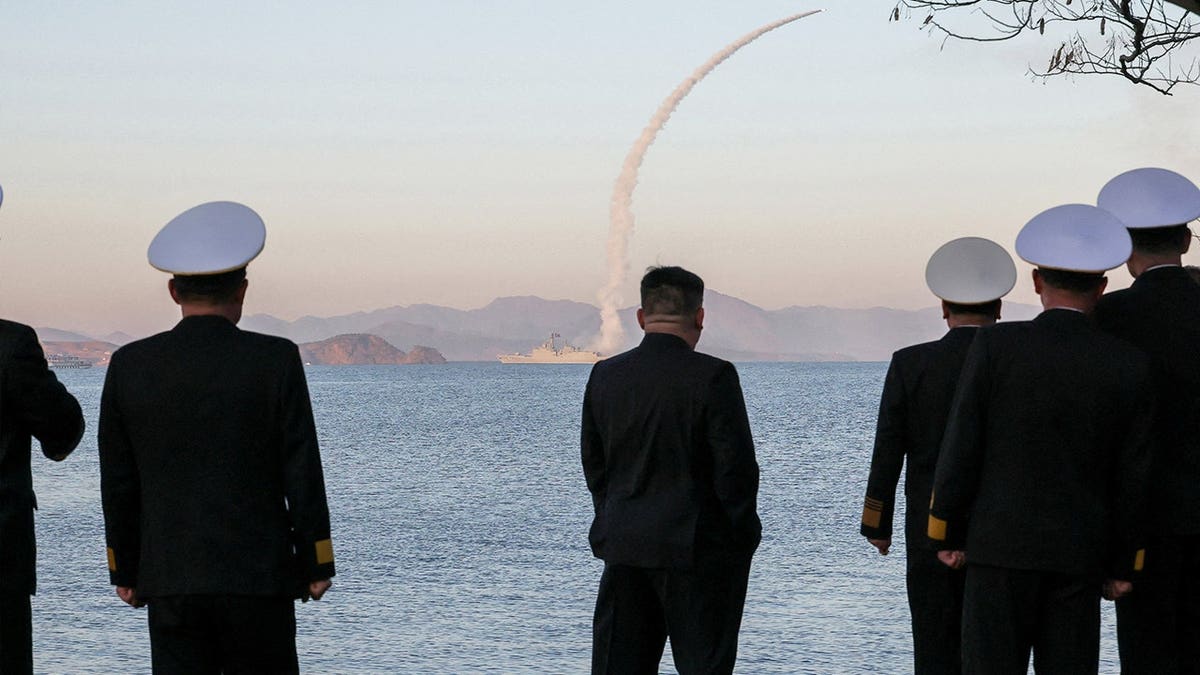
North Korean leader Kim Jong Un observes strategic cruise and anti-warship missiles test-fired from the destroyer Choe Hyon on Sunday, April 12, 2026. (Korean Central News Agency/Reuters)
South Korean and U.S. officials haven’t yet released details about this year’s Ulchi Freedom Shield joint exercise, but the drills are typically held in the latter half of August.
“This annual exercise aims to build understanding between Combined Forces Command, United States Forces Korea, the United Nations Command, and ROK Joint Chiefs of Staff (JCS), ROK government agency, ensuring their ability to fortify the combined defense posture and enhance Alliance response capabilities against a spectrum of security threats,” United States Forces Korea said about the exercises on its website.
“It will feature live, virtual, constructive and field-based training, engaging personnel from the various military services,” it added.
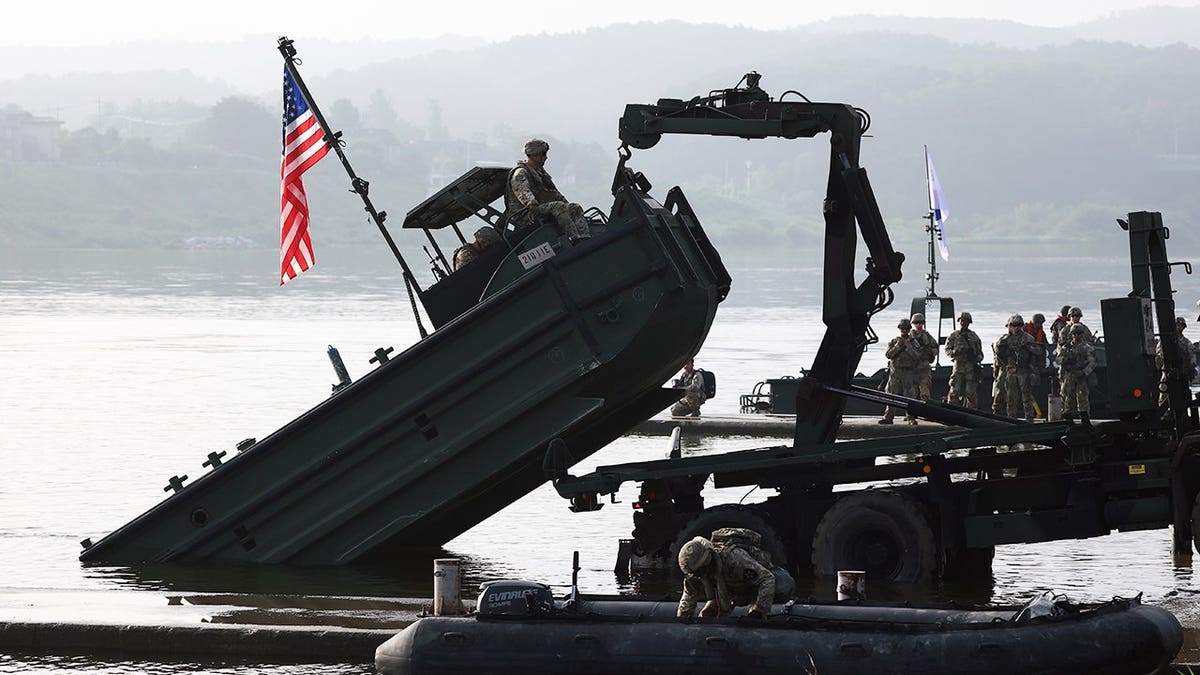
U.S. soldiers from the 2nd Infantry Division participate in a river crossing exercise as part of the Ulchi Freedom Shield exercise on Aug. 27, 2025, in Yeoju-gun, South Korea. The 11-day exercise is a regular joint military exercise between U.S. and South Korean troops to prepare for potential emergencies on the Korean Peninsula. (Getty Images)
U.S. and South Korean officials say the training is defensive in nature, but North Korea says the maneuvers are a practice invasion and often responds with missile tests, according to The Associated Press.