The brother of a prominent Iranian athlete condemned to death after joining protests against the Islamic Republic is making a last-minute plea to President Trump, urging him to help stop the execution before it is too late.
Arash Naghdi says he is hoping Trump will raise his brother’s case in any negotiations with Iran and press the country’s leadership, including the Ayatollah, to halt the sentence.
“Please help us, do everything you can to save my brother,” a visibly emotional Arash Naghdi, 37, told The Post in an interview from Shiraz, Iran.
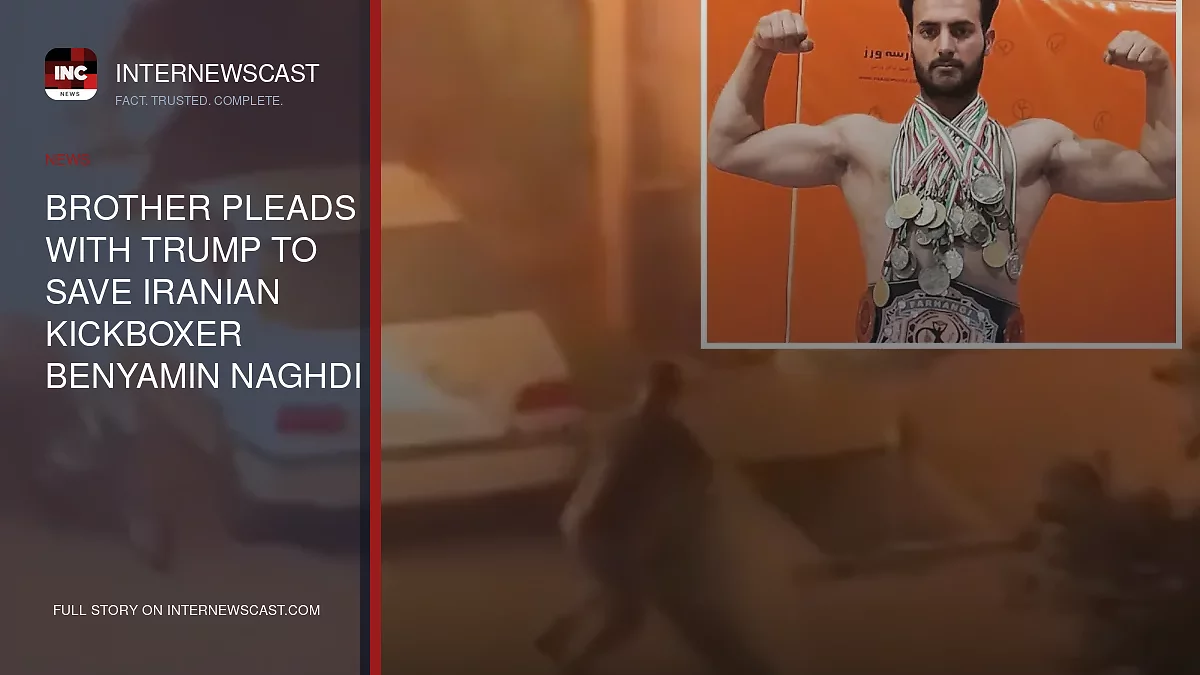
His brother, Benyamin Naghdi, a 26-year-old champion kickboxer and former member of Iran’s national team, was sentenced to death in May after authorities accused him of using a homemade flamethrower to fend off security forces during an anti-regime demonstration in January.
Benyamin was convicted on a charge of “enmity against God,” and Iran’s Supreme Court upheld the death penalty on July 30, leaving his relatives racing against time with few remaining legal avenues.
The family has not been told when the hanging will take place, but they fear the execution could happen at any moment.
“He’s only 26 years old, he has his whole life ahead of him, he deserves the chance to live, to dream, to build a future,” Arash said, fighting back tears.
Arash said he has received threatening calls from blocked numbers, but despite the risk of being detained himself, he believes he has no choice but to speak publicly in hopes of pushing the United States and the wider international community to intervene.
“My plea is simple and heartfelt: please help my brother, please save his life.”
Arash said he hasn’t been allowed to visit his brother in prison but his parents were allowed a “final goodbye” two months ago — part of psychological torture the regime imposes on families of the convicted.
His father described Benyamin as an emaciated ghost of his former self.
“I’m convinced he was tortured, he’s lost all hope . . . he called our cousin and threatened to harm himself in an attempt to delay his execution,” Arash said, his voice trembling with rage and terror.
The Islamic regime has executed least 56 people on trumped-up charges since March — 27 of whom were arrested during the January protests.
The president in January vowed the US would take “very strong action” against the Islamic Republic should they hang protesters — and stated the regime called off executions at his behest.
READ MORE: Inside the Million-Dollar Empire of YouTube Icons Dan and Phil
But the nation on Aug. 3 executed political prisoners Omid Behzad and Pouria Safvat after they were convicted of spying for Israel.
The Iranian security forces turned the January protests into a bloodbath, slaughtering at least 52,000 demonstrators, according to figures cited by Trump.
Arash said he is convinced that his brother was trying to protect himself and his fellow protesters from security forces who are seen chasing him down on motorcycles in a horrifying video.
“He acted in self defense,” he said.
The regime publicly hanged two protesters in Isfahan in late July and broadcast footage of their executions inside the prison, causing Benyamin’s mental state to spiral, Arash said.
His brother was held in solitary confinement for months, and only transferred to general population less than a month ago after going on a 10-day long hunger strike.
Benyamin had put his athletic aspirations aside to support his family after his father’s health deteriorated due to chemical weapons exposure from the Iran-Iraq War.
He took on whatever jobs he could to help provide for his parents and teenage sister, working as a mechanic, carpenter, fruit vendor and tour guide.
Rapid inflation — fueled by decades of political and economic mismanagement by the mullahs and US sanctions — made saving money nearly impossible for the young kickboxer.
“Benyamin is the backbone of our family, he was always looking out for everyone else . . . even from prison he calls me to tell me to take care of our mother,” said Arash.
His brother was never a political person, Arash said, but his family’s economic struggles drove him to join the protest movement.
“He went because of the hardships he was living through, The feeling that he had no future, he couldn’t make ends meet or provide money for his family,” Arash said.
Arash has had to step in as breadwinner — driving a truck all day and night — while his parents desperately try to save his brother’s life.
“My ailing father spends his days going from courthouse to police station, he does all this with no resources, borrowing money wherever he can,” Arash said.
His heartbroken mother cries every night, and not a minute goes by where she doesn’t mention her son, he said.
“In Iran we have a saying, ‘One eye is full of tears, the other is full of blood” — this is our mother,” he said.