
Survivors who spent roughly six months in the grip of jihadi abductors in Nigeria have begun recounting the fear, deprivation and uncertainty they endured, speaking Friday after Nigerian authorities described their release as part of the largest rescue mission in the nation’s history.
Officials said Nigerian security forces freed at least 308 people from captivity over the past week, most of them from two separate groups. Among those rescued were 163 people seized from the Woro community in Kwara State during a Feb. 3 assault, an attack in which the militants also killed 160 residents of the village.
Speaking to The Associated Press, some of the freed captives said they believed they were targeted because they resisted the militants’ demands to embrace their extremist religious ideology.
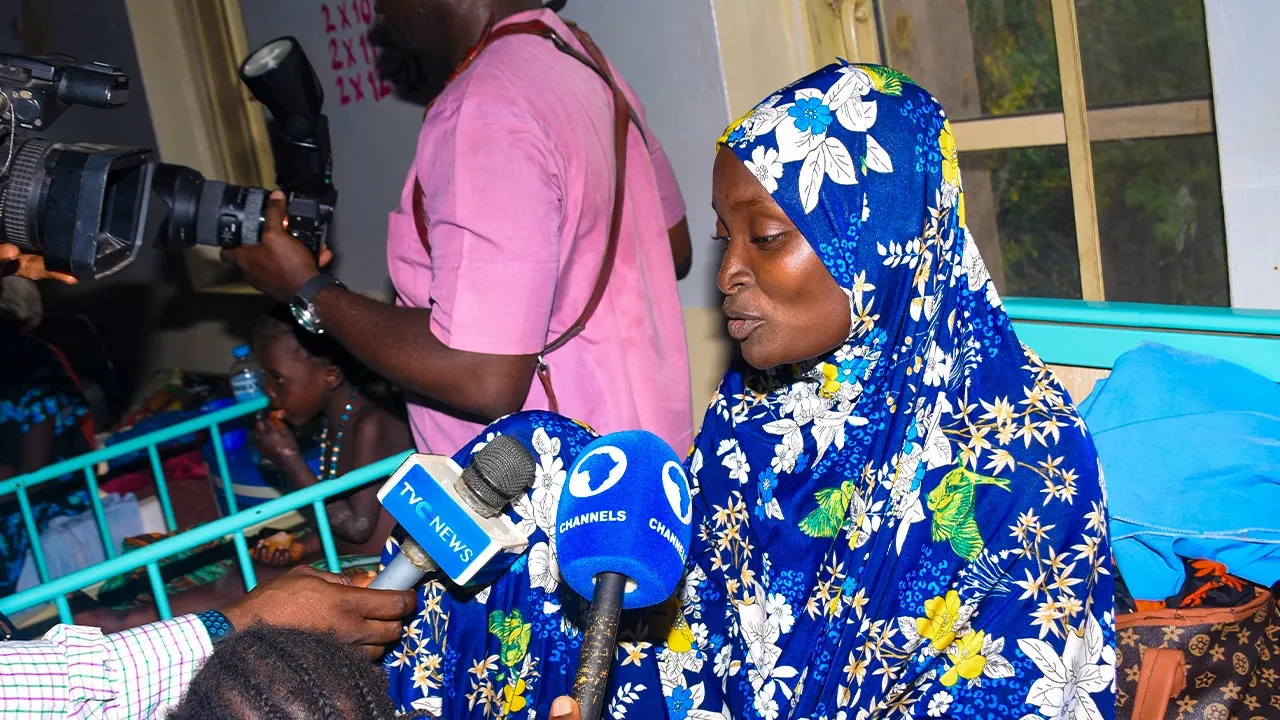
Hauwa Saliu, one of the women rescued, said the kidnappers repeatedly questioned the hostages about whether they had “accepted jihad.”
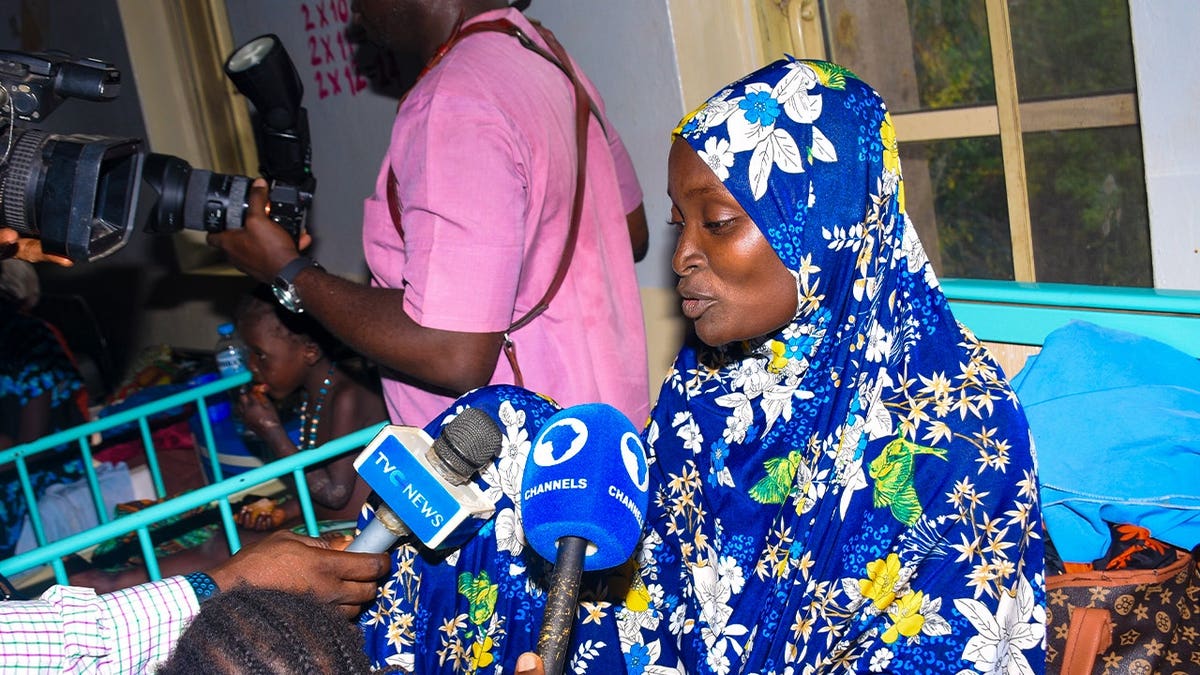
Hauwa Saliu, one of the people rescued by Nigerian forces this week nearly six months after being abducted by militants in February, speaks with journalists while receiving medical care at a hospital in Ilorin, Nigeria, Friday, Aug. 7, 2026. (AP Photo/Abubakar Khadijat)
“We prayed to God to help us go back home, but it never really crossed our minds that we were going to go back home,” she told the news agency.
Another survivor, Amira Saliu, described a brutal existence for the women and children held captive, saying they were kept in a forested area close to a river and ordered to extinguish fires and hide whenever helicopters could be heard overhead.
Saliu, who works as a nurse, said she also helped deliver 10 babies while in captivity, doing so without medical supplies, proper equipment or sterile gloves.
“I had no choice but to use my bare hands,” she told the outlet.
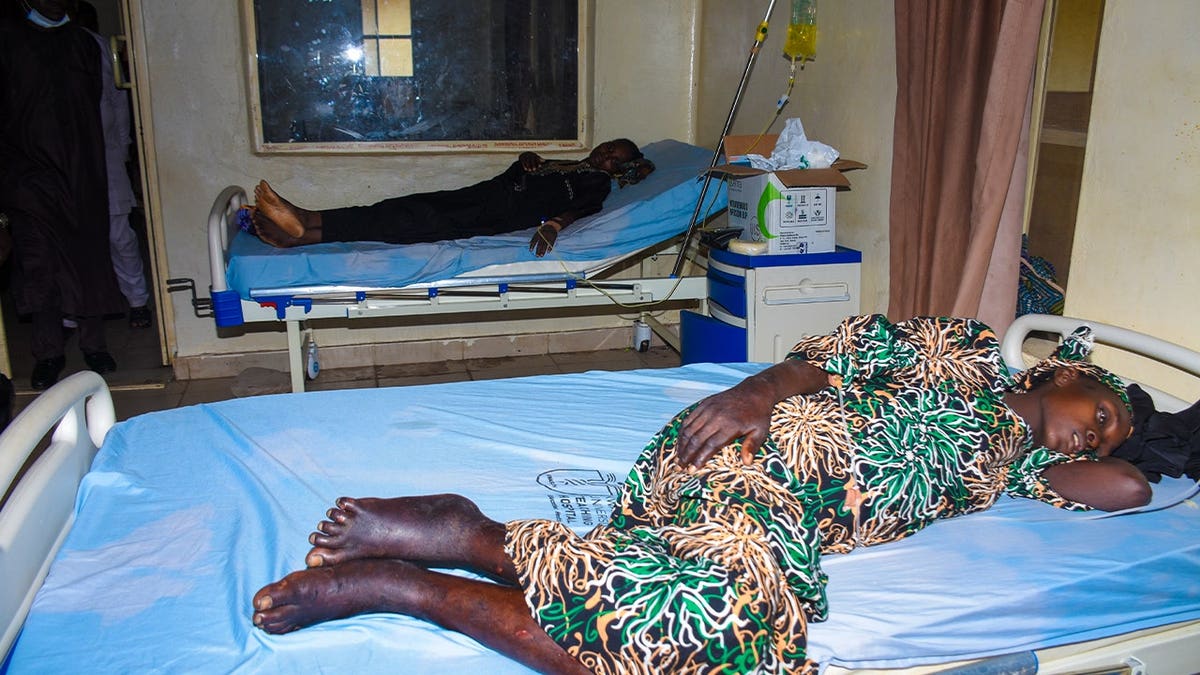
Women who were rescued after being held in a forest after they were abducted from the Woro community by gunmen in February receive medical attention at a hospital in Ilorin, Nigeria, Friday, Aug. 7, 2026. (AP Photo/Abubakar Khadijat)
Mary Ishaya, 44, told the outlet that the captives often went days without food and had to bury other captives who had died.
“I still cannot find the right words to describe what has happened to us. We saw death and suffering,” she said.

A woman who was rescued after being held in a forest after being abducted from the Woro community by gunmen in February receives medical attention at a hospital in Ilorin, Nigeria, Friday, Aug. 7, 2026. (AP Photo/Abubakar Khadijat)
The governor of Kwara State, AbdulRahman AbdulRasaq, told reporters during a news conference that 46 victims were being treated at a hospital.
“This is indeed, indeed a very sad situation. We’ve not yet come to terms with it. We’re still assessing the situation. As you can see, it’s just kids … children and women that are here today,” he said. “It’s truly a shame that this has happened.”
The incident highlights the ongoing tensions between Nigeria’s militant Islamic insurgency in the north and the country’s large Christian population, who make up roughly 45% of Nigeria’s citizens.
On Christmas Day, President Donald Trump, in coordination with Nigeria’s government, authorized precision missile strikes on Islamic State-affiliated groups in northern Nigeria, citing the need to protect the country’s Christians.
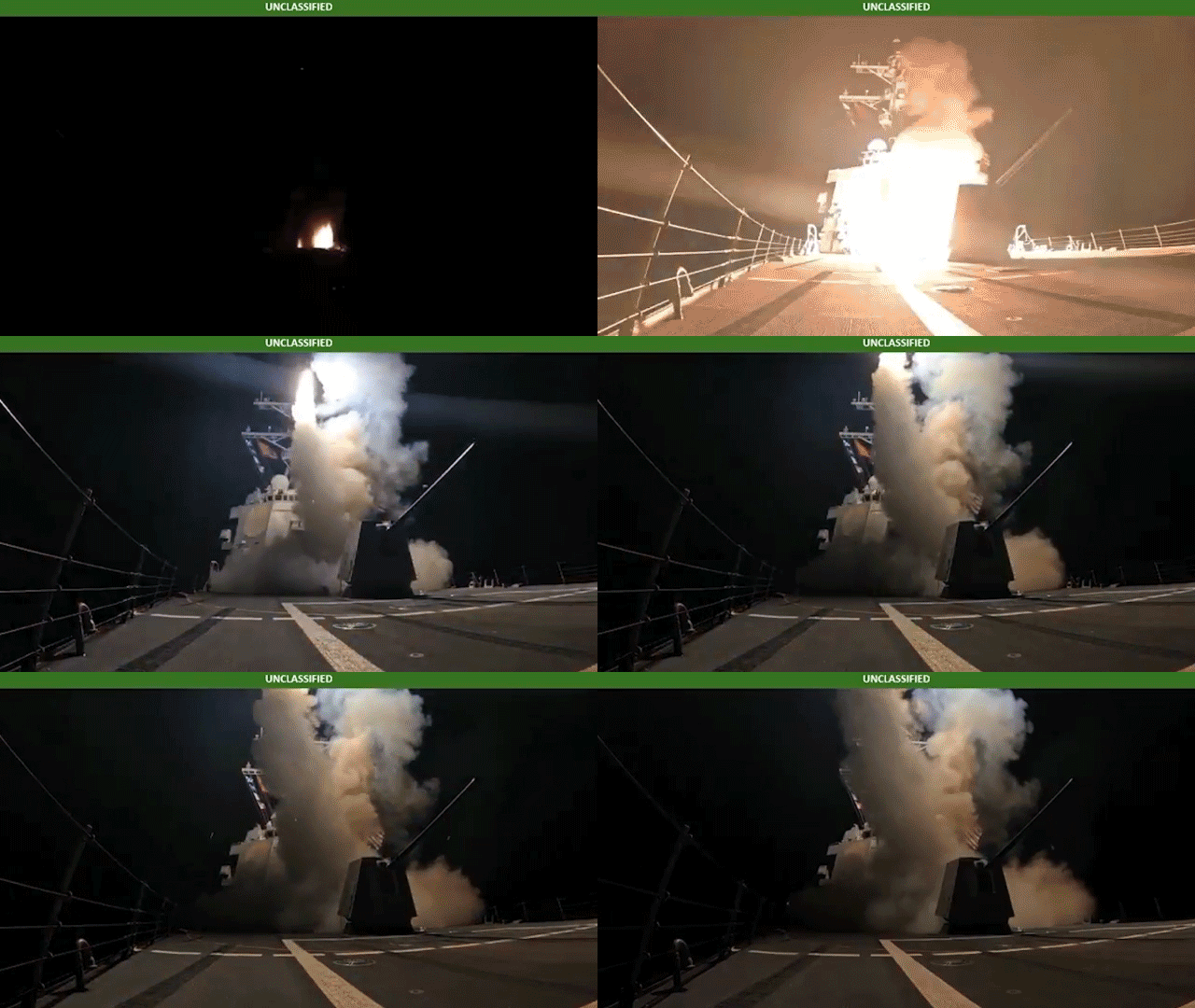
US launches strike against ISIS in Nigeria. (Department of War via X)
The U.S. followed up in May, launching coordinated joint military action that reportedly resulted in the death of senior Islamic State leader Abu Bakr al-Mainuk.