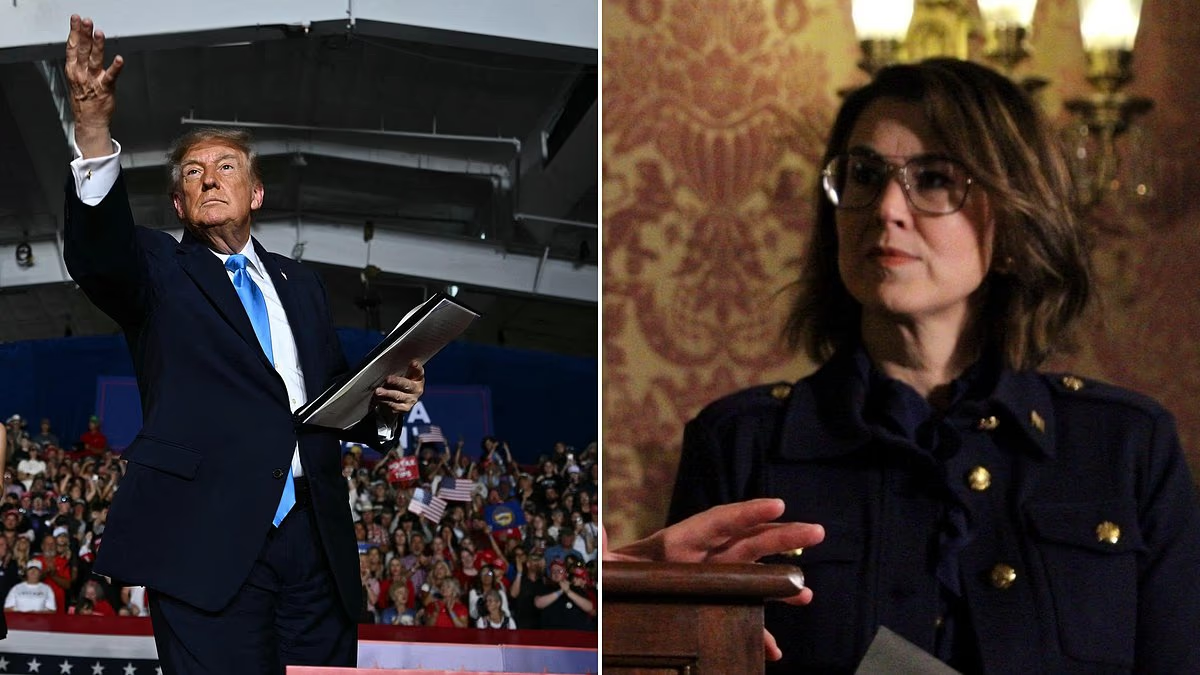

A prominent Republican is warning that the biggest threats to the upcoming midterm elections may be coming from “within” the U.S. government, putting her at odds with President Donald Trump and his allies as Election Day approaches.
Utah Lieutenant Governor Deidre Henderson laid out her concerns during a candid interview with CBS News’ 60 Minutes.
She said the pressure and threats linked to Trump administration officials are unlike anything she has encountered during her nine years overseeing elections in Utah.
“In the past two elections that I oversaw as lieutenant governor, the threats were all external,” Henderson told CBS News correspondent Leslie Stahl. “Non-state actors, cybersecurity threats and other things.”
“But now we also have threats coming from within our own government,” she added.
Utah is among the states that have pushed back against the Trump administration’s attempts to obtain statewide voter data and impose new restrictions on mail-in voting.
Henderson’s position is especially notable because she oversees elections in Utah, a reliably Republican state that backed Trump in the last election by a commanding 20-point margin.

President Donald Trump speaks at a campaign rally in Nebraska. Since taking office last January, Trump has suggested roughly 150 times that the nation’s elections cannot be trusted

Utah Lieutenant Governor Deidre Henderson appears at a press conference in Salt Lake City. She has directly challenged Trump’s claims about election fraud

Acting Deputy Attorney General Trent McCotter speaks at a September press conference at the Justice Department. McCotter said a Utah election worker was indicted for allegedly discarding ballots
Last month, Justice Department officials informed Henderson that she was under investigation and could face jail time if any noncitizens voted in Utah.
“You are toe-to-toe with the president of the United States,” Stahl told her. “It’s a big thing you’re doing.”
“I think this is an important thing for me to do—holding these guardrails, holding the line,” Henderson replied. “Someone has to.”
Her comments come as Trump and the Justice Department intensify their campaign against alleged voter fraud and noncitizen voting, even though broad evidence shows such incidents are exceedingly uncommon.
In Utah, Henderson said state audits identified only 52 “questionable” voting incidents among more than 2 million ballots cast—a rate Stahl described as just “two thousandths of one percent.”
This is not the first clash between Henderson, a Republican, and the Trump administration.

Demonstrators take part in a “No Kings” protest at the Utah State Capitol in Salt Lake City

Harmeet Dhillon, head of the Justice Department’s Civil Rights Division, speaks at a TPUSA event in 2022. Dhillon is helping direct the Trump administration’s voting crackdown
Last year, she declined to provide Utah’s “voter registration list” to the Justice Department, joining 28 other states that refused and were later sued by Trump’s DOJ.
The Justice Department has not prevailed in any of those lawsuits.
‘They wanted things that we typically are required by law to keep private,’ Henderson said of DOJ’s requests, which included information such as voters’ social security numbers, full dates of birth, and drivers’ license numbers.
‘We just weren’t given very good answers and we were concerned about what they would do with that data,’ Henderson said.
Trump, for his part, has signed two executive orders aimed at tightening voter registration and attempted to federalize mail-in ballots – sparking concerns from state leaders, who argue these actions run afoul of the US Constitution.


