
As of Sunday, neither system was an immediate threat to the United States.
WASHINGTON — The National Hurricane Center is keeping watch on two disturbances in the Atlantic Ocean that have some potential to develop into tropical systems.
So far, Atlantic hurricane season activity has been running below average, according to a new report from the National Oceanic and Atmospheric Administration.
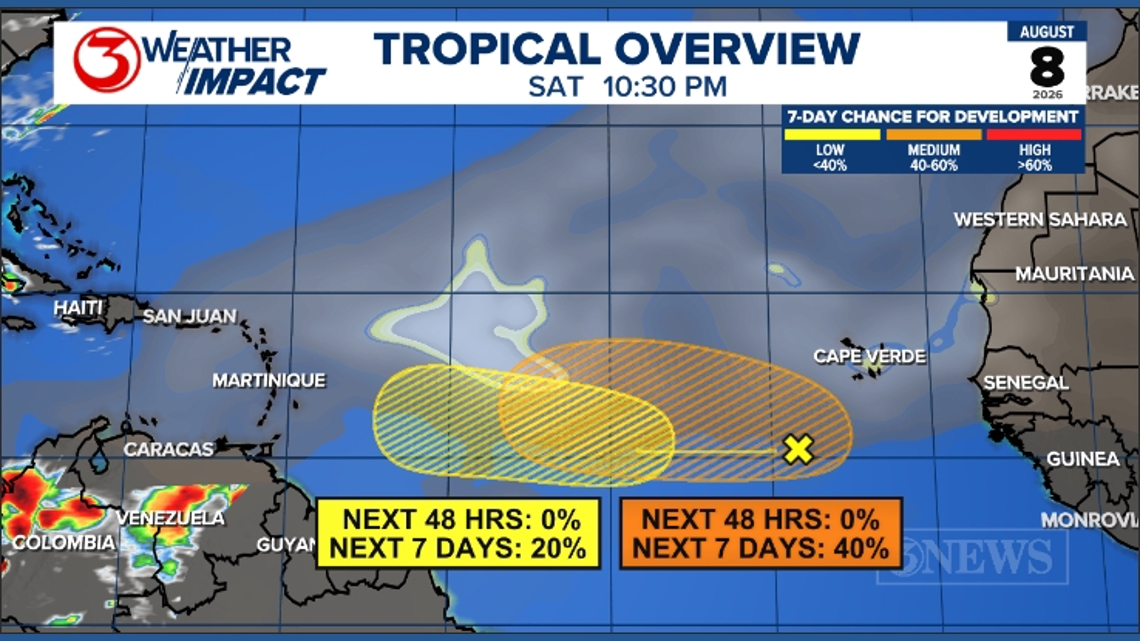
The agency said Saturday that both tropical waves face a narrow window for development, with strong upper-level winds nearby limiting their chances. Forecasters rated the likelihood of tropical cyclone formation as low for each disturbance.


The first tropical wave, which also carried a low development chance, was located a few hundred miles southwest of the Cabo Verde Islands as of Saturday evening. It was forecast to continue moving west across the central Atlantic.
The second wave had a medium to low chance of development over the next several days and was expected to move off the west coast of Africa on Tuesday. There’s plenty of Saharan dust out there, which may make it difficult for it to develop, according to the weather team at WWL in Louisiana. This will be a long-term area to monitor.
The weather agency said the second wave could become more organized as it travels west, with a roughly 40 percent chance of cyclone formation in the next seven days.
Neither disturbance poses an immediate threat to the U.S. as of Sunday, according to Florida meteorologists at First Coast News in Jacksonville and 10 Tampa Bay News in Tampa.
It’s common for the Tropics to become more in August, with Sept. 10 marking the traditional peak of hurricane season. This year, storms will be moving into a more hostile environment thanks to a strong El Niño in the Pacific.
El Niño tends to send shear over the Atlantic and hampers the ability for tropical systems to form and get stronger. We are expecting a “below average” year for tropical activity in the tropical Atlantic.
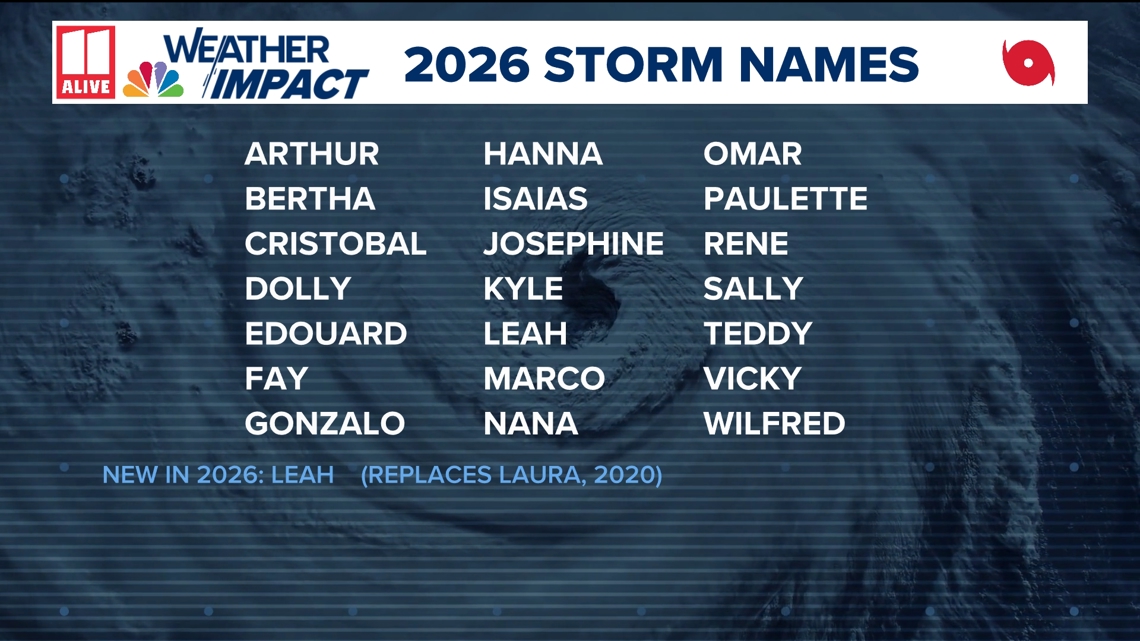
Once storms form in the Atlantic and reach tropical storm strength, they get a name. The World Meteorological Organization keeps six lists of names on rotation. This year, we will see the same list of names from 2020. The only new name will be Leah.
So far, we’ve had two named storms this hurricane season. Arthur and Bertha were both tropical storms.