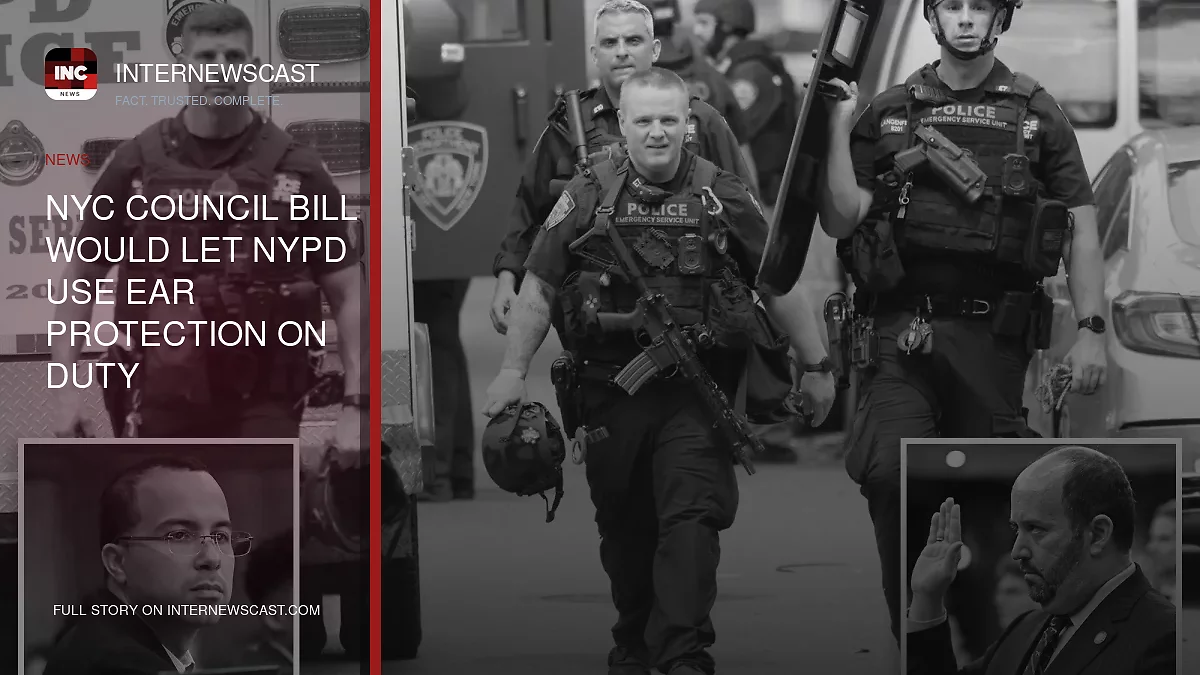

Life on New York City’s streets can be deafening — especially for officers working the beat.
City lawmakers are considering a new measure that would give NYPD officers access to electronic hearing protection aimed at shielding them from the relentless noise of the “very loud” Big Apple.
The proposal, introduced Thursday by Republican Minority Leader David Carr and Council Public Safety Chair Oswald Feliz, would launch a one-year NYPD pilot program supplying ear-protection devices capable of cutting noise exposure by at least 25 decibels.
“New York is a very loud city and our police officers are exposed to these noises constantly, whether it’s blaring sirens, car horns or even people screaming in their ears,” Carr told The Post.
Carr said the technology would serve both officers and the public, adding that the devices would help safeguard “the hearing of the people who protect us.”
Research has found that police officers nationwide experience hearing loss at higher rates than the general population, with more than one-third of officers reporting some degree of impairment.
Unlike standard earplugs, many digital in-ear devices are designed to preserve normal conversation and everyday sounds while automatically reducing dangerous bursts of noise, including gunfire.
Under the pilot program, the NYPD hearing-protection equipment would be made available in at least one precinct in every borough and distributed on a first-come, first-served basis to officers whose duties are not limited to indoor assignments.
“Police officers work long hours to keep New Yorkers safe. Too often, they deal with loud and prolonged noise that can have negative effects on their hearing,” Feliz (D-Bronx) told The Post.
“We must make every effort to ensure they are able to carry out their duties without having to worry about the long term impact on their health and well-being,” he continued.
The NYPD would be required to provide officers with information about hearing loss and release a report within two months of the pilot’s conclusion assessing the program and whether it should be expanded.
Ohio has a similar program where local departments can submit requests for the protective devices paid for by the state.
The NYPD and the New York City Police Benevolence Association did not immediately respond to requests for comment.


