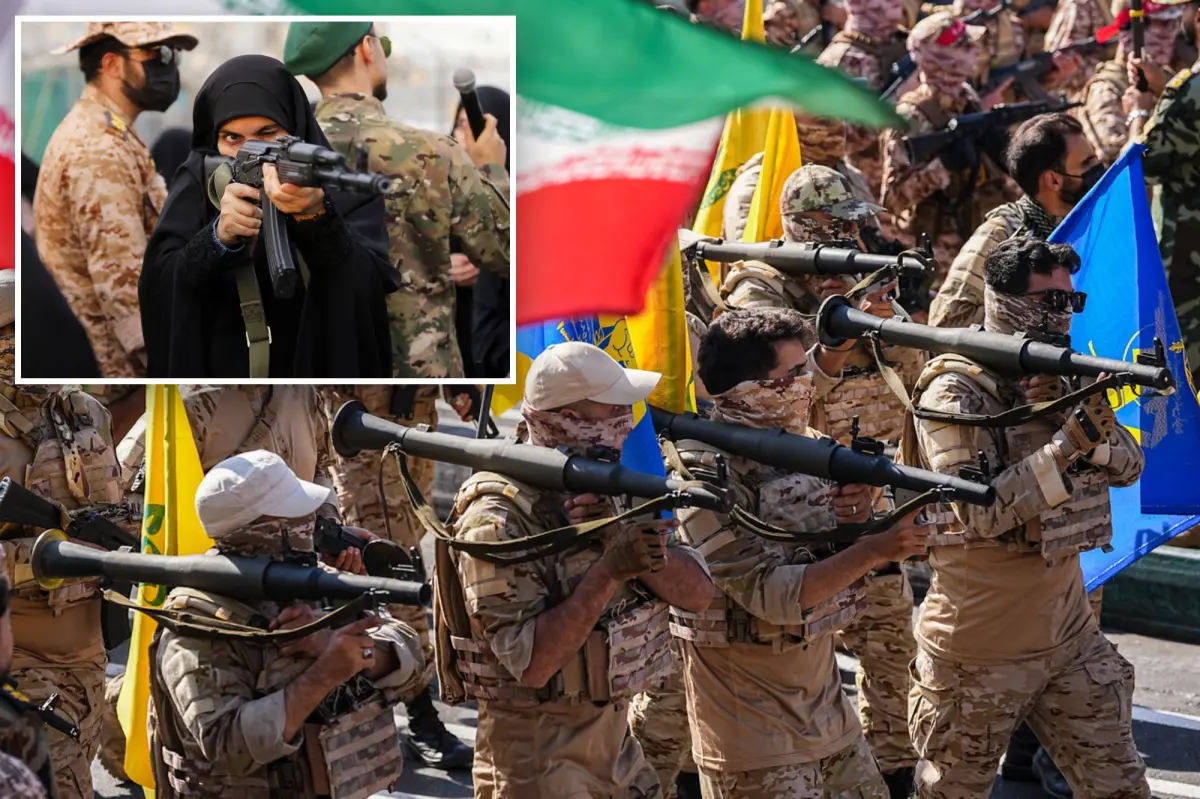

Iran is strengthening its defenses and weighing possible troop deployments into neighboring countries as it prepares for the prospect of renewed US attacks after next month’s midterm elections.
President Trump has suggested that large-scale strikes against the Islamic Republic could resume after the Nov. 3 elections. Iranian officials, meanwhile, have indicated that threatening to invade Persian Gulf neighbors could serve as a deterrent.
Mohsen Rezaei, secretary of Iran’s Supreme National Security Council, said Sunday that the United Arab Emirates—one of Tehran’s favored targets—could be considered for further retaliation.
Iran has warned regional governments, both publicly and through private channels, that it would expand the conflict if the US resumes its attacks, the Wall Street Journal reported.
The country is also reportedly massing troops near its borders.
Iran, home to roughly 90 million people, shares a long border with Iraq and has maintained significant influence among the country’s Shiite Arab population.
In May, Kuwait—located just 20 miles from Iran across a narrow stretch of Iraq—accused Iran’s Islamic Revolutionary Guard Corps of sending several commandos to seize Bubiyan Island. The incident reportedly led to a firefight involving Kuwaiti troops.
Rezaei defended the prospect of striking the UAE, accusing the country of providing direct assistance to US Central Command, which directs American military operations across the region.
EXPLORE MORE: Ex-boyfriend admits killing woman and keeping her severed head
Sources told the outlet that Saudi Arabia’s oil infrastructure was among the principal targets threatened by Tehran. Those facilities are already facing attacks from Iran-backed Houthi rebels in Yemen.
Tehran has also told mediators that it would intensify attacks on US personnel throughout the region. Iranian officials have gone so far as to threaten American warships involved in enforcing the naval blockade against Iran.
Previous Iranian attacks in the region have targeted US forces in the UAE, Kuwait, Jordan, Saudi Arabia, Bahrain and Oman.
Rezaei further suggested that regional data centers and undersea internet cables could be included in any retaliatory campaign.
Military analysts say Iran has restored and upgraded its missile and drone arsenals. They point to a surge in attacks on vessels near the Strait of Hormuz this month as evidence of those capabilities.
Satellite images taken in recent weeks show Iran reinforcing military and nuclear facilities, along with areas near its borders, as the regime prepares for the possibility of a return to full-scale war.
According to the Washington-based Institute for Science and International Security, construction has accelerated at Iran’s notorious Pickaxe Mountain and Natanz nuclear sites. The work includes makeshift earthen barriers designed to hinder a ground assault.


