
A Syrian court on Tuesday sentenced former President Bashar Assad and his younger brother Maher Assad to death in absentia, finding them guilty of crimes against humanity and war crimes tied to Syria’s 14-year conflict, which killed about half a million people.
The rulings, handed down by the Fourth Criminal Court in Damascus, mark the first convictions of Assad or members of his inner circle since the family’s five-decade hold on power ended 20 months ago.
“Bashar Assad used state agencies to commit war crimes and crimes against humanity,” Judge Fakhareddine al-Aryan said during a hearing broadcast live on state television.
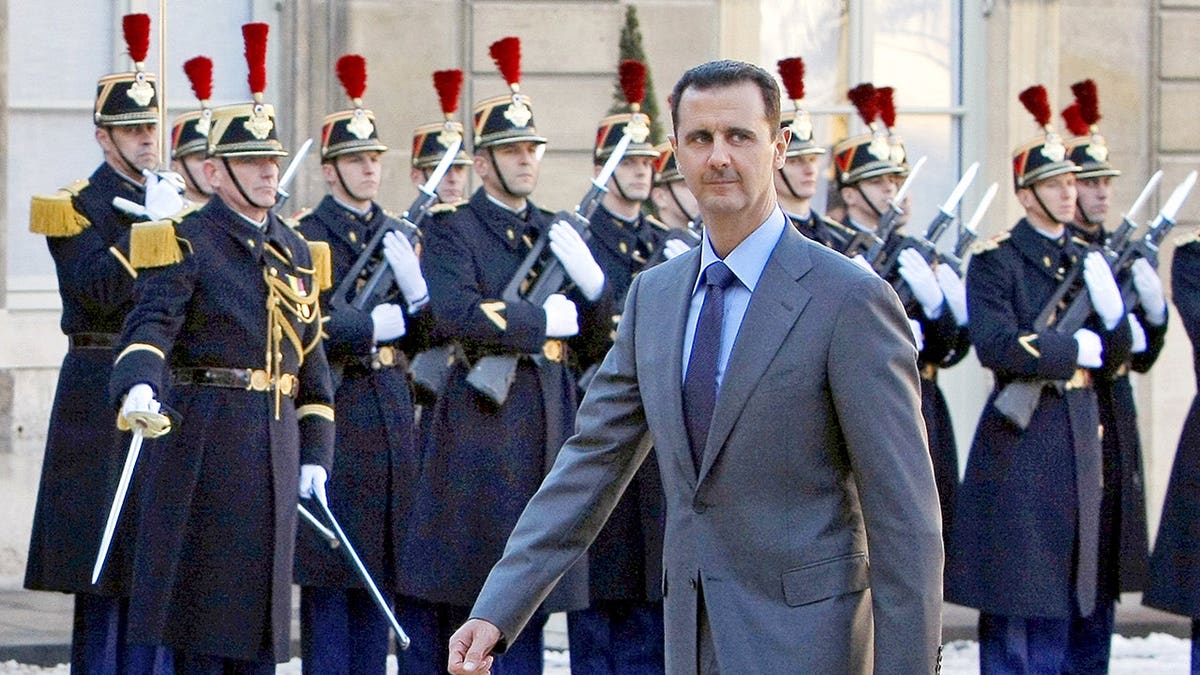
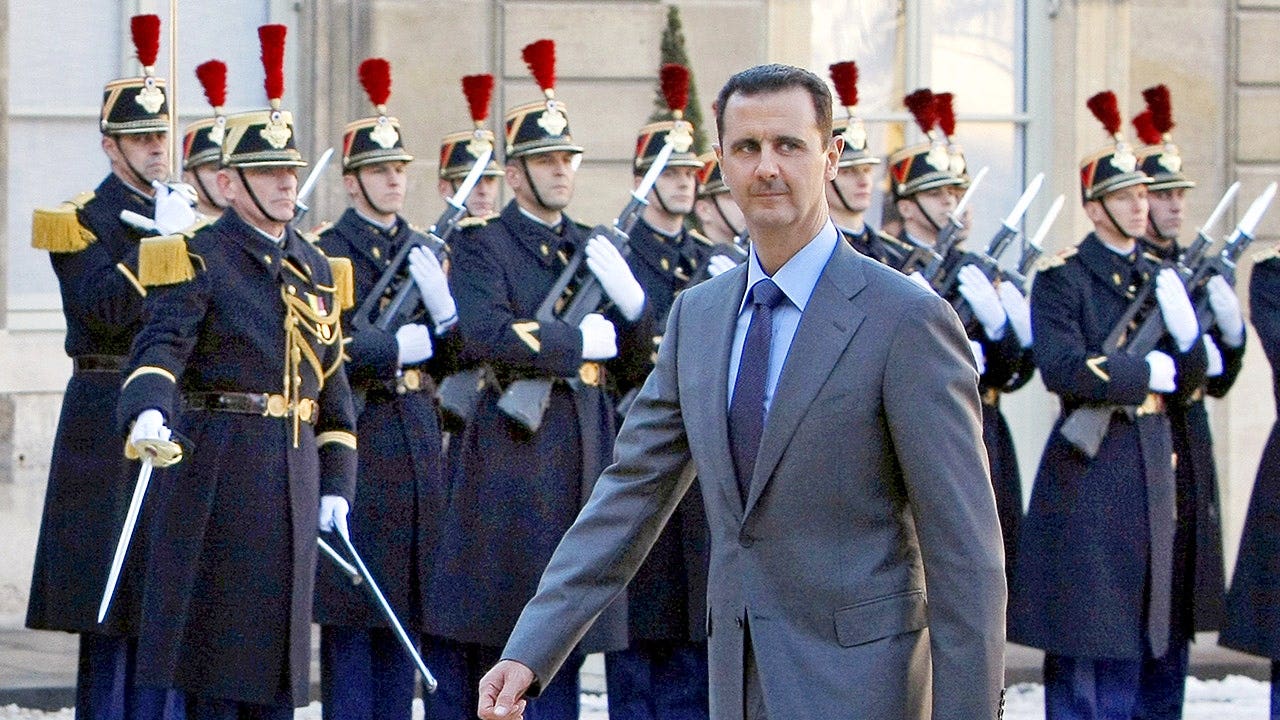
In this Dec. 9, 2010 file photo, Syrian President Bashar al-Assad arrives at the Elysee Palace in Paris for his meeting with French President Nicolas Sarkozy. (AP Photo/Remy de la Mauviniere)
Assad’s maternal cousin, Atef Najib, was also sentenced to death in the case. Najib was convicted of directing a crackdown in the southern province of Daraa, an operation that helped ignite the uprising that later spiraled into civil war.
Under heavy security, Najib appeared in a cage wearing a prisoner’s uniform as the judge read the verdict. Outside the courthouse in central Damascus, crowds gathered to hear the decision.
Bashar Assad and Maher Assad fled to Russia after the government collapsed in December 2024 and were granted political asylum. Syria’s new authorities have requested that Moscow extradite them.
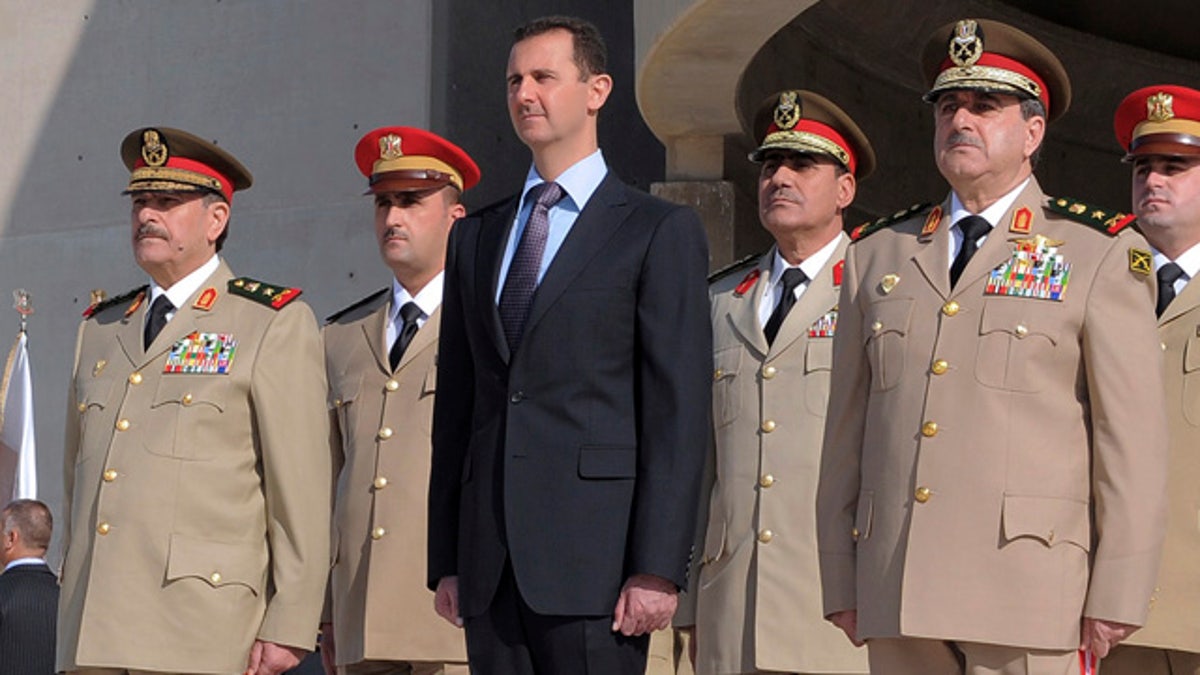
Syrian President Bashar Assad, center, stands next to Syrian Defense Minister Gen. Dawoud Rajha, right, and Chief of Staff Gen. Fahed al-Jasem el-Freij, left, during a ceremony to mark the 38th anniversary of the October 1973 Arab-Israeli war, in Damascus, Syria. ( )
Najib, who was sanctioned by the U.S. Department of the Treasury in April 2011, was later detained and is one of the highest-ranking officials to be put on trial.
Najib is a former Syrian army brigadier general who was head of the Political Security Branch in southern Syria’s Daraa province under Assad in 2011.
During his tenure, more than a dozen teenagers who scrawled anti-government graffiti on a school wall in Daraa were arrested and tortured. The case became a catalyst for mass protests against the repressive policies of Assad’s security forces.
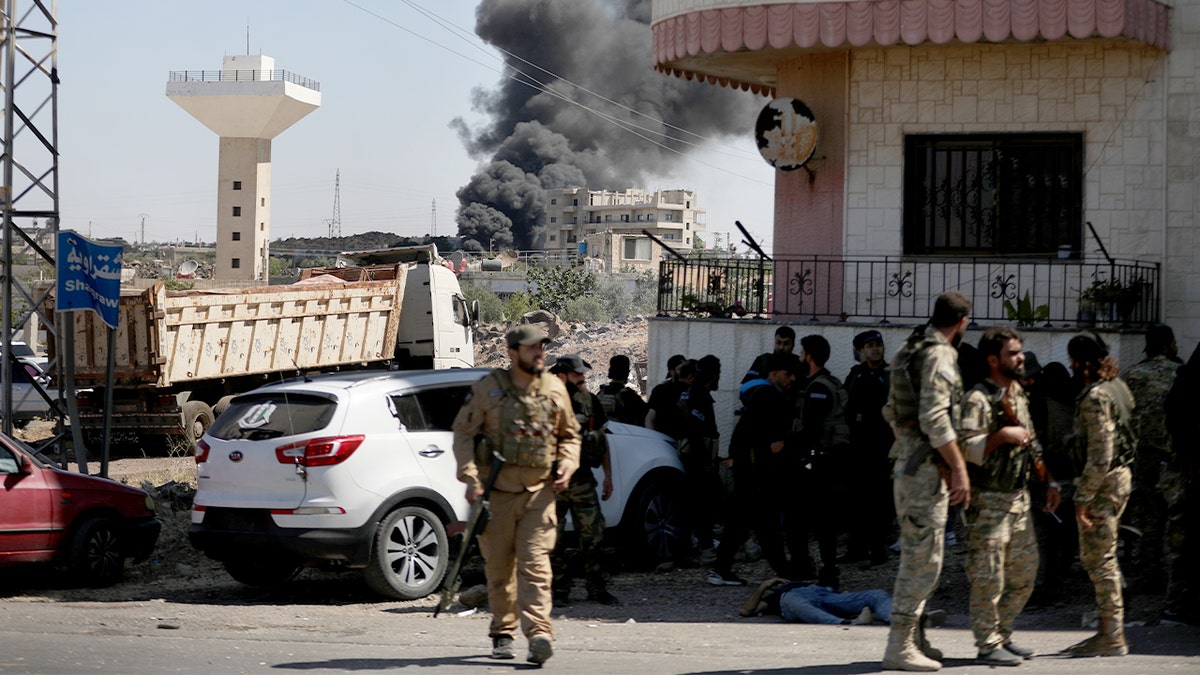
Syrian soldiers assemble near Sweida on July 15, 2025, as black smoke rises following deadly sectarian clashes in the southern province. (Stringer/Getty Images)
The protests were met by a brutal government crackdown and spiraled into a 14-year civil war that ended with Assad’s ouster in a lightning rebel offensive.
Maher Assad was a former commander of the Syrian military’s 4th Armored Division — which Syrian opposition activists have accused of killings, torture, extortion and drug trafficking, in addition to running its own detention centers.