
If the price of steak or ground beef has already been giving you sticker shock, the latest signal from the meat industry suggests the pressure on beef costs is not easing anytime soon.
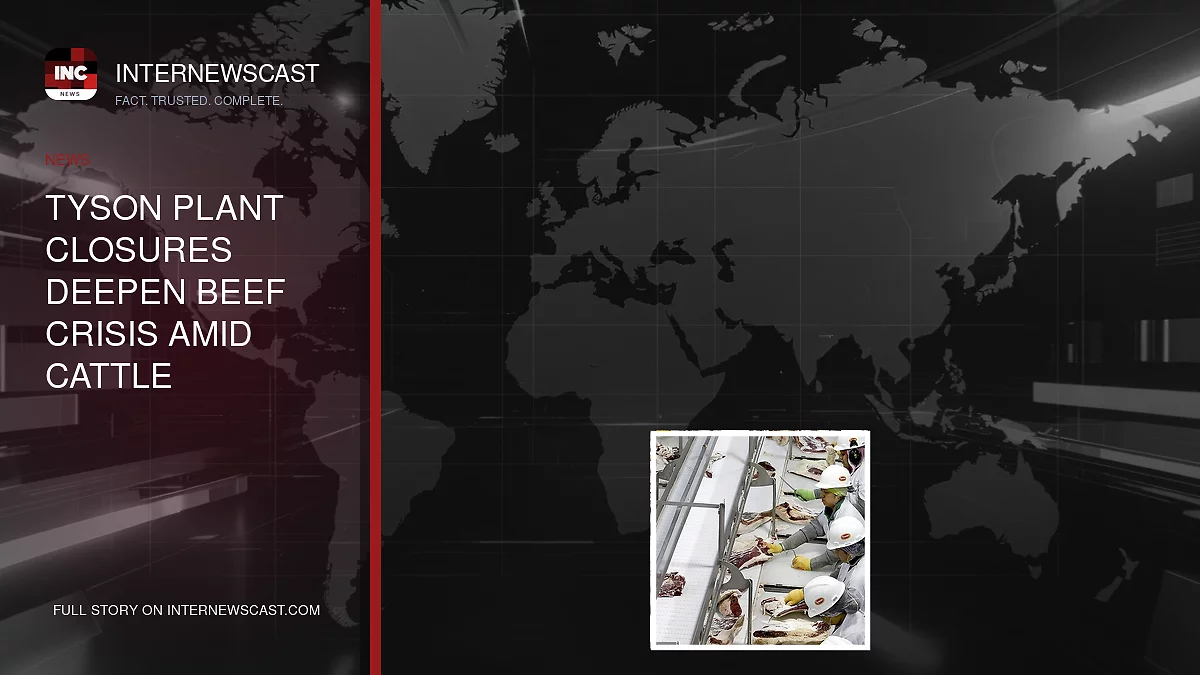
Tyson Foods, among the largest meat processors in the United States, plans to close or sell three beef facilities as a historic cattle shortage continues to strain the sector.
The company said it will shut down operations at its beef facility in Joslin, Illinois, and its case-ready beef facility in Eagle Mountain, Utah. It is also putting its beef plant in Pasco, Washington, on the market.
The decision reduces Tyson’s beef-processing footprint as the company contends with sharply higher cattle prices and growing financial pressure in the business.
Tyson said production will be moved to other sites, and the company expects its overall cattle slaughter levels to remain roughly the same even with fewer facilities in operation.
For shoppers, however, the central question is what this means for beef prices that are already hovering at painful levels.
The US cattle herd has dropped to its lowest point in decades, tightening supply and driving up the price meat processors pay for cattle. Those higher costs are increasingly being passed along through the supply chain.
Tyson has cautioned that its beef unit could record an adjusted operating loss of between $500 million and $650 million in fiscal 2026.

Tyson Foods, one of America’s biggest meat producers, is closing or selling three of its beef facilities as an unprecedented shortage of cattle continues to hammer the industry

The US cattle herd has fallen to its lowest level in decades, creating a supply crunch that has pushed up the cost of cattle for meat processors. And those costs are being passed down the supply chain
Meanwhile, the average retail price of beef has been hitting records. USDA data shows just how much pressure is building in the cattle market, with its July outlook forecasting a 2026 slaughter-steer price of around $251.10 per hundredweight, up from its previous forecast.
That is bad news for shoppers who are already finding that beef is becoming something of a luxury purchase.
The average retail price of lean and extra-lean ground beef reached $8.65 a pound in June, according to federal data.
On Reddit, consumers have been particularly vocal about the disconnect.
One commenter in a discussion about the Eagle Mountain closure said they had recently seen ordinary ground beef selling for $12 a pound, adding that it was costing what New York strip steak used to cost several years ago.
Another shopper said they had almost stopped buying beef altogether because of the prices.
‘I’d probably buy steaks regularly, but not at these prices,’ they wrote.
That sentiment could become increasingly familiar if cattle supplies remain tight. The problem has been building for years.

Tyson says it will shift production to other facilities, meaning it expects to maintain a similar level of cattle slaughter overall despite having fewer plants
Drought has damaged grazing land across parts of the western US, making it more difficult and expensive for ranchers to maintain herds.
At the same time, many ranchers have been reluctant to rebuild their cattle numbers after years of difficult economics and challenging weather conditions.
The result is fewer cattle available to meat processors – and fierce competition among those processors to secure the animals they do have.
The USDA’s latest cattle outlook continues to point to constrained beef production, with the agency lowering its 2026 and 2027 production forecasts in July because of a slower expected pace of fed-cattle slaughter.
And there is another complication: The spread of the New World screwworm, a flesh-eating parasite that has moved north through Central America.
The US suspended imports of Mexican cattle over concerns about the pest, further restricting an important source of livestock.
The Trump administration has since moved toward reopening that trade, but Tyson has warned that imported feeder cattle would still need time to be raised and fattened before they could enter the US beef supply.
In other words, shoppers shouldn’t expect an overnight fix. Tyson’s latest move follows the closure of its huge beef plant in Lexington, Nebraska, earlier this year.
That facility employed around 3,200 people and was capable of processing thousands of cattle a day, according to industry estimates.
The company also consolidated production at its Amarillo, Texas, facility, affecting roughly 1,700 workers.
Now, Tyson says it wants to concentrate its beef operations around three central US facilities: Dakota City, Nebraska; Holcomb, Kansas; and Amarillo, Texas.

Tyson’s latest move follows the closure of its huge beef plant in Lexington, Nebraska, earlier this year. That facility employed around 3,200 people
The company said it will work with affected employees in Illinois, Utah and Washington to help them apply for jobs at other facilities.
While Tyson has not provided a full breakdown of the number of workers affected across all three locations, the closure in Joslin alone is expected to result in around 2,500 union jobs being lost, according to Illinois officials.
In Eagle Mountain, local reporting has put the number of affected jobs at around 700.
The closures are therefore likely to have a major impact on the communities around the plants, particularly in areas where large industrial employers provide a significant share of local jobs.
Reddit users discussing the Utah closure expressed sympathy for workers facing unemployment, with one commenter writing that it was difficult to imagine Eagle Mountain having many alternative jobs for people affected.
Others were less sympathetic toward Tyson, with several commenters criticizing the company’s wider record and the meat industry’s structure.
Some consumers also questioned how an industry can claim to be struggling when shoppers are paying record prices for beef.
One commenter summed up the frustration bluntly: ‘How is beef collapsing when it’s like buying gold when I pick up steaks?’
That may be the question increasingly asked by shoppers as the cattle shortage continues. Not necessarily – at least not immediately.