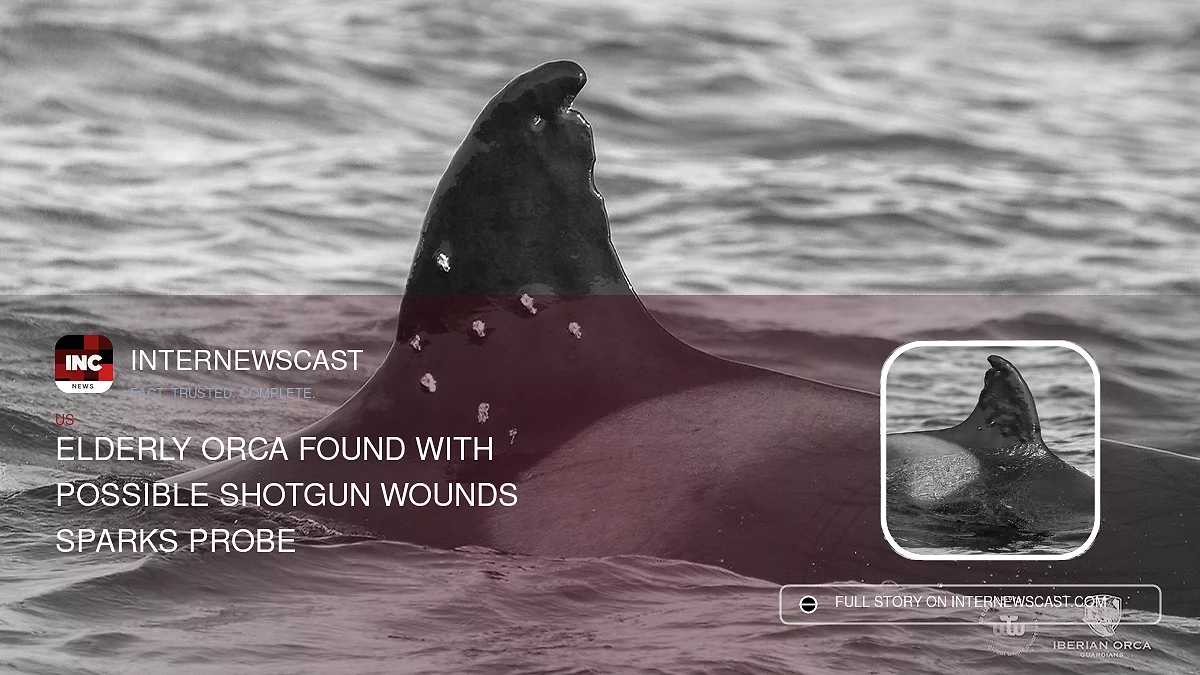

Unexplained injuries on one of the world’s oldest known orcas have prompted an investigation in Spain, intensifying concern over whether the celebrated killer whale may have been deliberately targeted after years of fraught encounters between orcas and vessels.
Toñi, the oldest known Iberian orca, was seen in the Strait of Gibraltar with several fresh marks on her dorsal fin and back. Conservationists believe the wounds may have been caused by shotgun pellets, noting that the same injuries did not appear in photos taken just weeks before.
Spanish officials said the orca, widely known as Toñi, was spotted this week bearing marks they described as compatible with possible pellet impacts, according to Spain’s Ministry for the Ecological Transition and the Demographic Challenge, known as MITECO.

Toñi is seen with marks on her dorsal fin that conservationists believe are consistent with shotgun pellet wounds. (WeWhale Association)
The ministry said it was alerted to Toñi’s injuries on Aug. 11 after receiving information from the marine conservation organization WeWhale, which operates in the area under government authorization.
A day later, officials launched preliminary investigative proceedings aimed at establishing what happened and, if possible, identifying anyone responsible.
Spanish authorities have not determined that Toñi was shot. However, WeWhale and Iberian Orca Guardians said their teams believe the pattern, quantity and placement of the wounds are consistent with a shotgun blast.
The conservation groups said the injuries appeared abruptly. Their teams had observed and photographed Toñi only weeks earlier, and at that time the marks were not visible.
WeWhale said its team counted roughly 10 apparent pellet impacts on the left side of her dorsal fin. At least two or three projectiles appear to have passed straight through the fin, while others may still be lodged inside, according to the group.
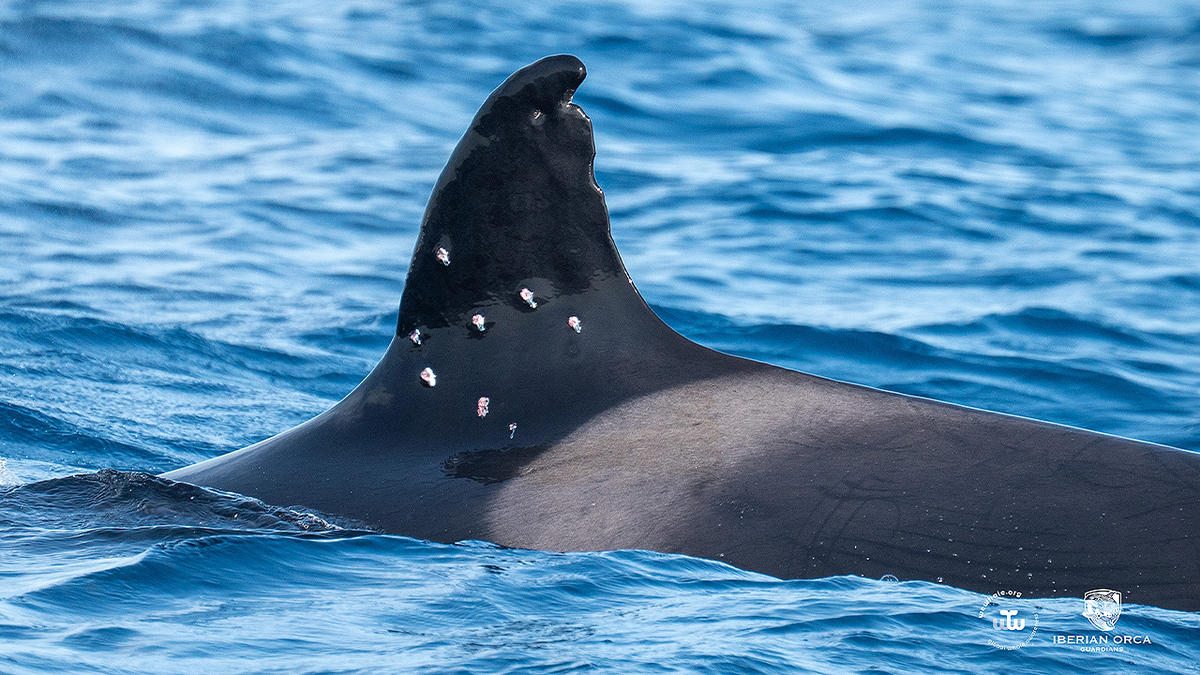
Multiple apparent pellet wounds are visible on the dorsal fin of Toñi, the oldest known Iberian orca. (WeWhale Association)
At an estimated 60 years old, Toñi could face added risks from the injuries. WeWhale said the fin has a rich blood supply and helps the animal regulate its body temperature, meaning the wounds could lead to tissue damage, swelling or infection. If pellets remain lodged inside, the group warned that an infection could, in the worst case, become life-threatening.
For now, however, there are encouraging signs. WeWhale said Toñi appears to be swimming and hunting normally, and its team will continue watching her closely.
“We know Toñi. We were with her a few weeks ago and these wounds were not there,” Janek Andre, founder and president of WeWhale and the Iberian Orca Guardians Foundation, said in a statement.
Andre said the groups are now seeing “multiple impact wounds” across the animal’s dorsal fin and back that they believe are consistent with a shotgun blast.
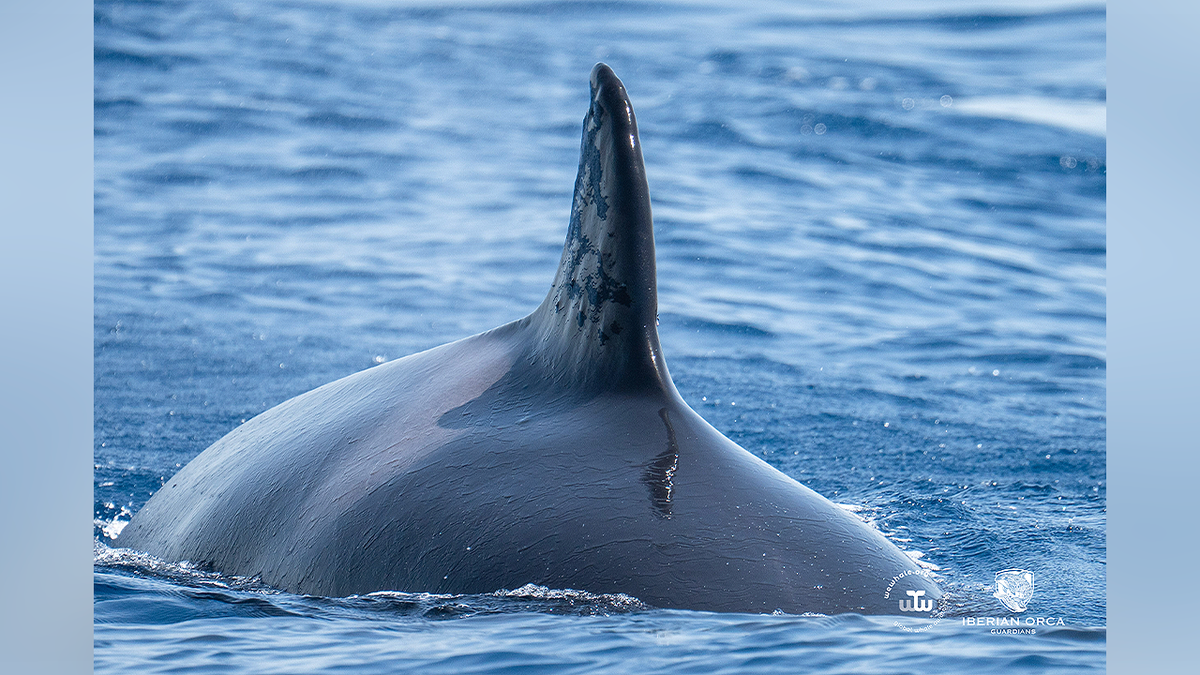
Toñi was photographed without the recent dorsal-fin injuries just weeks before the wounds were discovered, according to WeWhale. (WeWhale Association)
“If someone has deliberately fired a shotgun at her, this is not only an act of extreme cruelty against an individual animal,” Andre said. “It is an attack on one of the last remaining members of a critically endangered population.”
Toñi, also known as “La Abuela,” or “the grandmother,” is the oldest known member of the Iberian orca population, according to the conservation groups. Her population in the Strait of Gibraltar and Gulf of Cádiz is classified as vulnerable under Spain’s Catalog of Endangered Species.
The stakes for anyone found responsible could be steep. Spanish law prohibits killing, capturing, pursuing or disturbing protected species, and violations of regulations protecting the orcas can carry penalties of up to 2 million euros, equivalent to about $2.3 million, along with potential criminal liability, according to MITECO.
The ministry’s General Directorate of Biodiversity, Forests and Desertification is investigating the incident.
The investigation comes amid years of documented interactions between Iberian orcas and boats off the Iberian Peninsula.
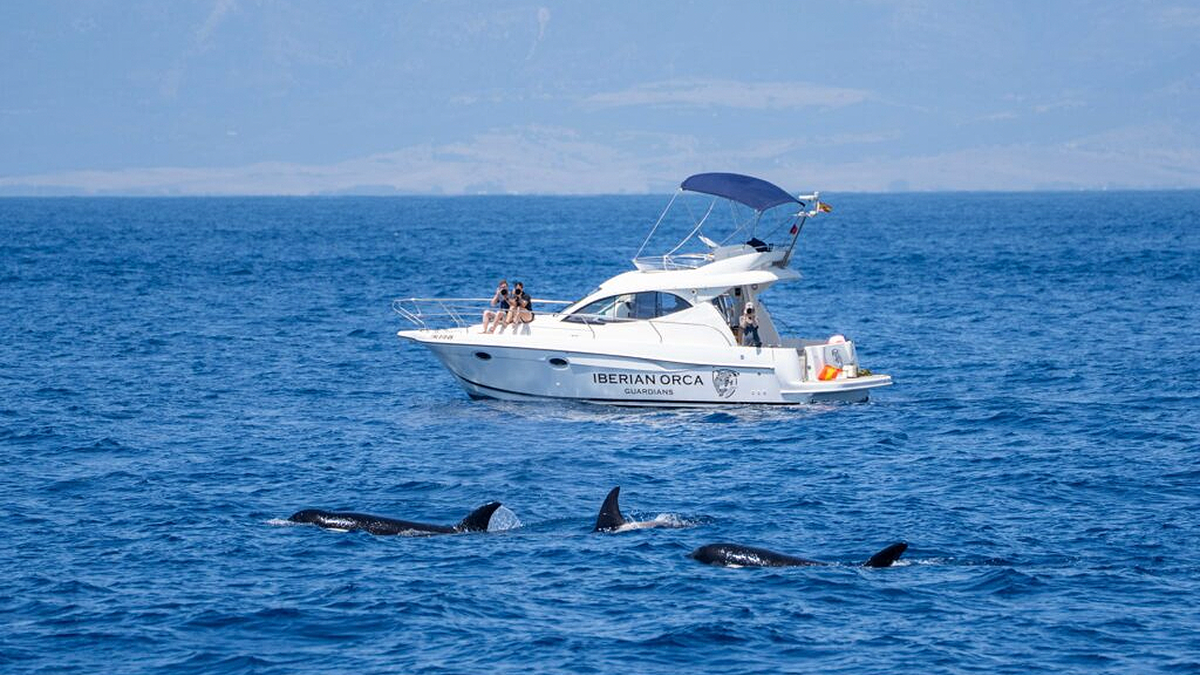
Iberian orcas swim near a conservation vessel during field observations. (WeWhale Association)
Since 2020, orcas in the region have repeatedly interacted with vessels in Atlantic waters, prompting Spanish authorities to issue guidance aimed at protecting boaters, vessels and the animals. Officials advise sailors not to use deterrent measures that could kill, injure or disturb the cetaceans.
WeWhale said the apparent shooting should not be viewed as an acceptable response to those encounters.
“There has been enormous public discussion about Iberian orcas and their interactions with vessels,” Andre said. “Whatever someone’s opinion about those interactions may be, shooting at these animals can never be an acceptable response.”
The conservation groups said they are preserving their original photographs and observational records and will continue monitoring Toñi’s physical condition and behavior as the government investigation moves forward.
Authorities have not announced a suspect or identified anyone who may be responsible for the injuries.