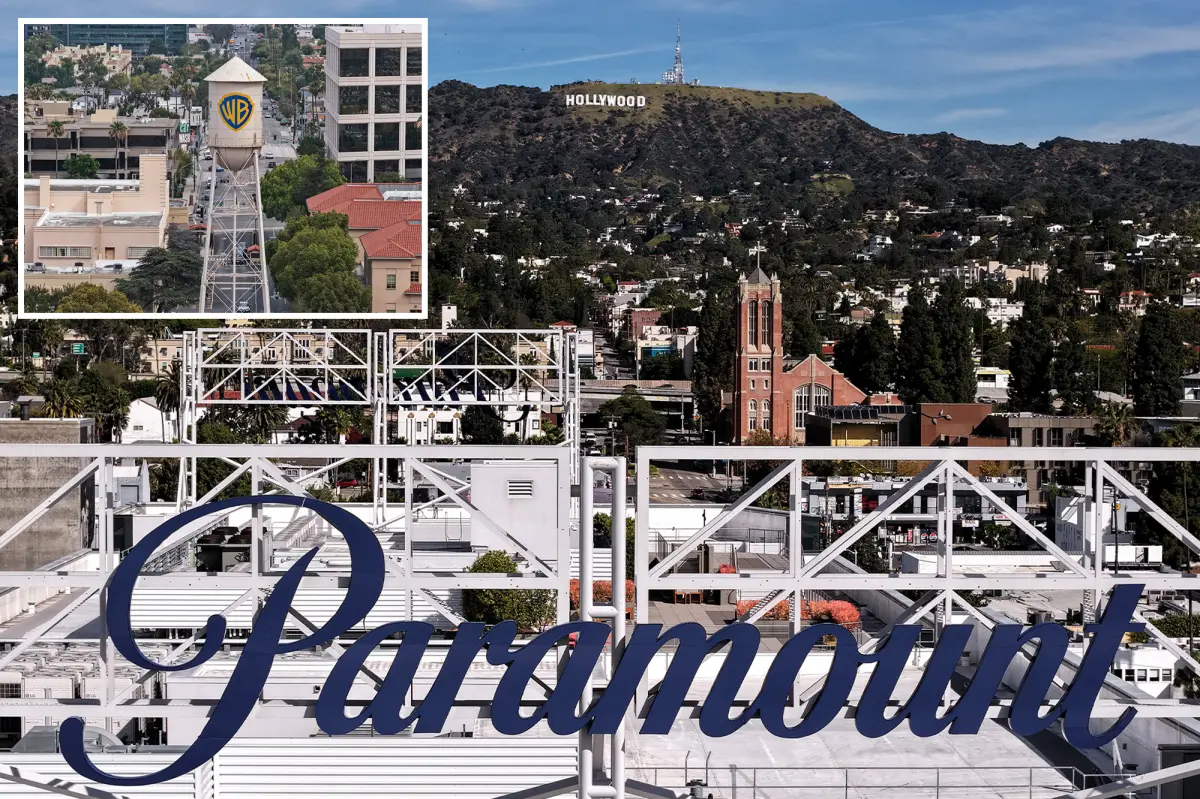

More than 10,000 jobs could be at risk if the proposed Paramount and Warner Bros. mega-merger moves forward, raising fresh concerns about a serious hit to Los Angeles’ already pressured entertainment economy.
The potential tie-up between the two Hollywood powerhouses could jeopardize 10,360 jobs and $4.06 billion in business output, according to a new analysis from the Los Angeles County Department of Economic Opportunity.
“If the merger goes through, about 4,500 film and TV jobs in Los Angeles County could be lost over the three-year period,” the report states.
The impact would likely extend well beyond studio lots. The report estimates that 2,661 jobs at small businesses supporting film and television production could also be affected, along with another 3,204 positions connected to entertainment workers’ spending across the local economy.
The possible economic fallout, county officials warned, could be substantial.
RELATED: Experts Warn Nationwide Blackout Could Last 18 Months
Los Angeles County estimates the merger could put $1.26 billion in wages, $2.78 billion in economic value and $4.06 billion in total business output in jeopardy.
The findings were released in conjunction with the LA County Film Office and represent the final 120-day assessment, following a 60-day interim report submitted to the Los Angeles County Board of Supervisors in June.
The Board authorized the Department of Economic Opportunity in March to examine the potential workforce impact of the deal, setting a timeline that called for both a 60-day interim review and a 120-day final assessment.
The DEO is under the supervision of the County Board, which is led by four Democrats and one Republican.
California Attorney General Rob Bonta also filed a lawsuit with 11 other attorney generals to challenge the $110 billion acquisition of Warner Bros. by Paramount in July.
Bonta called the merger “unlawful” and said it would lead to “higher prices, lower quality, and less content for film and television, harming movie theaters, basic cable distributors, and ultimately, audiences on every sofa and movie theater seat in the U.S.”