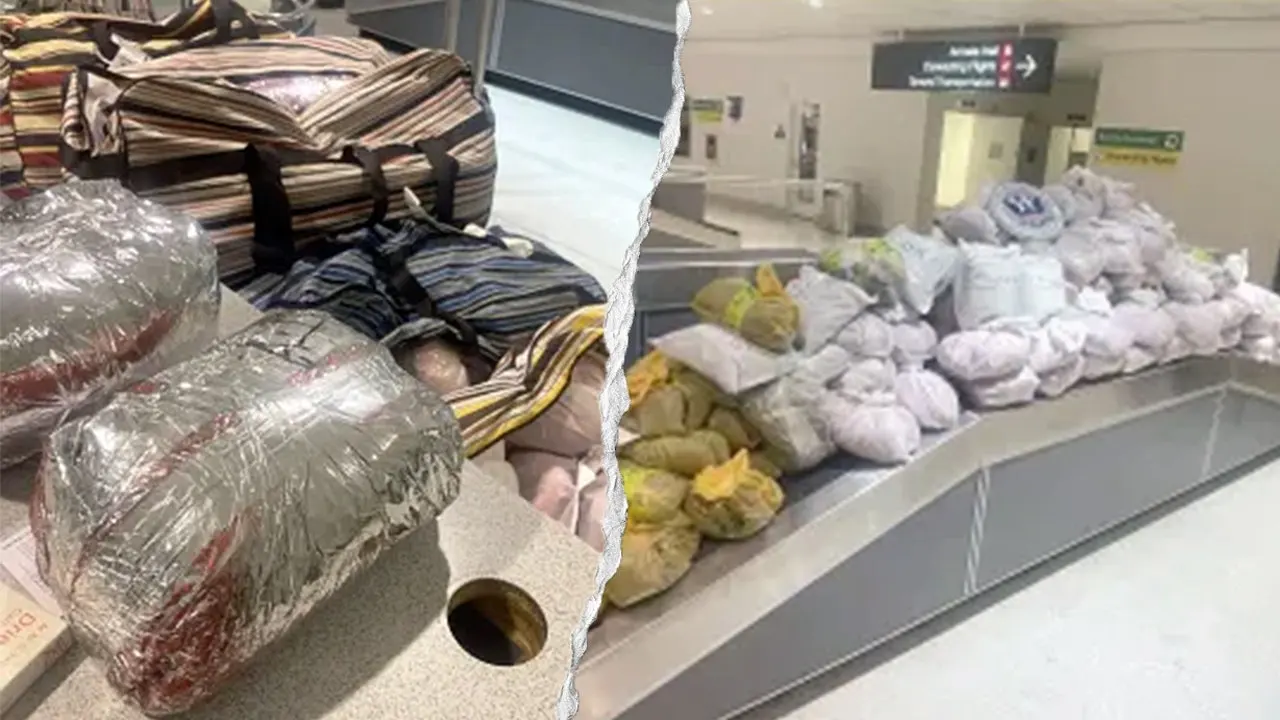

Customs officers at a Maryland airport say they intercepted nearly 850 pounds of khat after two travelers arriving from London allegedly tried to bring the stimulant plant into the United States packed across 12 suitcases.
According to U.S. Customs and Border Protection, the two travelers, both U.S. citizens from New York, landed at Baltimore/Washington International Thurgood Marshall Airport on Aug. 13 and were sent for a secondary inspection.
When officers searched their luggage, they found what initially looked like a large shipment of tea leaves. Testing later confirmed the plant material was khat, also known by its scientific name, Catha edulis, CBP said.
MEXICAN NATIONAL FACES FEDERAL CHARGES AFTER CBP FINDS $238K IN FENTANYL INSIDE ELECTRIC MOPED
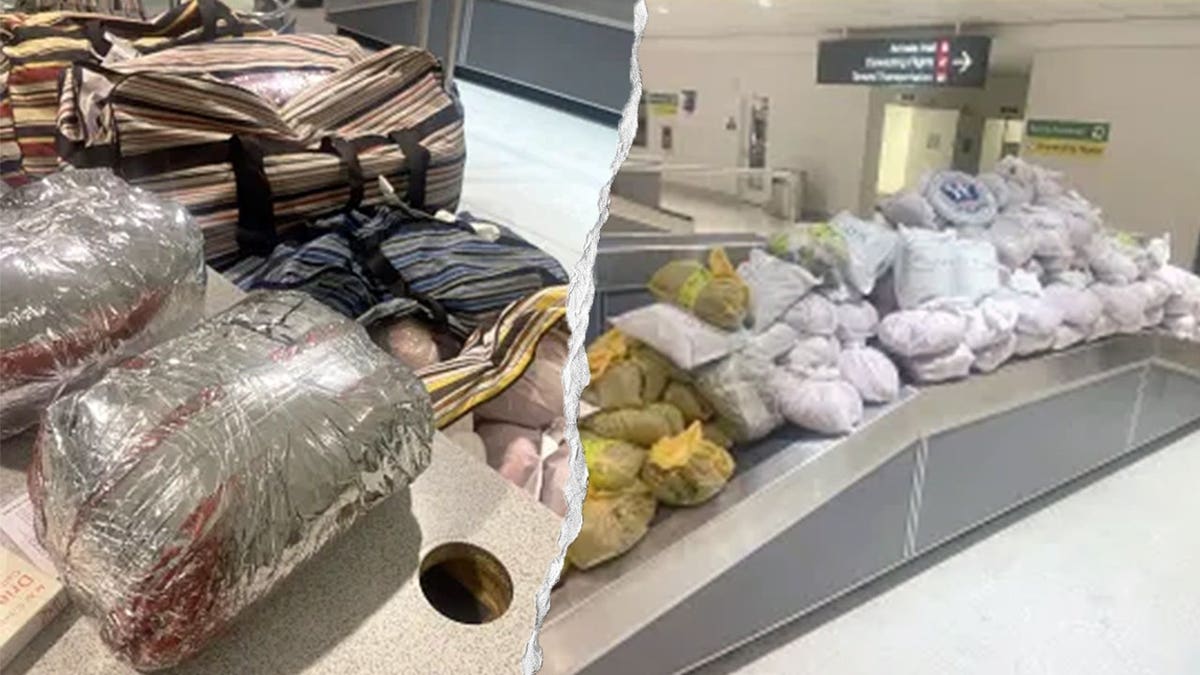
CBP said officers first encountered what appeared to be bulk tea leaves before testing identified the material as khat. (U.S. Customs and Border Protection)
Investigators said each man was carrying six soft-sided suitcases stuffed with khat. In total, the seized plant material weighed about 847 pounds and carried an estimated street value of roughly $100,000.
CBP said the two men were released while the investigation continues.
Khat, sometimes called Abyssinian tea or African salad, is commonly grown in East Africa and the Arabian Peninsula. The plant is often chewed for stimulant, amphetamine-like effects, and its dried leaves may also be boiled into a tea, according to CBP.
According to the Drug Enforcement Administration (DEA), khat contains two central nervous system stimulants — cathinone, a Schedule I controlled substance, and cathine, a Schedule IV controlled substance.
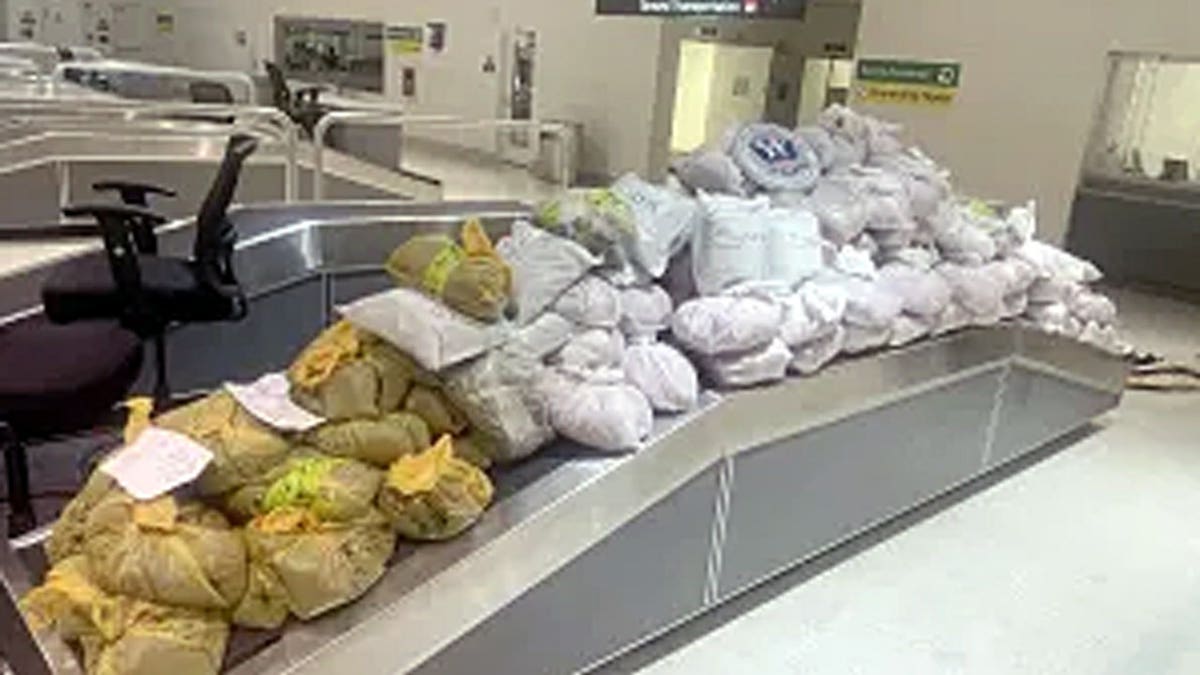
CBP officers seized approximately 847 pounds of khat with an estimated street value of about $100,000 at a Maryland airport. (U.S. Customs and Border Protection)
Symptoms of khat toxicity can include delusions, loss of appetite, difficulty breathing and increased blood pressure and heart rate, according to the DEA.
The World Health Organization classified khat as a drug of abuse in 1980.
The discovery came just days after CBP officers seized another 412 pounds of khat from unclaimed traveler baggage at the same airport.
In that case, CBP said officers “spooked” a suspected smuggler, who fled the inspection station and left the khat behind.
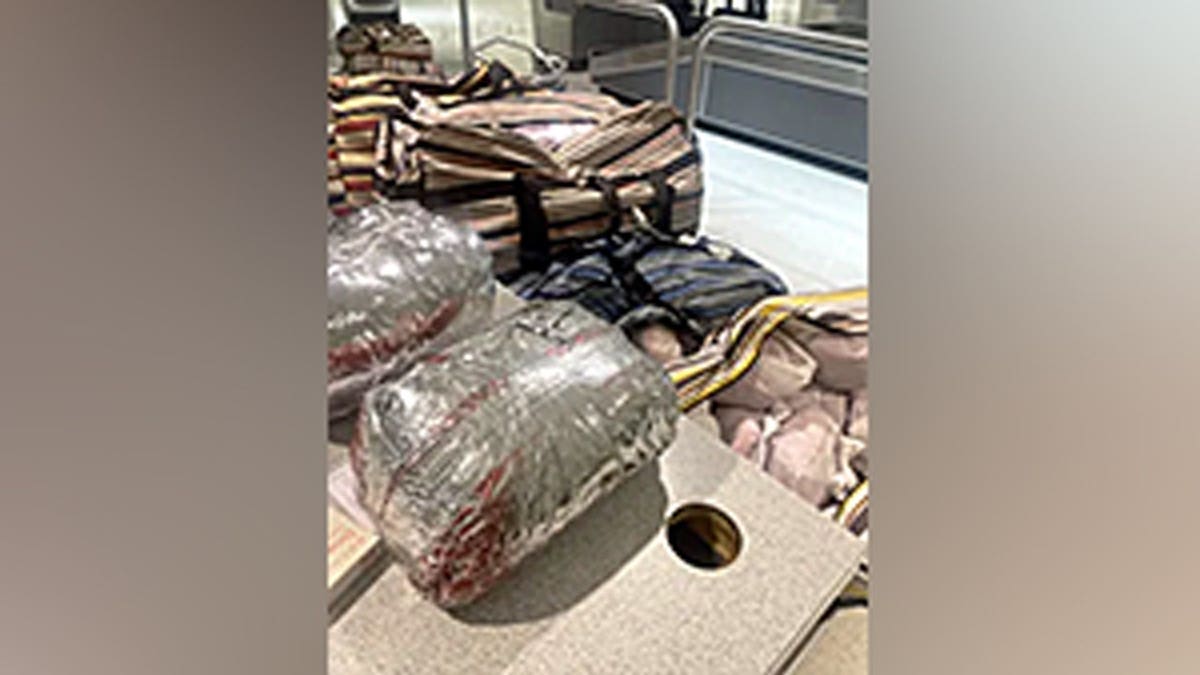
U.S. Customs and Border Protection officers seized nearly 850 pounds of khat allegedly carried in 12 suitcases by two travelers arriving from London. (U.S. Customs and Border Protection)
“Customs and Border Protection officers have observed substantial quantities of khat being smuggled in commercial shipments, but smuggling loads of this volume inside traveler baggage is a bit unusual, and not any more successful,” CBP’s Baltimore Area Port Director Adam Rottman said in a statement.
“Khat is illegal and poses severe health risks to users,” Rottman continued. “CBP will continue to seize khat and other dangerous drugs when we encounter it and we will work with our law enforcement partners to hold smugglers accountable.”
CBP officers seized roughly 46,000 pounds of khat last fiscal year and nearly 20,000 pounds during the current fiscal year so far, according to the agency.