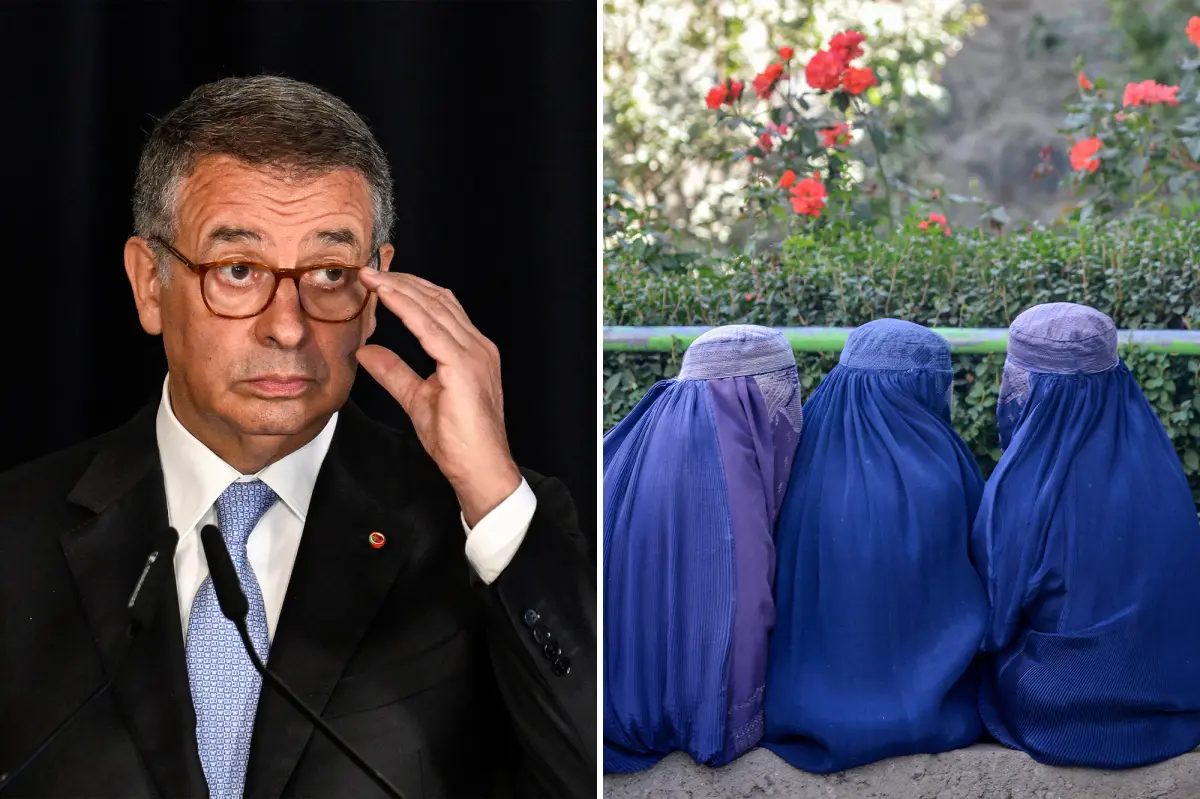

Portuguese President António José Seguro has signed into law a measure that broadly bars people from concealing their faces in public spaces, a move widely interpreted as targeting Muslim women who wear full-face coverings, AFP reported.
The ban, however, includes several exceptions. According to the report, face coverings will still be permitted for health-related reasons, professional duties, artistic purposes, weather conditions, and in specific settings such as places of worship, diplomatic missions and aircraft.
People found violating the law could face penalties ranging from 150 euros to 3,000 euros, the outlet said.
That amounts to roughly $175 to $3,500.
Portugal’s parliament approved the final version of the legislation last month, AFP reported. Local media have dubbed it the “burqa law,” a reference to the full-body and face covering worn by some Muslim women.
The law prohibits wearing coverings designed to obscure a person’s face or prevent identification in public places. It also bans forcing someone to cover their face on the basis of gender, religion, age or origin, according to the report.
“For the president of the republic, the uncovered face constitutes a structuring dimension of social trust, a characteristic of Portuguese society,” said an English translation of a Portuguese-language press release.

“Social integration, non-discrimination based on gender and the security resulting from similar decisions by the European Court of Human Rights underpin this decision. The president of the republic shares this court’s conviction that the face is central to human identity and communication, serving as a minimum element for mutual recognition among fellow citizens.
“And to admit that women, and only women, must hide their entire faces implies an asymmetry incompatible with the values of parity and equal dignity between men and women, values that shape European democracies,” the release added.


