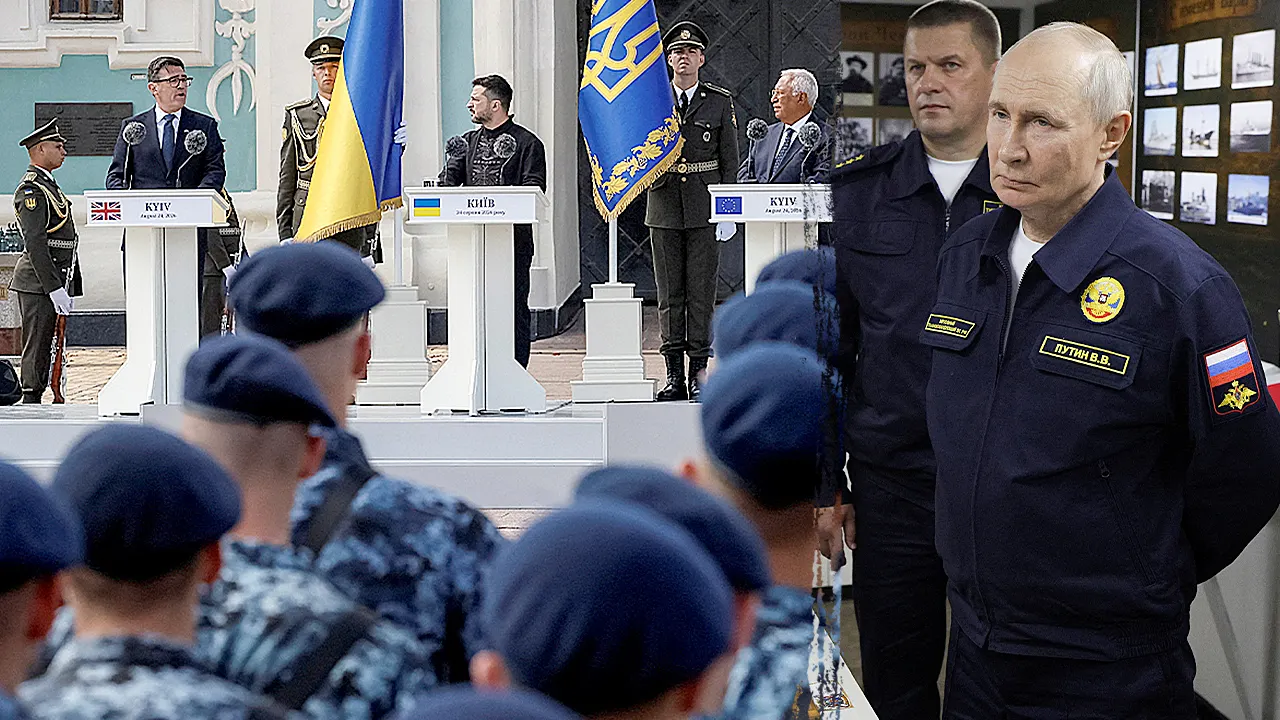

Ukraine observed its 35th Independence Day on Monday as Russian attacks continued across the country, while one regional security expert said President Vladimir Putin appears “panicked” by Ukraine’s ability to hit targets farther inside Russia.
The holiday, which marks Ukraine’s Aug. 24, 1991, declaration of independence from the Soviet Union, unfolded against a backdrop of stepped-up Russian strikes on civilian infrastructure. Security was also heightened after Ukraine’s Security Service warned of possible terrorist attacks in the run-up to the anniversary.
European leaders traveled to Kyiv to stand alongside Ukrainian President Volodymyr Zelenskyy during Independence Day commemorations, underscoring continued support as the war drags on. Zelenskyy said Ukraine seeks peace, but will not accept surrender on Moscow’s terms.
In Kryvyi Rih, Zelenskyy’s hometown, a Russian drone hit a crowded shopping center Friday, killing at least 16 people and wounding 130, according to The Associated Press.
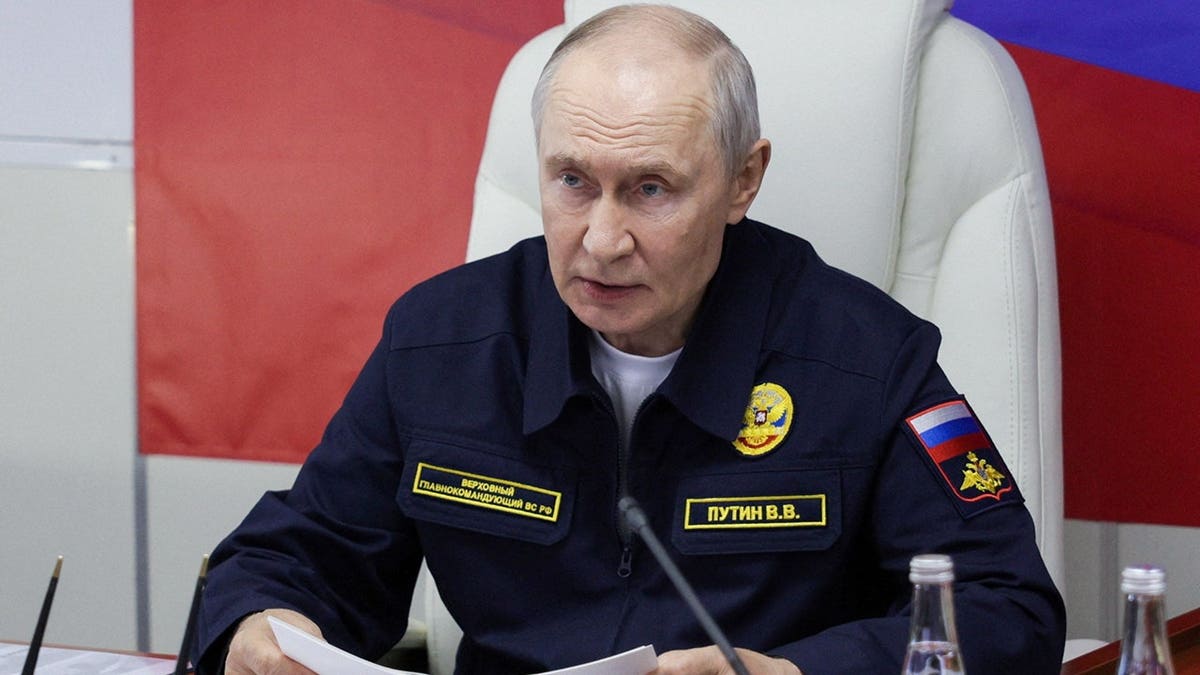
FILE – Russian President Vladimir Putin chairs a meeting aboard the missile cruiser Varyag in Russia’s far eastern Sakhalin region on Wednesday, Aug. 12, 2026. Putin previously said Russia is not waging a sabotage campaign against Europe. (Reuters)
Putin has cautioned that Ukrainian attacks on Russian economic targets risk opening a “Pandora’s box,” while Kyiv argues that long-range strikes are necessary to weaken Moscow’s supply lines and military logistics.
Among the targets Ukraine has struck are pieces of Russian economic infrastructure, including warehouses tied to major online retailers Wildberries and Ozon.
“The war with Russia has seen a lot of advances for the Ukrainians over this year,” Carrie Filipetti, a former deputy assistant secretary of state who now serves as executive director of the Vandenberg Coalition, told News Outlet.
“They’ve recently been able to actually penetrate much deeper into Russian territory, including close to Moscow and St. Petersburg.”
“Their success on the military front has now resulted in the Russians getting panicked and starting to attack more inside Ukraine and what they’re really trying to do is weaken their will and capabilities,” Filipetti said, adding that Putin “gets very anxious when he’s put in a corner.”
“What we’re seeing is these sorts of gasps at trying to retain some kind of control,” Filipetti added. “This is why he recently targeted a shopping mall inside Ukrainian territory. He is not focused on targeting military assets. He is really focused on trying to defeat the will of Ukrainians by attacking them.”
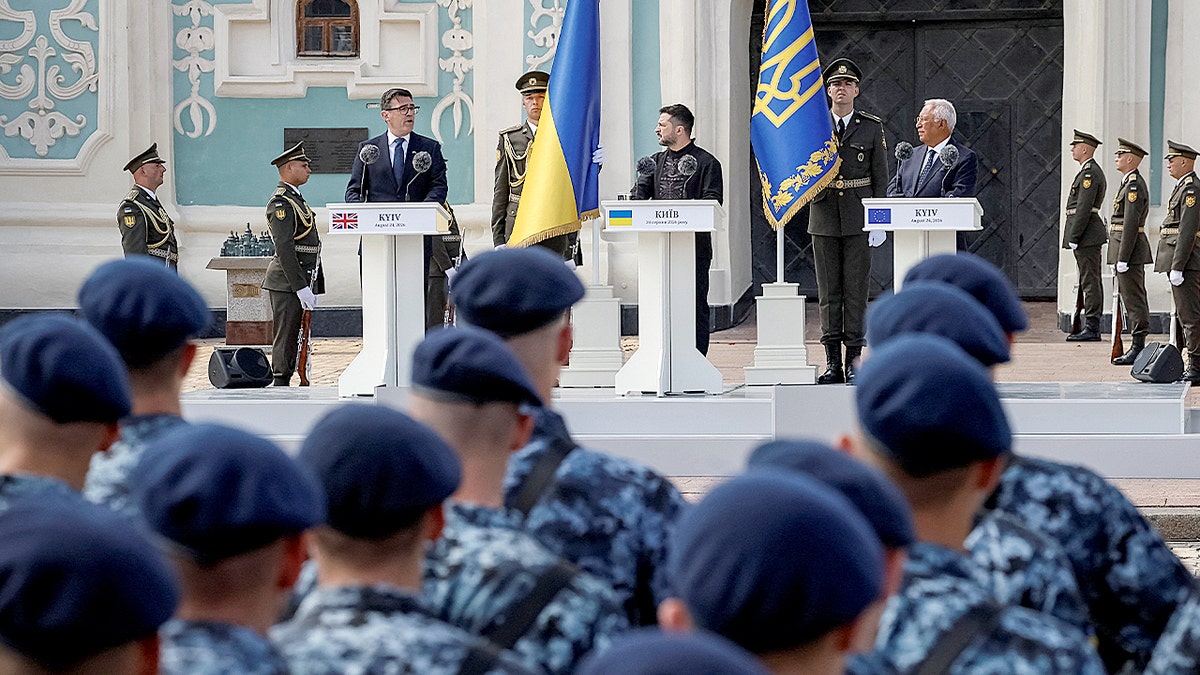
The anniversary came amid intensified Russian strikes. (REUTERS /Gleb Garanich)
Filipetti warned the targeting of civilian areas created heightened security risks as Ukraine marked its 35th Independence Day, more than four years into Russia’s full-scale invasion.
Several European leaders traveled to Kyiv for Ukraine’s Independence Day events, including European Council President António Costa and leaders from Finland, Lithuania, Norway, Denmark, Estonia and Latvia.
Filipetti said the high-level participation underscored continued international support for Ukraine.
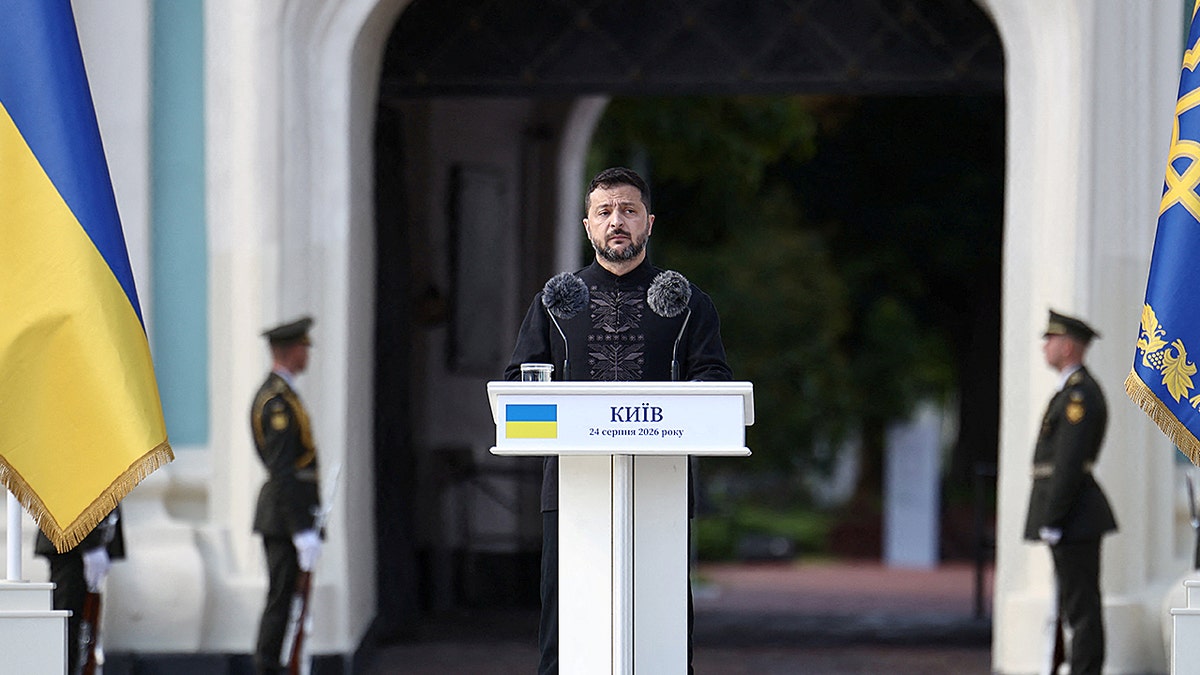
Ukrainian authorities urged citizens to stay vigilant on public transport and guard against potential sabotage or sharing media that could reveal military positions, as well as possible attacks, Ukrainian News reported. (HENRY NICHOLLS / Pool via REUTERS)
“Independence Day is a really important moment for the allies of the Ukrainians to really show that we are not losing steam, that we continue to support their operations, to continue to support their sovereignty,” Filipetti said. “But anytime there’s massive public gatherings, particularly to demonstrate patriotism and support for the Ukrainian state, it increases the security risk.”
Ukrainian authorities urged citizens to stay vigilant on public transport and guard against potential sabotage or sharing media that could reveal military positions, as well as possible attacks, Ukrainian News reported.
“They should be particularly mindful about sharing any videos or photographs that could betray the locations of some of their frontline soldiers,” Filipetti warned.
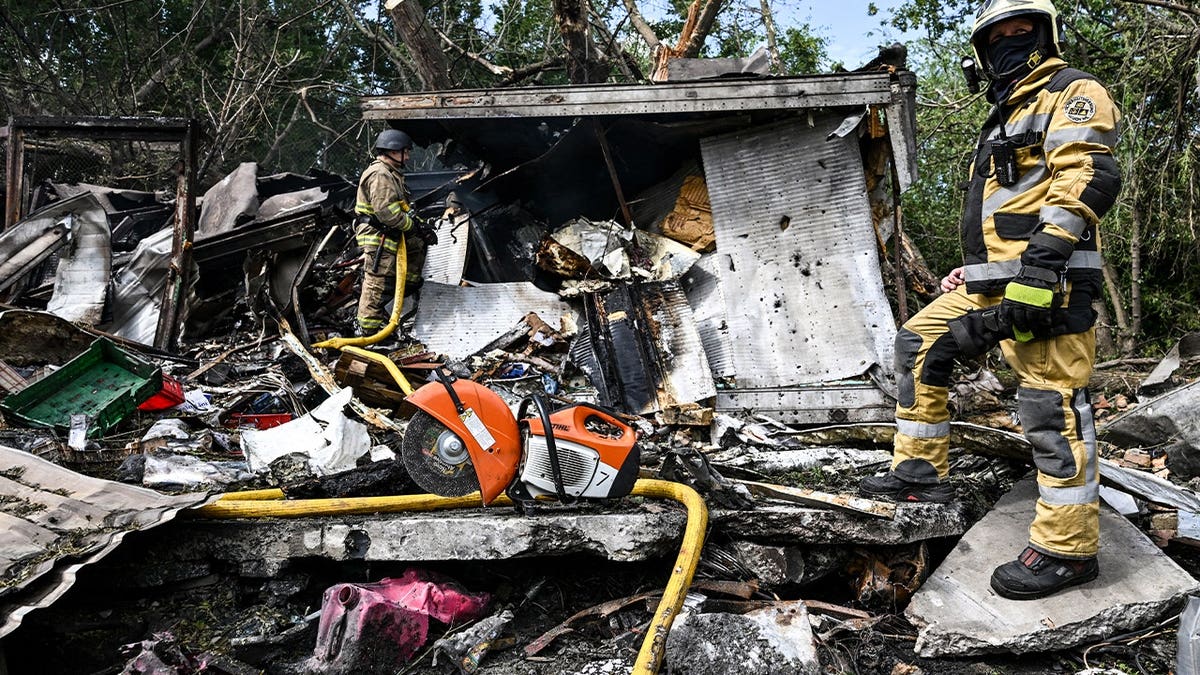
Russian glide bombs strike food processing plant in Zaporizhzhia Rescuers work at the site of a reported strike on a food processing plant in Zaporizhzhia, Ukraine, on July 8, 2026. (Dmytro Smolienko/Ukrinform/NurPhoto via Getty Images)
Monday’s holiday came after a lethal exchange of drone and missile strikes. Ukrainian officials reported at least seven deaths from Russian attacks, while a Ukrainian drone strike in Russia’s Krasnodar region killed three, according to Russian officials, The Associated Press reported.
“The Russians really want to bleed the Ukrainians of people, equipment, and will before the Russians are bled of those same three things,” Filipetti said. “And what we’ve seen over the course of this year is almost no territorial gains on behalf of the Russians.”
They are losing more soldiers each month than they can recruit, forcing them to rely on North Korean, Cuban and other foreign fighters to fill the gap, Filipetti added.
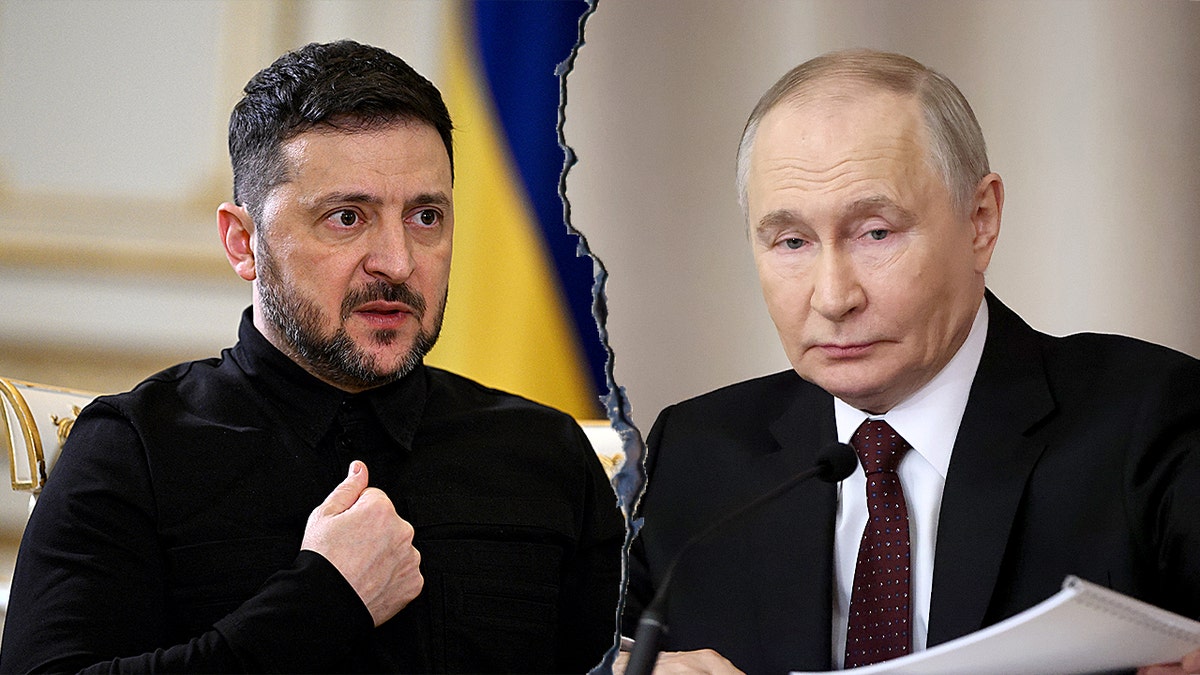
President Vladimir Putin prioritizes Russia’s nuclear triad strengthening as Ukrainian President Volodymyr Zelenskyy warns the Russian leader has launched “World War III.” (Genya SAVILOV / AFP via Getty ImagesContributor / Getty Images)
“Remember, Putin thought that this was going to be a special military operation that was going to last a matter of weeks,” Filipetti said.
Ultimately, she emphasized that Ukraine’s resolve delivers a firm deterrent beyond Moscow.
“It sends a message to the Russians that any invasion of sovereign territory, like their invasion of Ukraine, is going to create more consequences for them,” Filipetti said. “We are not losing steam, and we continue to support their operations, to continue to support their sovereignty.”
Filipetti said it also sends an important message to other American adversaries like China.
“These adversaries of the United States really learned from how the United States handles conflicts in other theaters. It’s really important that our adversaries of China, Russia, Iran, and others understand that if they invade another country unilaterally, there are going to be consequences, not rewards.”