
And you thought airfare was costly.
Airline fares have climbed sharply over the past year, driven in part by rising jet-fuel prices and reduced competition. But air travel is not the only way to get around that is becoming increasingly expensive. For millions of daily commuters, public transportation is also putting a noticeable strain on their wallets.
From London to New York, major metropolitan areas rely on subway and metro networks to move workers through the city each day. A new study from digital financial services company Remitly examined 94 metro systems worldwide to determine which cities have the highest prices for both individual rides and annual travel.
The Washington-based company manually reviewed fare information for the 94 systems, focusing on the average price of a single journey and the estimated annual cost of using the metro as of August 2026.
To put those figures into context, Remitly compared transportation costs with average earnings in each city. Its calculations relied on net national income per capita figures from the World Bank.
Researchers also applied several rules when calculating the fares:
- When prices varied according to distance or travel zones, researchers used the midpoint of the available fares
- For transportation networks that combine metro and conventional train services, only the zones served by the metro were included
- When a system did not offer an annual pass, the monthly fare was multiplied by 12 to estimate the yearly cost
London emerged as the clear leader for annual metro expenses. A year of riding the London Underground costs about £2,100, or roughly $2,817 in U.S. currency.
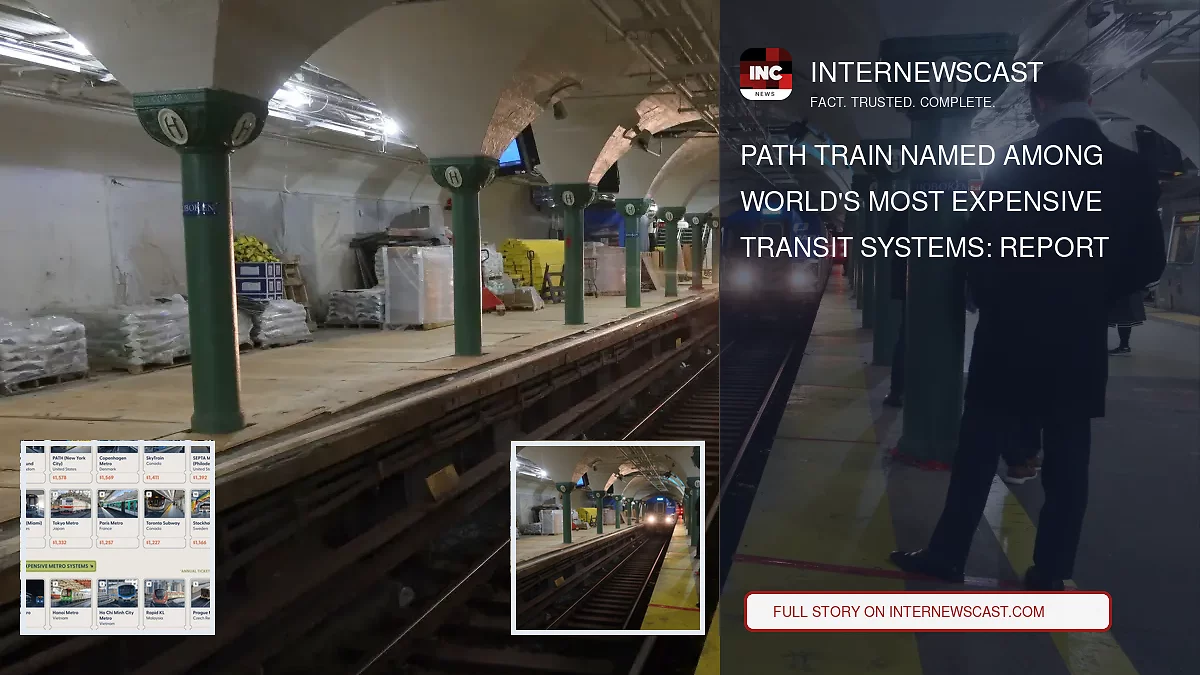
New York’s PATH system ranked second among the world’s most expensive metro networks, with an annualized cost of $1,578 for commuters. That figure, however, is an estimate based on regular travel rather than the price of one ticket or the total amount spent by every PATH passenger.
It also does not include the other transportation expenses many commuters incur on their way into Manhattan.
For some New Jersey commuters, the $1,578 estimate may seem modest. Riders who combine the PATH with other services have reported paying more than $6,625 each year once their full commuting costs are included.

In a blog post by a writer known as Island in the Net, one commuter detailed the expense of traveling into New York over several years.
“NJ Transit trains, PATH, and ferries each came with their own set of high costs, long commutes and crowded cars. You either paid heavily with money or time — often both,” the writer explained.
Their estimated annual expenses included:
- NJ Transit Train plus PATH: $6,625 per year, with a 90-minute commute each way
- NJ Transit Train plus PATH and ferry: $7,500 per year, adding 15 minutes to the daily journey
For the millions of people who rely on more than one transportation system to reach New York City, those combined figures may offer a more realistic view of the true cost of commuting.
Single-ride fares tell a different story.
Switzerland’s Lausanne Metro had the highest single-ticket price in the study, costing the equivalent of approximately $7.22 per ride. Copenhagen’s metro in Denmark followed closely behind at $6.54.
New York City’s MTA subway system was not included in Remitly’s official ranking. However, its fares can be compared using OMNY, the payment system that replaced the MetroCard this year. Because OMNY operates differently from the former unlimited MetroCards, The Post calculated an annual estimate using a method similar to Remitly’s approach.
A New Yorker making two subway trips each weekday — one to work and one home — could pay approximately $2,190 per year before the OMNY weekly fare cap is applied.
Frequent riders, however, can benefit from OMNY’s $35 weekly cap. After completing 12 rides, passengers receive unlimited subway and local bus travel for the remainder of that seven-day period.
Someone who reaches the cap every week would spend about $1,820 annually. Compared with the $2,190 cost of paying for two rides every day without the cap, that amounts to yearly savings of approximately $370.
Here’s the cost breakdown:
- Single ride: $3
- Two rides daily: $6
- Annual cost of two rides daily: $2,190
- Annualized unlimited travel: $1,820