
Armenia is preparing to inaugurate a U.S.-supported transportation and energy initiative along Iran’s northern frontier Monday, moving ahead despite a stark warning from a senior Iranian official that Tehran would “break their legs” if President Donald Trump and his partners crossed the Islamic Republic’s “red line.”
Armenian Prime Minister Nikol Pashinyan said the Trump Route for International Peace and Prosperity, or TRIPP, would officially begin Monday. The project is designed to link Azerbaijan’s mainland with its Nakhchivan exclave through southern Armenia while also creating energy connections with Turkey and Azerbaijan, Turkish media reported, citing Interfax.
The initiative is a central element of a U.S.-brokered effort to secure peace between Armenia and Azerbaijan. It would also deepen America’s economic role in the South Caucasus, a region where Iran has repeatedly objected to projects it believes could undermine its security interests and influence.
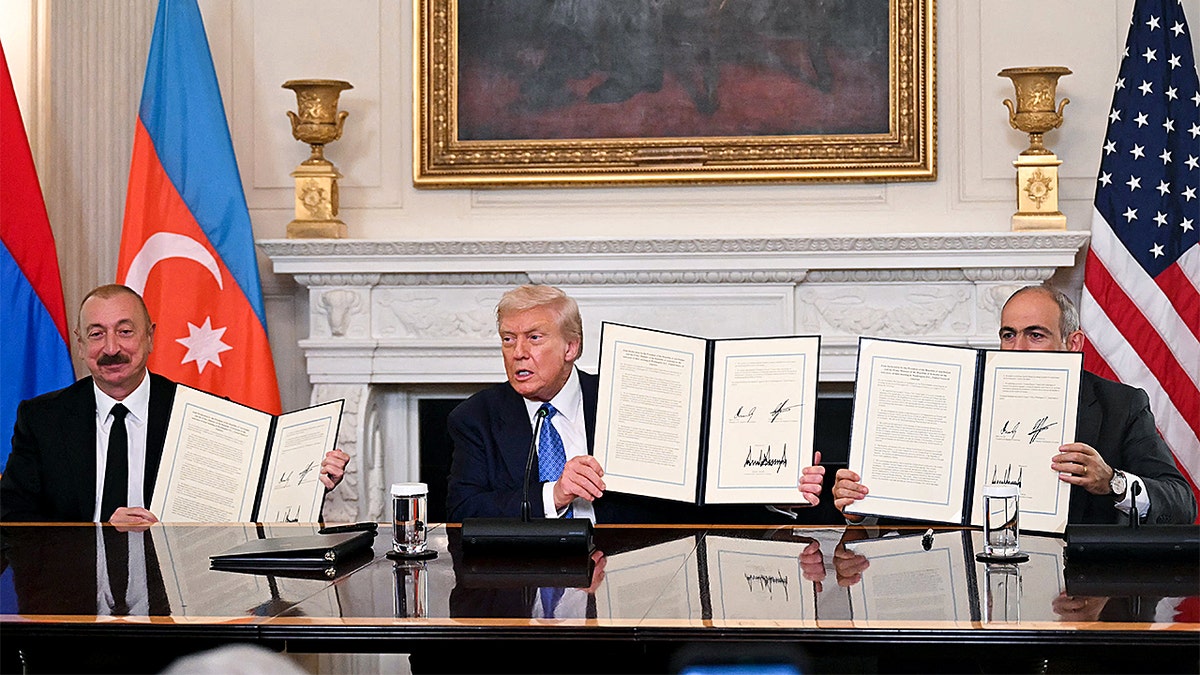
U.S. President Donald Trump (center), Azerbaijani President Ilham Aliyev (left) and Armenian Prime Minister Nikol Pashinyan hold up the agreement they signed in the White House State Dining Room in Washington, D.C., on Aug. 8, 2025. Trump said the two South Caucasus leaders were committed to lasting peace during the summit, held after decades of conflict between their countries. (Photo by Andrew Caballero-Reynolds/AFP via Getty Images)
The proposed corridor has taken on added importance amid the U.S.-Israeli war with Iran. Tehran is seeking to preserve its northern commercial routes and prevent a larger American security presence near its borders, while Washington maintains a naval blockade and Task Force Iron Gate concentrates on Iran’s surrounding frontiers.
Pashinyan announced the development while speaking at the DigiTec 2026 technology conference in Yerevan. He said the TRIPP initiative, often referred to as the “Trump Corridor,” would broaden Armenia’s energy ties across the region, according to Interfax.
“Tomorrow we will officially announce the launch of the TRIPP program, and energy and electricity transit will be an important component of it,” Pashinyan said during a public discussion focused on artificial intelligence.
He added, “We will now connect our network to the electricity grids of Türkiye and Azerbaijan.”
The announcement came after Ali Akbar Velayati, a senior foreign policy adviser to Iranian Supreme Leader Mojtaba Khamenei, accused Armenia of ignoring Tehran’s objections to the planned route.
“I told the Armenian ambassador the final word, clearly, that if Trump and his allies want to cross this Iranian red line, we will break their legs,” Velayati wrote in a Nov. 5 article published by the Iranian newspaper Ettelaat, according to Iran’s Tasnim News Agency.

The Arax River is seen from Armenia’s southern border, with Iran visible across the water in May 2025. The crossing is an important channel for trade and energy, as tensions continue over the proposed Zangezur Corridor. Iran opposes the project, fearing it could cut off its direct land connection to Armenia and reduce its influence as a regional transit hub. The planned route would connect Azerbaijan with Nakhchivan through Armenian territory. (Anthony Pizzoferrato/Middle East Images/AFP via Getty Images)
Velayati said Iran would protect its interests in the South Caucasus regardless of Russia’s position, reaffirming Tehran’s long-standing resistance to the proposed transportation link.
The planned route would stretch about 26 miles through Armenia’s southern Syunik province, close to the Iranian border. It would connect mainland Azerbaijan to Nakhchivan and create an onward route to Turkey, a NATO member.
Plans call for rail lines, highways, electricity transmission infrastructure and fiber-optic cables, potentially opening a major trade corridor between Central Asia and Europe.
Iran has consistently rejected proposals associated with what Azerbaijan calls the “Zangezur Corridor.” Tehran is particularly concerned that certain arrangements could reduce Armenia’s authority over the territory, restrict Iran’s access to Armenia or bring foreign powers closer to its borders.
In August 2025, Velayati warned that the corridor could become a “graveyard” for what he described as Trump’s mercenaries, according to Al Jazeera.
MORE ON THIS: Man, 23, and Woman, 66, Caught With £1.5m Cocaine in Luggage
“Such a corridor will turn into a graveyard of the mercenaries of Donald Trump, not a route owned by the U.S. president,” Velayati said, according to the outlet.
He also said Tehran would take action to defend the South Caucasus even if Moscow disagreed, while claiming that Russia opposed the corridor for strategic reasons.

Ali Akbar Velayati, a senior foreign policy adviser to Iranian Supreme Leader Mojtaba Khamenei, said Armenia had disregarded Tehran’s security objections to the proposed corridor. (Photo by Rouzbeh Fouladi/NurPhoto via Getty Images)
Velayati raised the issue again during a December 2025 meeting with Armenia’s ambassador to Tehran, Grigor Hakobyan, according to Iran International.
TRIPP grew out of a U.S.-led diplomatic effort to end decades of conflict between Armenia and Azerbaijan over Nagorno-Karabakh. The internationally recognized Azerbaijani territory was controlled for years by ethnic Armenian separatists before Azerbaijani forces reclaimed it in 2023.
In 2025, Trump hosted Pashinyan and Azerbaijani President Ilham Aliyev at the White House. The leaders signed a joint declaration aimed at advancing a peace agreement, normalizing relations and reopening transportation routes across the region.
That declaration created the foundation for TRIPP and gave the United States a leading role in the planned infrastructure development.
Under an implementation framework unveiled in January by Secretary of State Marco Rubio and Armenian Foreign Minister Ararat Mirzoyan, the TRIPP Development Company would direct construction and operations for the project.

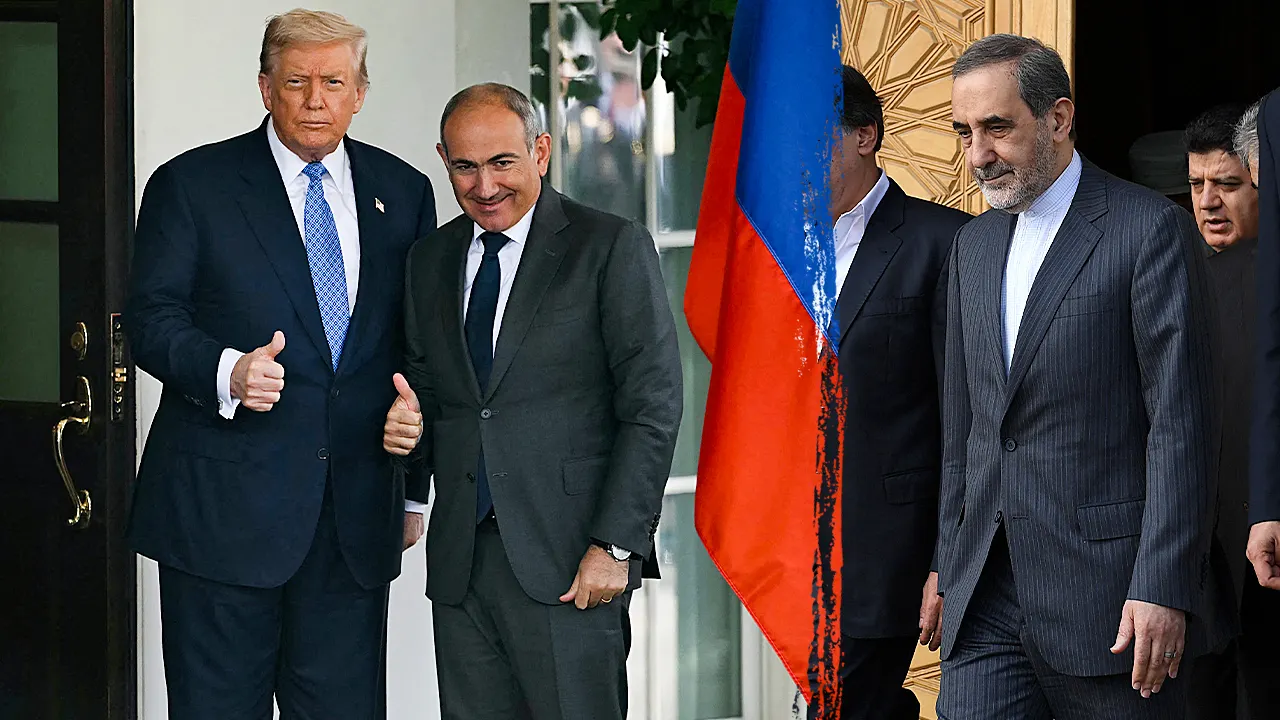
Armenian Prime Minister Nikol Pashinyan said the Trump Route for International Peace and Prosperity, or TRIPP, would officially launch Nov. 23. (Photo by ANDREW CABALLERO-REYNOLDS/AFP via Getty Images)
The framework gives a U.S.-controlled entity a 74% ownership share in the company, while Armenia would hold the remaining 26%.
Development rights would initially last 49 years, with an option to extend the arrangement for another 50 years. If that extension is exercised, Armenia’s ownership stake would rise to 49%.
Armenia would continue to exercise jurisdiction over the land, including customs, immigration, policing and border security.
Private companies could assist with transit and trade operations, but final decisions involving customs and security would remain under Armenian control.
The Armenian parliament approved the agreement 63-32 on Oct. 28, and President Vahagn Khachaturyan signed the ratification law Nov. 12.
The United States, Armenia and Azerbaijan also announced in November that trilateral technical planning teams had begun work to move the initiative forward.


