
CHICAGO () — The Cook County Medical Examiner’s Office is continuing the painstaking work of identifying 56 people whose remains were discovered in advanced stages of decomposition at South Chicago Chapel earlier this month. Officials said just nine of those cases remain unidentified.
Cook County Medical Examiner Dr. Ponni Arunkumar told the ABC7 I-Team in an exclusive interview that the scale of the discovery is unlike anything she has encountered during her years in the office.
“I don’t remember it. For the 22 years I’ve been here, any incident where we had 56 cases coming at one time to our office,” Arunkumar said when asked if she could recall a comparable situation.
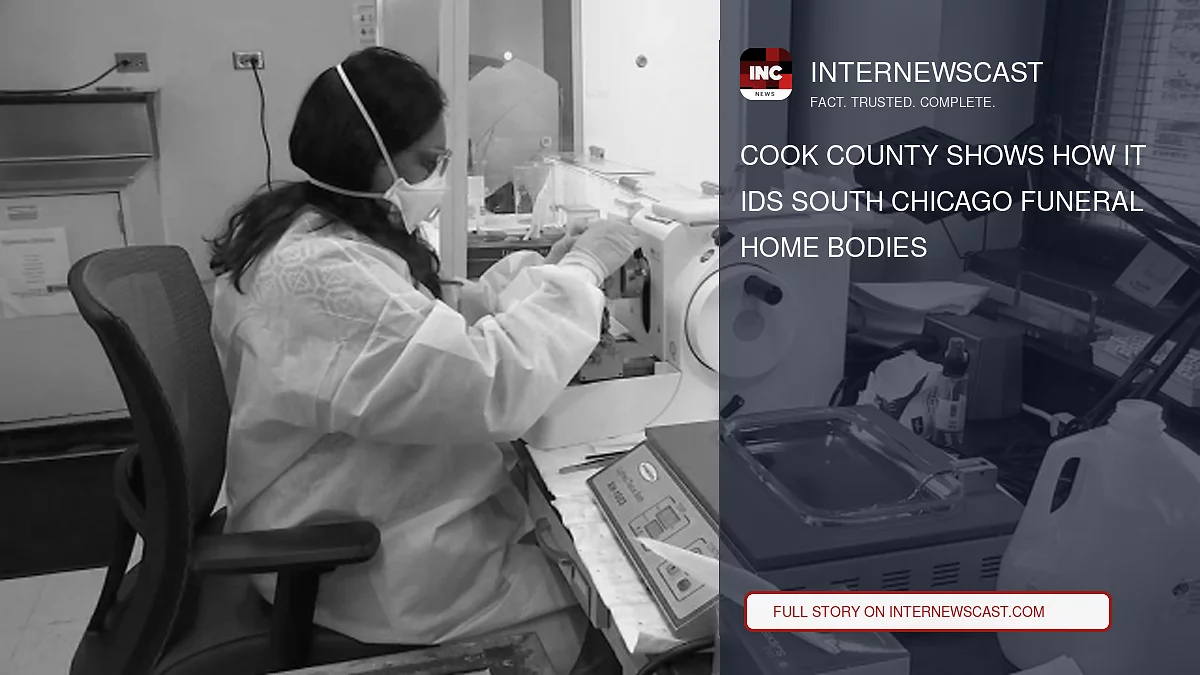
At the Cook County Medical Examiner’s Office, forensic staff have been putting in long hours to determine who the deceased are. In cases where remains are well preserved, relatives may be able to make a visual identification, or fingerprints can be checked against law enforcement databases. But authorities said many of the bodies recovered from the funeral home had not been properly stored, making the process far more complicated.
“Many of them were in moderate to advanced states of decomposition where they cannot be visually identified,” Arunkumar said. “It hinders our efforts to identify the person quickly.”
When decomposition is severe, investigators turn to tools such as X-rays and dental analysis. Technicians examine the remains for surgical implants, medical devices and other markers that can be linked to medical records. Arunkumar said one person from South Chicago Chapel was positively identified through evidence of a double knee replacement.
Dental records are another critical resource for investigators working to confirm identities.
“If you look at the teeth, you can see there are more ways to compare there,” Arunkumar said.
The 56 sets of remains were discovered Aug. 6, and as of Monday, nine remained unidentified, primarily those in the most advanced stages of decomposition.
The medical examiner’s office is also using rapid DNA technology in its most difficult cases.
“We have the equipment necessary to do our work. So, it’s just staff putting in additional hours to identify these people and examine them to give, in some instances, cause of death. Because some cases there’s no death certificate for the decisions,” Arunkumar said.
When identifications cannot be made at the medical examiner’s office, DNA comparisons are conducted by state police and, in some cases, the FBI.
“For us, our mission is to treat our decedents with dignity and respect and give closure to families,” Arunkumar said.
The medical examiner’s office also received dozens of cremated remains but does not have the ability to identify them. Officials said the office is offering free cremation services for families whose loved ones were found at South Chicago Chapel and have since been identified.