
DOJ investigates Mamdani over rising antisemitism concerns
The Department of Justice has opened an inquiry into New York Mayor Zohran Mamdani over claims that Jewish residents have been treated unequally. Fox News national correspondent CB Cotton reported on mounting alarm about antisemitism in New York City, citing a DOJ letter seeking answers from the mayor’s office.
The Dominican Republic is preparing to become the 48th nation in the world, and the seventh in Latin America, to adopt the International Holocaust Remembrance Alliance’s working definition of antisemitism. President Luis Abinader directed the country’s foreign ministry to move ahead with the formal adoption.
The decision drew praise from Ambassador Rabbi Yehuda Kaploun, the U.S. special envoy to Monitor and Combat Antisemitism, who encouraged other Latin American nations to take similar action. Kaploun pointed to the Trump administration’s domestic approach as a model for broader international efforts to confront antisemitism.
Abinader announced the step Monday in Santo Domingo during the Combat Antisemitism Movement-sponsored annual Latin American Forum Against Antisemitism. According to an English translation of his remarks, the president warned that antisemitism must not be treated as an issue affecting only Jewish communities. “Antisemitism is not a problem that concerns only the Jewish people,” he said. “It is a threat to democratic coexistence and to the rights and freedoms of us all.”
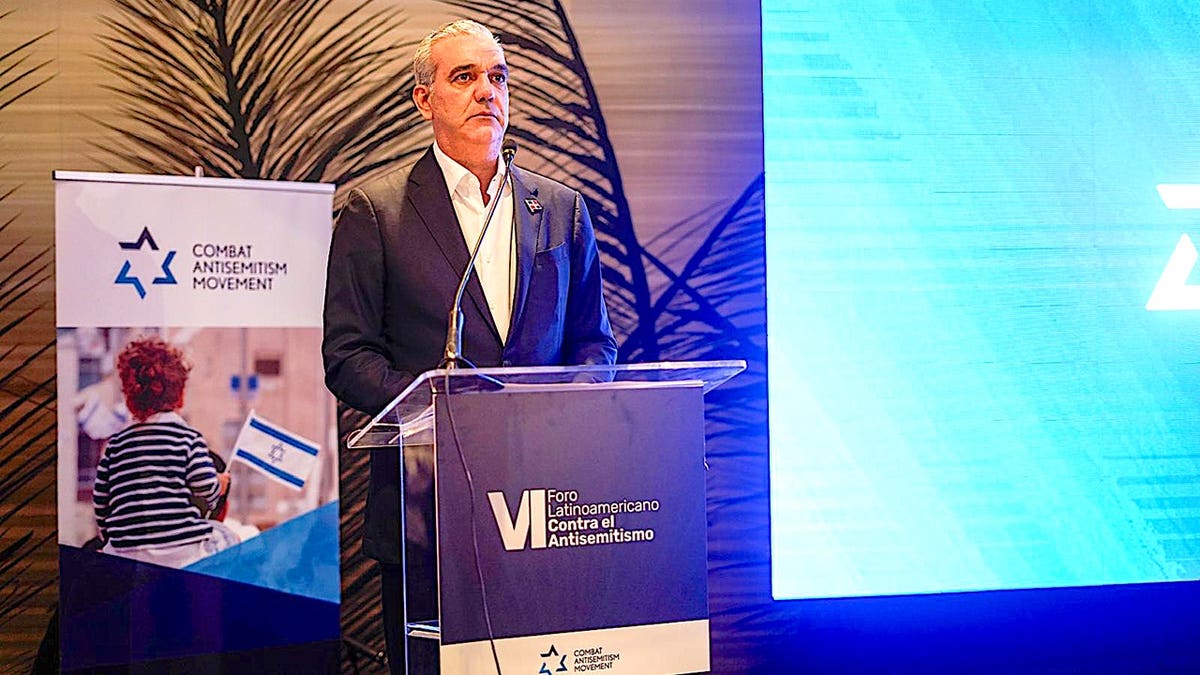
Dominican Republic President Luis Abinader addresses CAM’s sixth-annual Latin American Forum Against Antisemitism, in Santo Domingo, Aug. 25, 2026. (Combat Antisemitism Movement)
The announcement comes as governments and Jewish advocacy groups continue to raise alarms about antisemitism worldwide. The Combat Antisemitism Movement’s Antisemitism Research Center said it tracked and reported 767 antisemitic incidents globally in March 2026, equal to nearly 25 incidents per day and up 32.5% from March 2025.
Speaking at the forum, Kaploun called the Dominican Republic’s move a “historic moment” and urged leaders throughout the region to build on it.
“What you have witnessed tonight is a government standing up for what is right,” he said.
“There cannot be any compromise with antisemitism,” he continued. “We will lead by example, and we will take positive steps to protect every Jewish community.”
Kaploun pointed to the Trump administration’s efforts in the United States as a framework other governments could use to confront antisemitism within their own institutions.
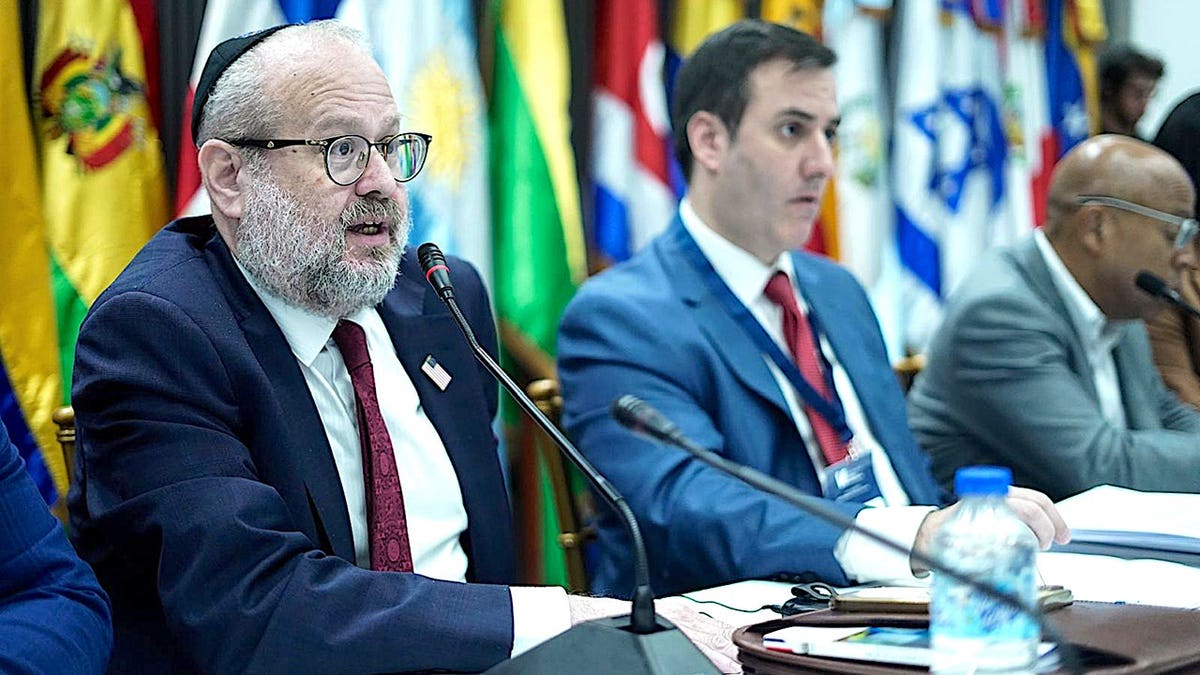
U.S. special envoy to Monitor and Combat Antisemitism, Rabbi Ambassador Yehuda Kaploun, speaks at a meeting of Latin American lawmakers during CAM’s Latin American Forum Against Antisemitism, Aug. 25, 2026. (Combat Antisemitism Movement)
“In America, we have our marching orders,” he said. “We are holding universities accountable. We are prosecuting hate crimes. We have changed our visa vetting programs. We have withdrawn from major U.N. bodies that have promoted terrorism and antisemitism.”
The U.S. State Department has used a working definition of antisemitism, together with guiding examples, since 2010. In 2016, the IHRA’s member countries adopted the current non-legally binding working definition.
The IHRA describes antisemitism as “a certain perception of Jews, which may be expressed as hatred toward Jews.” It further explains that antisemitism can include rhetorical or physical manifestations directed against Jewish or non-Jewish individuals, their property, Jewish community institutions or religious facilities.
Its non-legally binding definition and accompanying examples are intended to help governments, law enforcement agencies, universities and other institutions identify contemporary manifestations of antisemitism and respond to incidents more consistently.

Close-ups of antisemitic graffiti scrawled across Israeli-American Council headquarters in Los Angeles. (The Israeli-American Council (IAC) national headquarters in Los Angeles)
The accompanying examples address conduct including Holocaust denial, conspiracy theories about Jewish power, holding Jewish people collectively responsible for Israel’s actions and applying standards to Israel that are not demanded of other democratic nations.
As of the end of 2025, 1,334 governments, public institutions, universities, nonprofit organizations, corporations and sports organizations worldwide had adopted or endorsed the IHRA definition, according to data compiled by the Combat Antisemitism Movement’s Antisemitism Research Center.
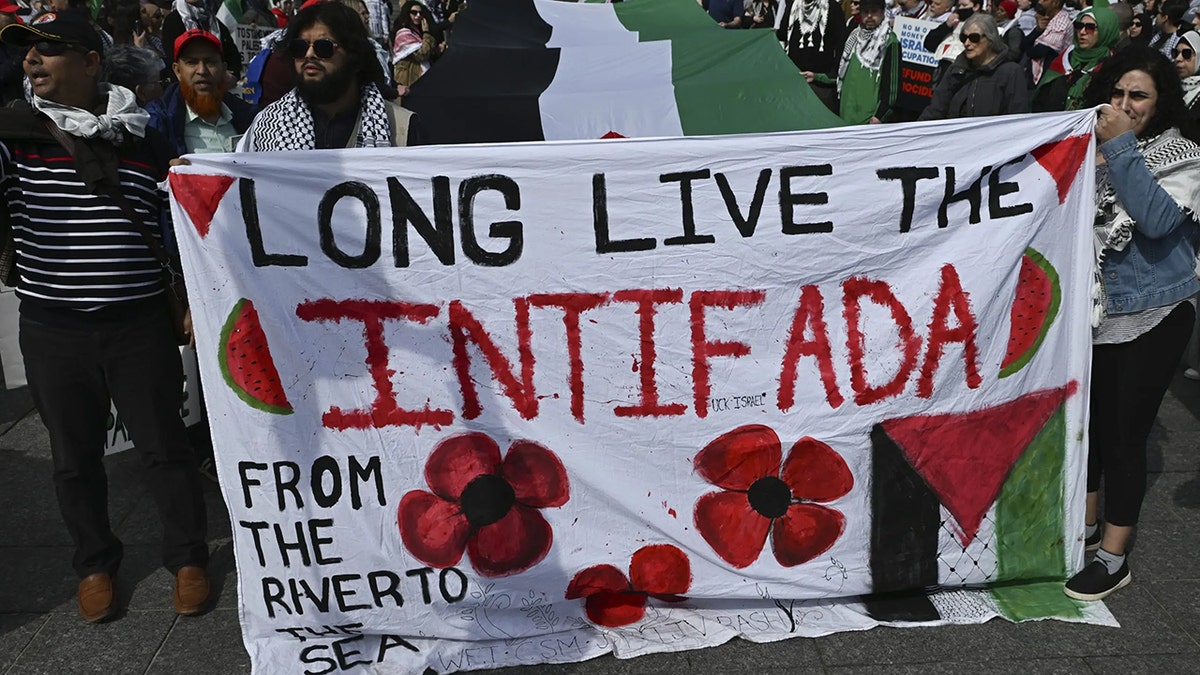
Anti-Israel protesters holding antisemitic posters in Alberta, Canada, on April 13, 2025. (Photo by Artur Widak/NurPhoto via AP)
Abinader told the conference that, “Rejecting antisemitism does not mean taking a position regarding a particular government or conflict,” he added. “It means stating unequivocally that no political disagreement, no cause and no circumstance can justify hatred, discrimination, or violence against an individual or a community.”
Abinader said the definition would provide the country with a framework for identifying and combating different forms of antisemitism while respecting freedom of expression and other rights protected by the Dominican Constitution.
“Through this decision, the Dominican Republic reaffirms its commitment to the memory of the Holocaust, to the protection of Jewish communities and to the eradication of antisemitism in all its forms,” he said. “Human dignity is indivisible and its defense admits no exceptions.”
The president connected the decision to the Dominican Republic’s history of offering refuge to Jews fleeing Nazi persecution. Following the 1938 Évian Conference, hundreds of Jewish refugees established a community in Sosúa, where they were able to rebuild their lives.
Abinader also announced that his government would commit 50 million Dominican pesos toward constructing a new building for the Jewish Museum of Sosúa to preserve that history.
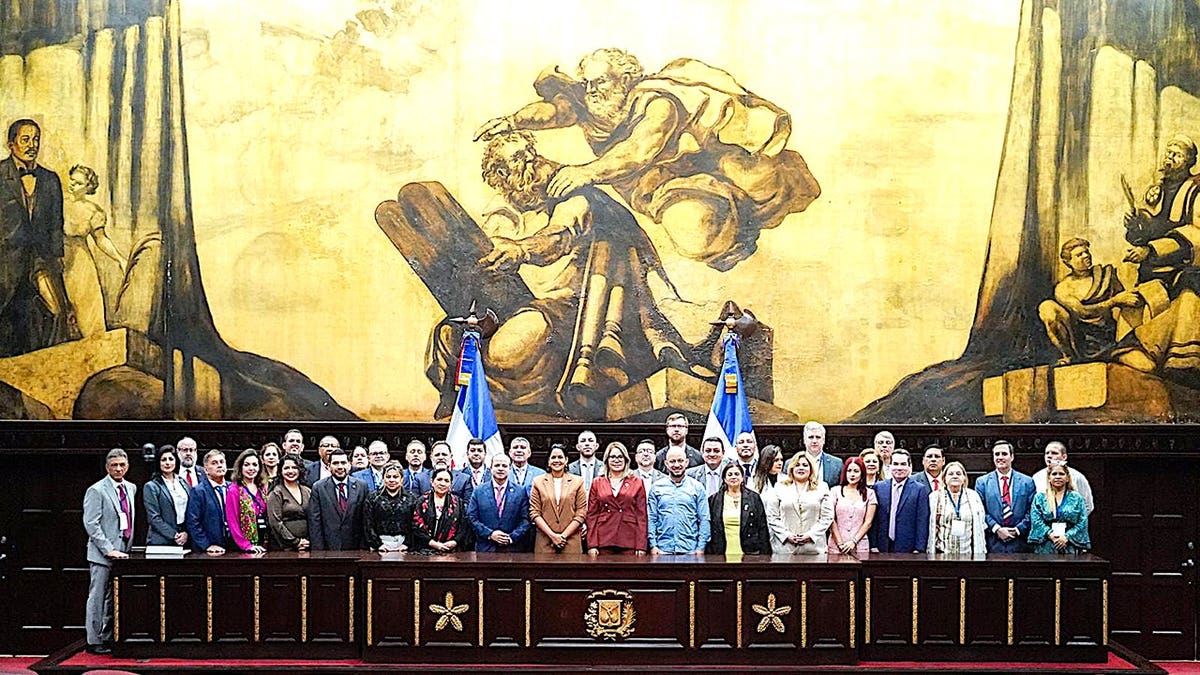
Lawmakers from 19 Latin American nations visit the Dominican Chamber of Deputies, in Santo Domingo, during CAM’s Latin American Forum Against Antisemitism, Aug. 24, 2026. (Combat Antisemitism Movement)
Once the Foreign Ministry formalizes the decision, the Dominican Republic will join Argentina, Colombia, Costa Rica, Guatemala, Panama and Uruguay as the Latin American countries that have embraced the IHRA framework.
The decision adds to growing regional acceptance of the definition and could set a precedent for additional Latin American governments considering how to formally identify and address antisemitism.
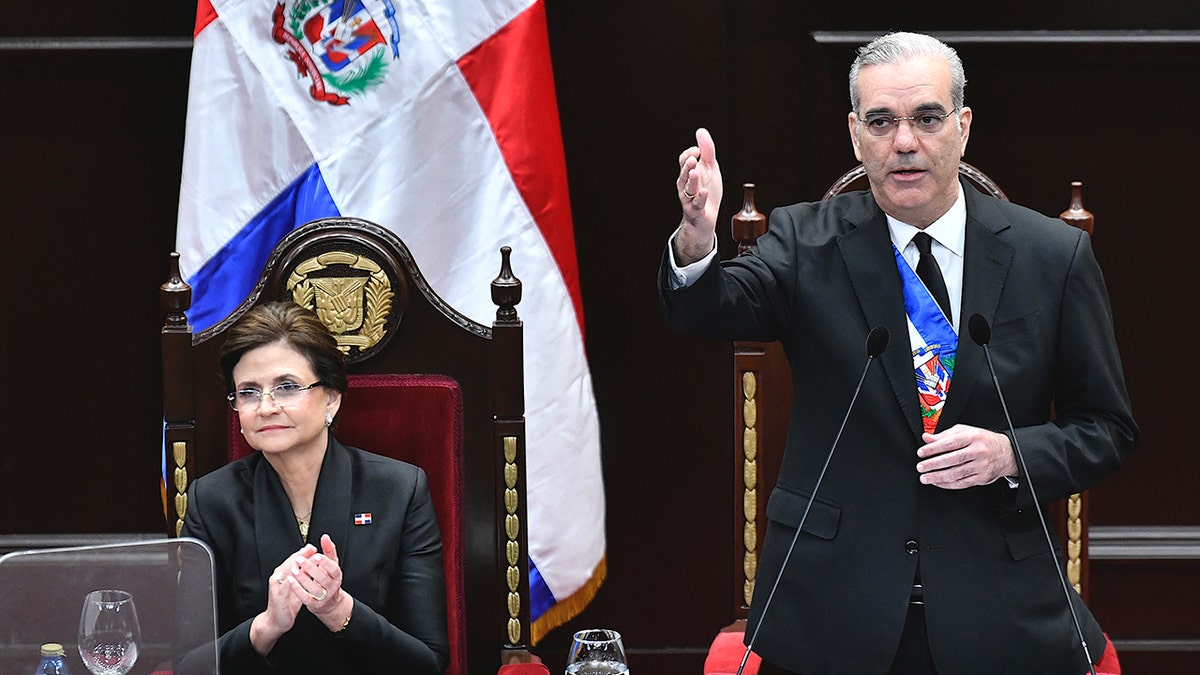
Dominican Republic’s President Luis Abinader (R) gestures as he speaks next to Vice President Raquel Pena during his annual report at the National Congress in Santo Domingo on Feb. 27, 2026. (Danny Polaco / AFP via Getty Images)
Abinader concluded his remarks with a call for the region to act: “From this land, which at different moments in its history has offered refuge and hope, let us send a firm message throughout Latin America and the Caribbean: Indifference must never prevail in the face of hatred.”
“May this forum enable us to turn memory into education; education into prevention; and our principles into concrete action,” he added.
Kaploun framed that regional effort as one the United States is prepared to support, saying he was representing President Donald Trump and Secretary of State Marco Rubio, in delivering a direct message to Latin American leaders: “America stands ready to support our friends in this effort to bring a new Latin America with religious liberty and freedom for everybody.”