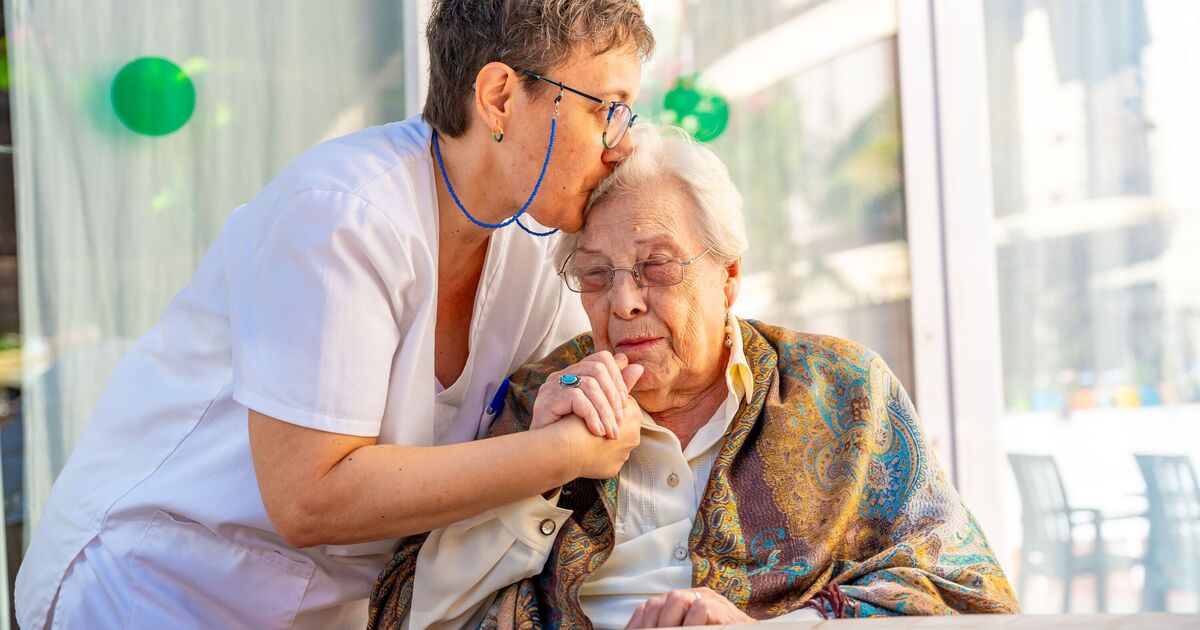


A doctor has highlighted how treating hearing loss may help lower the risk of cognitive decline and dementia (stock image) (Image: Getty)
An ageing specialist has urged older adults not to ignore hearing loss, warning that tackling the common condition could play a major role in protecting brain health. Dementia is a progressive syndrome that affects how the brain works, gradually disrupting memory, reasoning, speech and emotional control.
In the UK, around 944,000 people are thought to be living with dementia, with the condition affecting roughly one in 11 people over the age of 65. As the population continues to age, that figure is projected to rise to 1.4 million by 2040.
Doctors and public health experts have long stressed that certain lifestyle changes can help reduce dementia risk, particularly habits that support both the heart and the brain. These include staying physically active, eating a balanced diet, managing blood pressure and keeping socially connected.
But Dr Steph, a physician specialising in geriatrics and internal medicine, has drawn attention to another important and often overlooked factor: hearing. She explained that correcting hearing loss may be one of the most powerful modifiable steps people can take to help protect cognitive function as they age.
Speaking in a TikTok video, she said: “It’s just a reminder that the number one modifiable thing that you can do to prevent dementia is the correction of hearing loss.”
She went on to explain: “So if you have any hearing loss and you wear hearing aids, you will cut your risk of dementia by almost half.”
How does hearing loss affect your risk of dementia?
Untreated hearing loss substantially heightens the likelihood of developing dementia, with the risk increasing in line with the severity of the hearing impairment, according to Alzheimer’s Society. It has also been linked to a decline in memory and cognitive abilities.
This is because when those listening areas of the brain fall out of use, they may begin to deteriorate. Furthermore, the considerable mental effort required to process sound can ultimately exhaust the brain.
Hearing loss is also associated with social isolation and depression, which are themselves independent risk factors for dementia, Dr Steph noted in the caption of her post.
She also referenced a clinical trial by ACHIEVE (Aging and Cognitive Health Evaluation in Elders), which discovered that wearing hearing aids reduced the rate of cognitive decline by 48% over a three-year period amongst older adults at greater risk of cognitive deterioration.
Nevertheless, the Alzheimer’s Society emphasised that while the connection between hearing loss and dementia remains incompletely understood, it does not necessarily mean that someone with hearing loss will go on to develop dementia – simply that their risk is elevated.
What are the signs of dementia?
According to the NHS, common early indicators of dementia include short-term memory loss, difficulty managing everyday tasks, and changes in communication or mood. These symptoms are frequently mild and may deteriorate only very slowly.
It is often referred to as “mild cognitive impairment” (MCI) as the symptoms are not serious enough to be diagnosed as dementia.
If you are concerned about any symptoms, or believe you or someone close to you has dementia, it is advised to contact your GP to arrange an appointment.