Tuskegee University President Dr. Mark Brown, a retired U.S. Air Force major general, is standing by the historically Black university’s renewed focus on student dress code and conduct expectations, arguing that the effort is designed to prepare students for professional life — not to police their individuality.
“If you raise the bar, students will reach it,” Brown told News Outlet in an interview.
“Why don’t we raise the bar? That’s what I think we ought to do. We’re unapologetic about that part.”
Brown’s comments come after Tuskegee sent students a memo before they arrived on campus outlining expectations for professional attire. The guidance called for business suits and shoes at business-like meetings, professional dress in classrooms and a ban on non-religious head coverings. According to Brown, the opening days of the academic year offered visible proof that students were responding.
“I had a wonderful time riding around and walking around the campus on the first and the second day of class,” he said. “The bar was raised and it was being reached. “But the same is true as if you lower the bar, or if you go past the mistake and fail to address it: That becomes the standard. And so, you know, we are a university of standards. I believe all of higher education should be a university standards.”
The Tuskegee University dress code has also sparked pushback from free expression advocates, particularly over restrictions on items including durags and bonnets. Some critics have characterized the policy as an example of “respectability politics.”
Brown rejected that framing, saying the clothing standards are only one piece of a larger student success strategy. He pointed to expectations around punctuality, class attendance, internships, professional certifications, interview preparation and overall workplace readiness as part of the university’s broader approach.
“The focus is how do I make you a professional in whatever space you want to go in?” he said.
“Any higher education institution in the country that’s not focused on student success, no matter what type of university that is, is not focused where they should be. That’s why we exist. That’s exactly why we exist.”
The policy itself is not new, Brown said, but Tuskegee is placing “greater emphasis” on it as part of an effort to ensure graduates leave campus prepared not only with a degree, but with the habits employers expect.
“It’s not the world we wish you were going into, it’s the world you’re going to go into,” Brown said. “It’s not the way that we wish an employer would perceive you. It’s the way the employer will perceive you.”
Brown said the debate over whether college is worth the cost has put greater pressure on universities to demonstrate that students are being prepared for what comes after graduation.
“What do you want when you send your son or daughter to college?” Brown said. “What do you expect us to do and what do you expect to happen four or five years from now when they graduate?”
Brown said Tuskegee wants students to leave with more than a grade-point average and a diploma.
“We want them job-ready,” he said.
He pointed to punctuality as one example of a habit that may appear minor in the classroom but can carry significant consequences in the workplace.
“Would it be sad for us to allow a student to come to class late, practice that for four to five years, and then find out that no matter how great they were with their 4.0 or 3.8 GPA, it won’t keep them that job?” he said.
Critics have also questioned whether professional dress requirements could place an added financial burden on students. Brown said Tuskegee is prepared to address that concern directly.
About 70% of students on campus are Pell Grant eligible, he said, and the university’s Golden Tigers Community Closet is available to students who need help obtaining professional clothing.
“If a student needs help with that, we’re going to help them,” Brown said. “That’s not going to be the barrier between compliance and getting ready. We’re going to remove that barrier.”
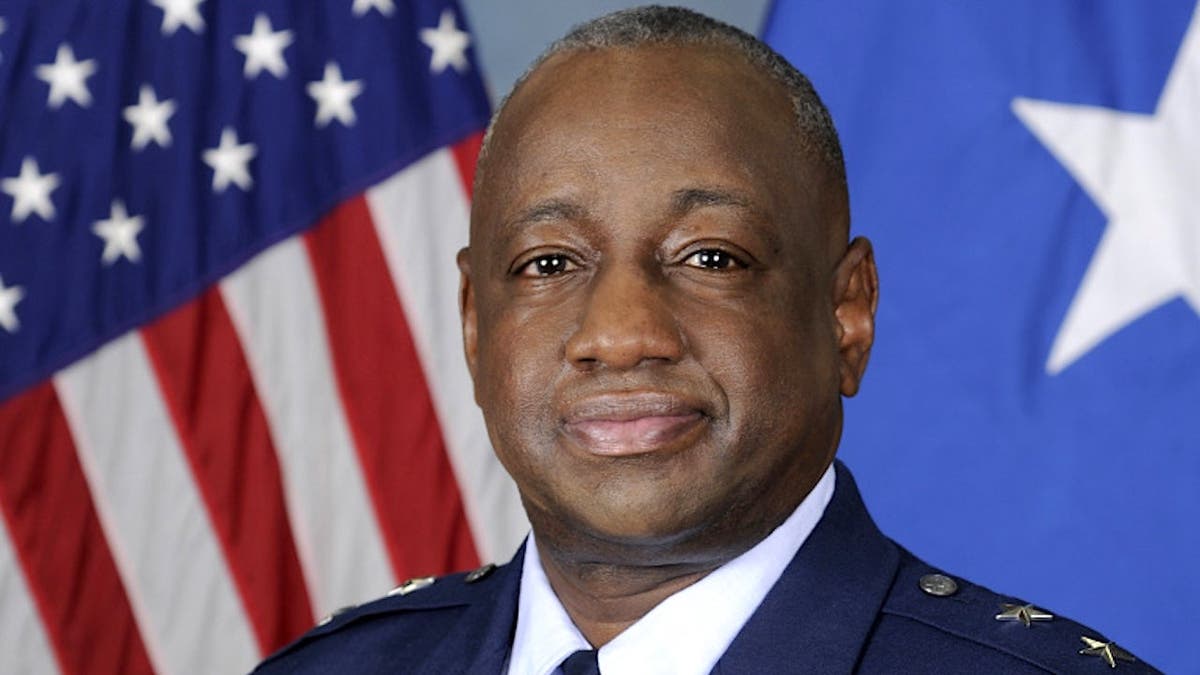
Retired Major General Mark Brown was commissioned through the ROTC program at Tuskegee University, Tuskegee, Alabama, and entered active duty in 1986. He has served in comptroller, command and staff positions at all levels of the Department of Defense, including two staff assignments working directly with the legislative branch of government. His global experience includes serving in the Philippines, Spain, England, Turkey and Iraq. (U.S. Air Force)
The university also plans to bring in a professional several times during the school year to teach students the details of business attire, including how to button a coat and properly wear a tie.
“I really want us to bear down and double click, to use a common term these days, on the fact that we have to care as much about what happens in school as what happens after school,” he said.
Brown pointed to the school’s recent employment numbers as evidence that its approach is producing results. He said roughly 70% of students who graduated in May already had jobs lined up.
“Seven out of every 10,” Brown said. “That is the challenge. That’s what we should be debating.”
Brown is facing criticism from those objecting to Tuskegee’s renewed emphasis on its dress code, including the Foundation for Individual Rights in Education (FIRE), a student rights advocacy group, due to restrictions on durags and other clothing associated with Black culture.
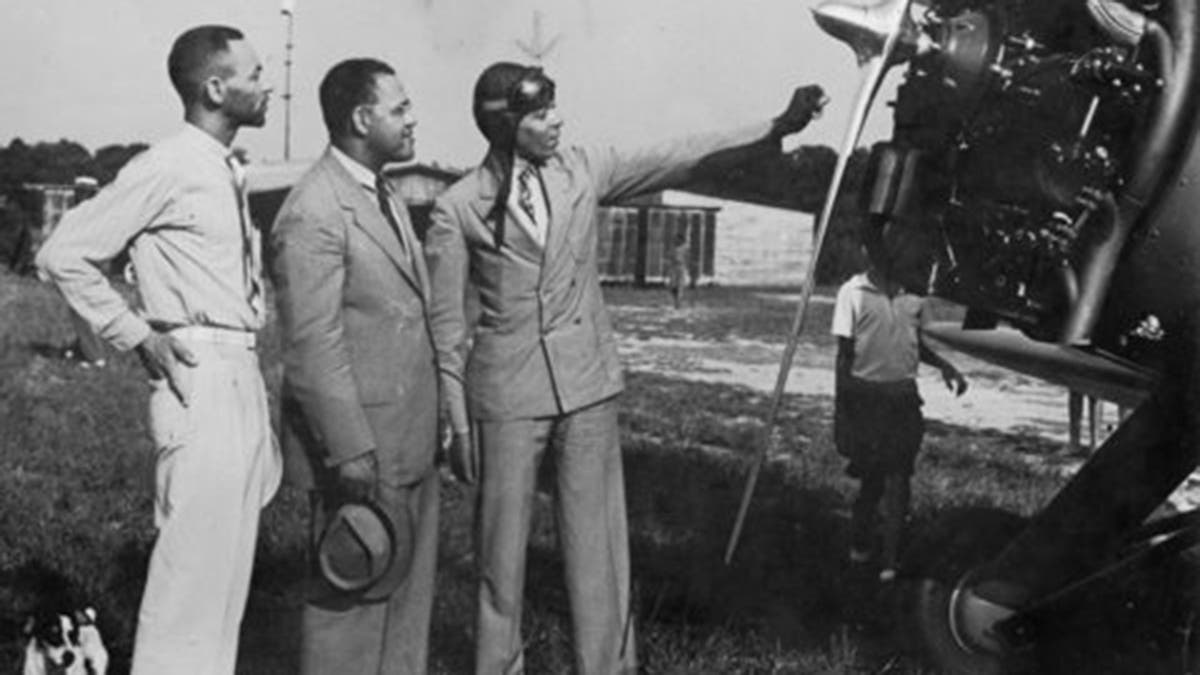
Tuskegee University Archives (Tuskegee University Archives)
“Tuskegee can’t promise students broad freedom of expression while enforcing a sweeping dress code that regulates ordinary, non-disruptive expression,” FIRE Senior Program Counsel Haley Gluhanich told News Outlet in a statement. “Preparing students for professional life is a legitimate goal, but it does not hinge on requirements about what adults wear to class or lunch.”
“As a private university, Tuskegee may choose to place other values ahead of expressive freedom, but if it does, it should be honest with current and prospective students about the limits of its commitment to free expression,” Gluhanich added.
In response to criticism, Brown pointed to Tuskegee’s history, including the Tuskegee Airmen, as an example of preparing students to demonstrate competence even in a society where prejudice exists.
“My race and my ethnicity would have absolutely nothing to do about it,” Brown said. “That’s not the subject. The subject is social and economic mobility and student success.”
“It’s not that there wasn’t prejudice in the world,” Brown said. “There’s prejudice in the world today. There’s going to be prejudice tomorrow.”
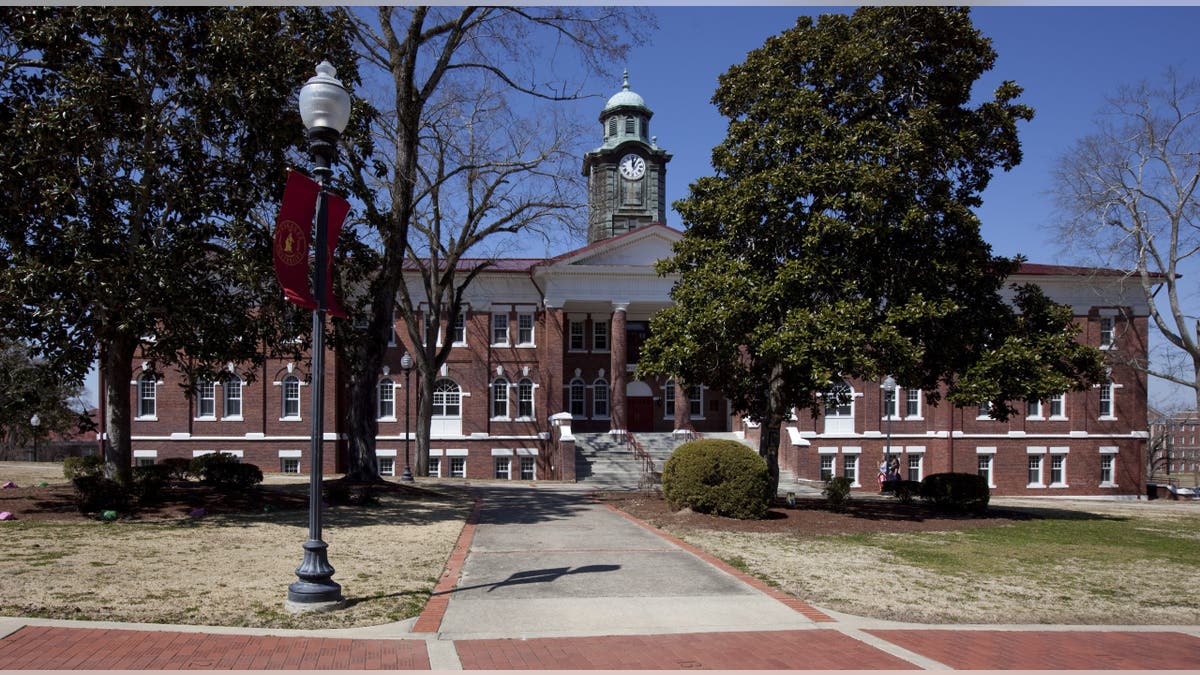
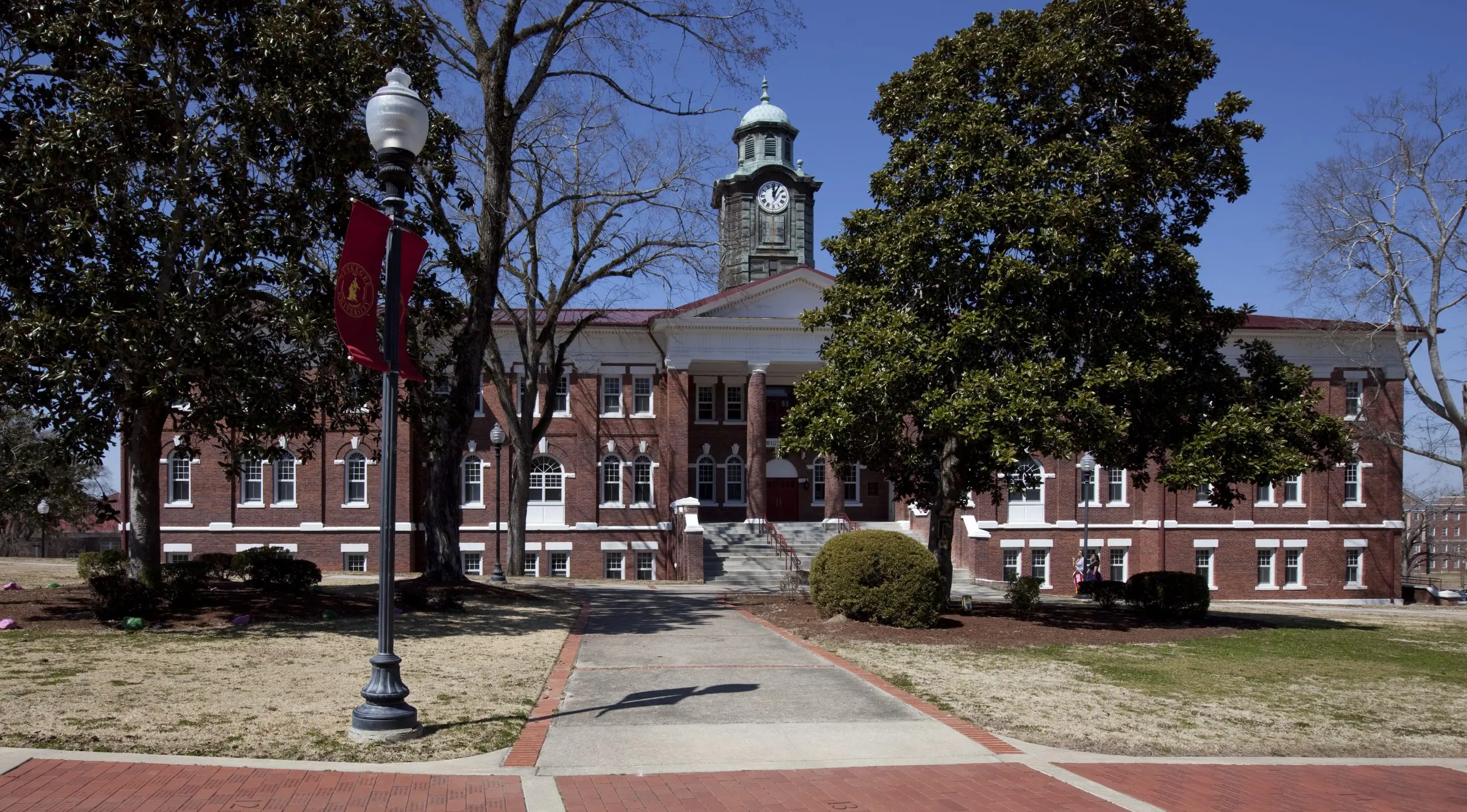
White Hall historic building, Tuskegee University, Tuskegee, Alabama (Carol M. Highsmith/Buyenlarge/Getty Images)
He is not dismissing broader debates over culture, expression or discrimination, but he argued that Tuskegee’s immediate responsibility is preparing its students to succeed amid those realities.
“I’m not discarding the debates,” he said. “The debates are great. I think America is great because we have debate. But that’s not the purpose of the university in this sense. The purpose of a university is, while the debates go on, to be prepared.”
Brown has heard the criticism but has not encountered significant pushback from Tuskegee students. He also said he has received significant positive feedback from leaders at other universities.
“This is not unique,” Brown said. “If you go to many universities, they have dress codes, they have these kinds of things. Perhaps we are, at this moment, [placing] a greater emphasis.”
For Brown, the larger question is whether universities view their responsibility to students as ending at graduation.
“If we think the degree ends the relationship, I do not,” Brown said. “I think the relationship and the value of the time here ends down the road, when that student is getting a return on investment.
“That matters the most for those students who are economically at a disadvantage, who are using education as a springboard to do better,” he concluded. “Again, every college president, chancellor – I’ve got to believe – wants that for their students.
“But do we expect them to practice that when they start work? Or isn’t the classroom an extension of that? Isn’t it a laboratory by which you practice these very important skills? I think it is.”