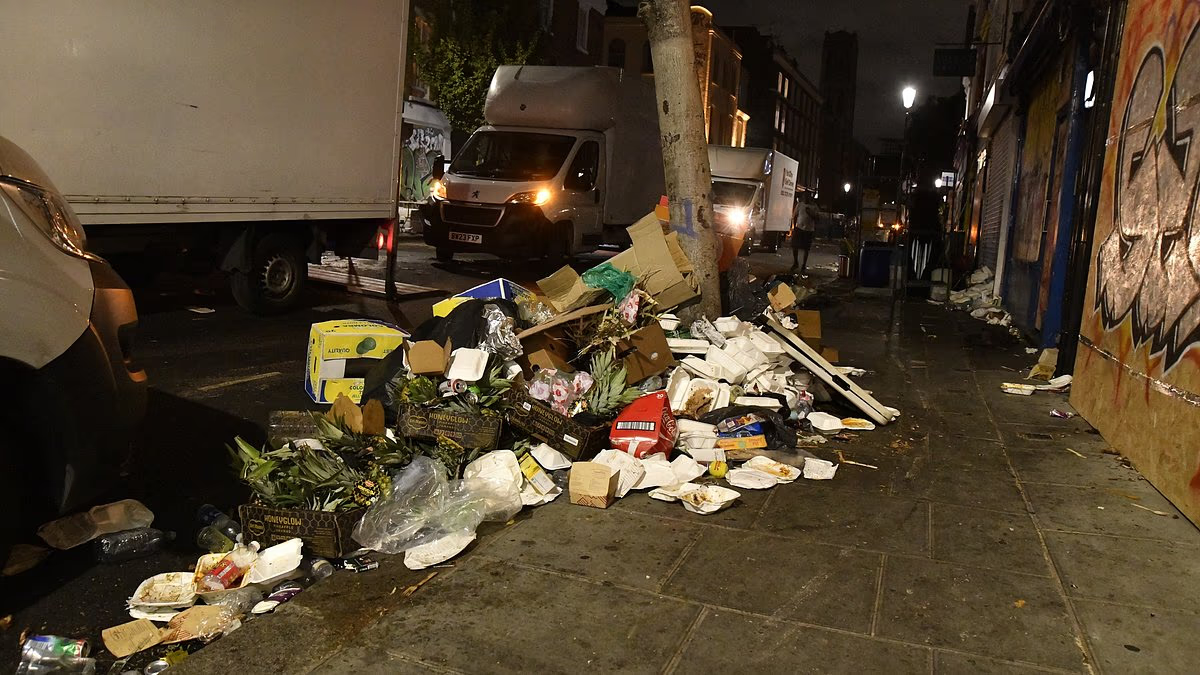

Clean-up crews worked through the night after Notting Hill Carnival, confronting vast piles of litter left behind once the celebrations ended.
Roads around the west London festival route were pictured strewn with rubbish, including raw chicken carcasses, takeaway containers, beer cans and cigarette butts.
The aftermath came as the Metropolitan Police confirmed today that arrests across the two-day event had risen to 636.
Police made 242 arrests on Sunday and a further 394 yesterday, with alleged offences including drug and weapons possession, assaults, attacks on emergency workers and sexual offences.
Live facial recognition technology led to 121 arrests, while 86 registered sex offenders were stopped. Of those, seven were found to be breaching their conditions and were arrested.
Officers also recovered 68 weapons through stop and search powers, including a handgun.
Familiar London landmarks, including red post boxes, were left smothered with plastic bags and discarded drinks cans dumped by carnival-goers over the weekend.
The Royal Borough of Kensington & Chelsea estimates the annual cost of cleaning and staffing the event at £1million, with around £300,000 recouped through street trader fees.
Notting Hill Carnival attracts millions of people each year over the two days, with partygoers seen climbing on top of bus stops and engaging in racy dancing.

Workers tackle the immense clean-up operation in Notting Hill following the carnival

Raw chicken is left for workers to clean up following two days of partying in one of London’s most affluent areas

Iconic cultural icons including red post boxes were left covered in plastic bags and beer bottles

A huge mound of litter is left next to a tree in Notting Hill on Monday night

Rubbish left in Notting Hill after the annual carnival over the weekend

The window of one property was left with dozens of takeaway boxes stacked on its sill

Revellers climb on top of a bus stop near Westbourne Park station in west London

Carnival-goers during the Notting Hill Carnival in London yesterday
Yesterday, the Met confirmed a man fleeing police at the carnival died after entering a canal.
The body of a man thought to be in his 20s was pulled from the water near a park in North Kensington, west London.
The force had been called at 3.19pm and attempted to stop the individual. He fled on foot as officers followed behind but entered the water a short time later.
The man was pulled from the water by officers and members of the public and was given CPR. He was taken to hospital where he was later pronounced dead.
It came as million-pound homes and businesses were left surrounded by litter following the festival, with the window of one property left with dozens of takeaway boxes stacked on its sill.
Many residents had already boarded up their properties ahead of the carnage, with photos from last week showing luxury London flats and houses protected by temporary coverings.
The event has caused much controversy over the years, known for becoming violent and bringing mounds of rubbish to the affluent area.
Official estimates suggest the carnival annually contributes almost £400million to the wider economy – but comes at a cost to taxpayers.
The Met’s policing operation cost £15.7million last year, up from £11.7million in 2023, while City Hall gave organisers an extra £4.6million grant for stewards and CCTV on top of the near-£1million already pledged to support the event.
Some have called for the Carnival to impose an admission fee to help cover costs.
James Ford, a former adviser to Boris Johnson when he was Mayor of London, said in City AM last week: ‘If London can’t turn a reasonable profit – or at least cover its costs – on one of the biggest street festivals in the world, then there is something fundamentally wrong here.’

A general view after the Notting Hill Carnival in London in the early hours of this morning

Litter fills the street in one of London’s most affluent areas this morning

Rubbish left in Notting Hill after the annual carnival over the weekend

Revellers climbing fences at the side of the railway in Notting Hill. The Met says the event has been ‘overwhelmingly positive’ despite making scores of arrests

Thousands of people attend the 60th-anniversary carnival on family day

Litter is seen on the floor following the carnival. The Royal Borough of Kensington and Chelsea estimates its annual clean-up and staffing bill as £1million
Organisers insist the carnival is safe and labelled criticism of it ‘unfair’.
But it has been marred by tragedy in recent years – including the 2024 murder of young mother Cher Maximen – and widespread drug use, with discarded nitrous oxide canisters a common sight on the streets.
Ms Maximen, 32, was murdered in front of her three-year-old daughter – one of eight stabbings in and around the festival.
Her killer Shakeil Thibou was jailed for life. Thibou had lunged at a man with a large knife at the festival and fell into a crowd of people including Ms Maximen. As he swung his blade, he stabbed her in the groin while she was shielding her child.
Mussie Imnetu was also murdered close to the carnival in 2024 by Omar Wilson, who lied to police that he had acted in self defence as he punched and kicked Mr Imnetu in Queensway and delivered kicks to his head.