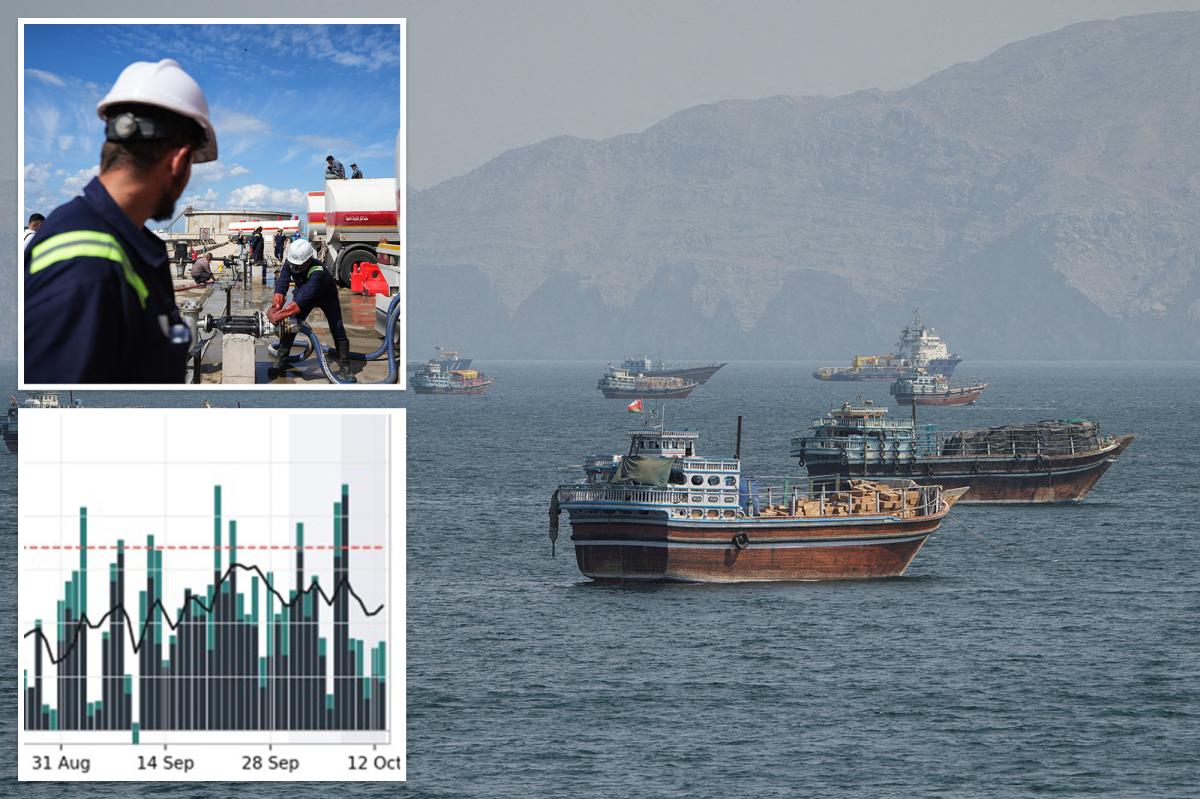

More than 12 million barrels of oil a day have moved through the Strait of Hormuz this month, exceeding last month’s average despite a sharp increase in attacks attributed to Iran, analysts said.
Oil shipments through the strategic waterway have risen since September. TankerTracker.com and maritime intelligence firm Kpler estimate that more than 9 million barrels per day have traveled under direct US military protection.
The higher export volume comes as 26 vessels have reportedly been attacked in October, making the month the most dangerous period for tankers and commercial ships since the conflict began.
The risks were underscored Wednesday when a cargo vessel sank after being struck by an unidentified projectile, according to Iran’s military and maritime incident analysts.
Still, the financial rewards appear to be outweighing the danger for some crews. Sailors have said they earned tens of thousands of dollars more over the past month by continuing to make the risky crossing.
Capt. Tim Hawkins, a spokesperson for US Central Command, said an estimated 19 million barrels of oil passed through the strait on Monday alone.
“Transits through the Strait of Hormuz continue despite Iran’s unwarranted aggression,” Hawkins told The New York Times.
The oil trade is nevertheless beginning to feel the impact of the escalating tensions. Shipments fell sharply over the past week following some of Iran’s heaviest attacks.
Kpler reported that almost 23 million barrels crossed the Strait of Hormuz last Thursday, but Wednesday’s volume was only about one-tenth of that amount.
Kpler’s latest six-day average showed that fewer than 4.6 million barrels of oil were passing through the waterway each day.
Maritime analysts also said ship-to-ship oil transfers near the Gulf of Oman remained relatively limited during the past week.
The instability, combined with repeated Houthi attacks on Saudi energy facilities, has helped keep oil prices elevated. Brent crude, the international benchmark, remained above $104 a barrel on Thursday.


