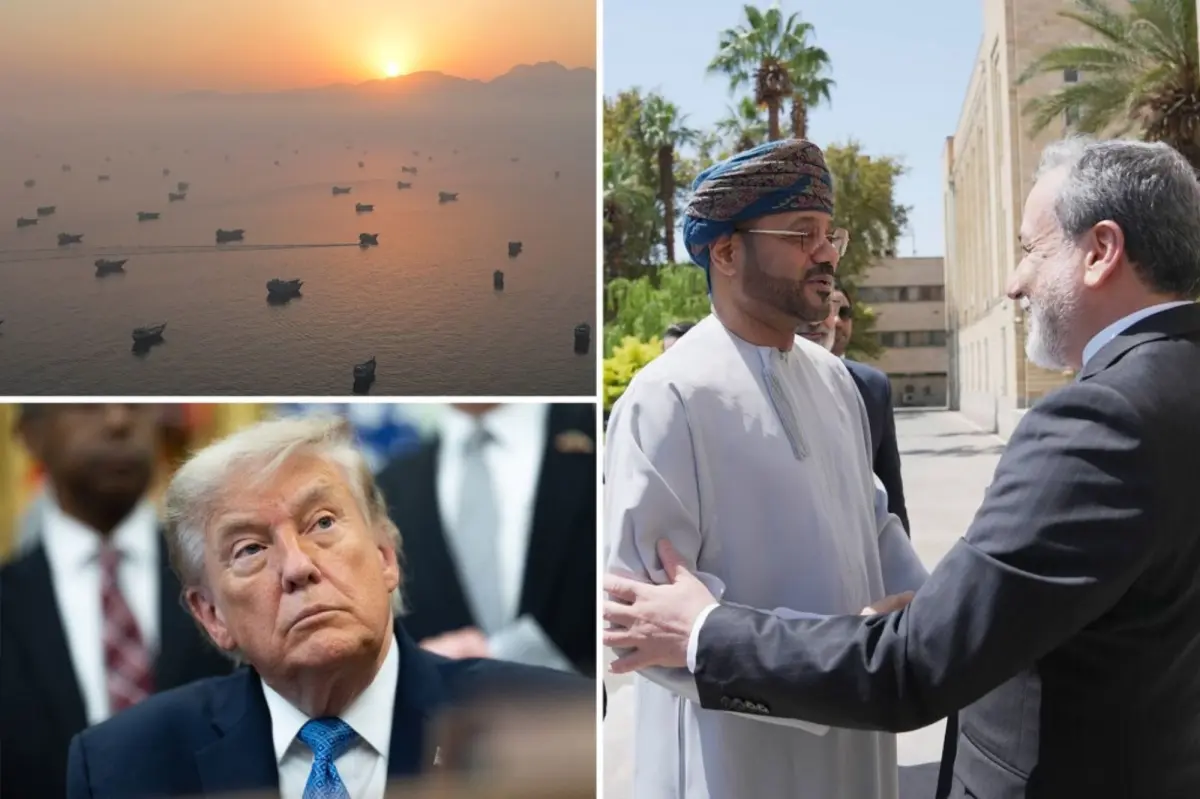
WASHINGTON — Oman has privately turned down Iran’s push to impose shared service fees on commercial vessels passing through the Strait of Hormuz, The Post has learned, sidestepping a potential confrontation with President Trump, who had warned of military action against the US partner.
A senior regional official said Muscat refused to approve the proposed charges — even if framed as voluntary payments — for environmental and security-related services, despite a claim last week by Iran’s Islamic Revolutionary Guard Corps.
A US official told The Post last week that the details of any revenue-sharing arrangement had not been completed, even inside Tehran, suggesting the IRGC announced the idea prematurely.
Trump had twice threatened to bomb Oman if it accepted what would effectively amount to tolls on the key waterway, saying on Aug. 17: “If Oman gets in the way, we’ll bomb the s–t out of them.”
Any plan to collect fees from ships would also be unworkable without US approval, given Trump’s reimposed naval blockade of Iran.
Oman, while viewing itself as an American ally, has long tried to serve as a regional go-between. Muscat sought to prevent the current war by hosting US-Iran nuclear talks and previously helped mediate the release of Americans held by Yemen’s Iran-backed Houthi movement.
The sultanate also brokered the May 2025 cease-fire between the US and the Houthis, who control northern Yemen. That agreement remains in place.
Iran has been pressing Oman, which sits along the strait’s southern coast, to accept a post-war arrangement that would expand Tehran’s influence over the crucial international chokepoint for oil and gas shipments.
Last Tuesday, Iranian Foreign Minister Abbas Araghchi and Omani Foreign Minister Sayyid Badr Albusaidi met in Tehran and discussed the waterway.
Hours later, IRGC spokesman Hossein Mohebbi told the state-run Sepah News agency: “Agreements have been reached regarding each country’s share of the strait’s waters as well as Iran and Oman’s share of its revenue.”
Oman is now balking at the Iranian proposal, according to sources familiar with the talks, in deference to broader peace efforts. Meanwhile, the United Arab Emirates and its banking hubs used by Iran-linked figures are emerging as a renewed focus in Washington.
Treasury Secretary Scott Bessent on Friday announced actions to cut off transactions with Banque Misr UAE and sanction the manager of Bank Melli’s Dubai branch for allegedly doing business with Iran — after sanctioning 154 other UAE-based entities over the past year.
More targeting of UAE-based institutions is expected as part of Bessent’s “Operation Economic Outcast,” which aims to force Iran to negotiate a peace deal through inflicting economic pain.
“The UAE needs to step up here,” a Republican source told The Post. “They are playing both sides, asking [Trump] to keep going to war, while at the same time paying the Iranians billions.”


