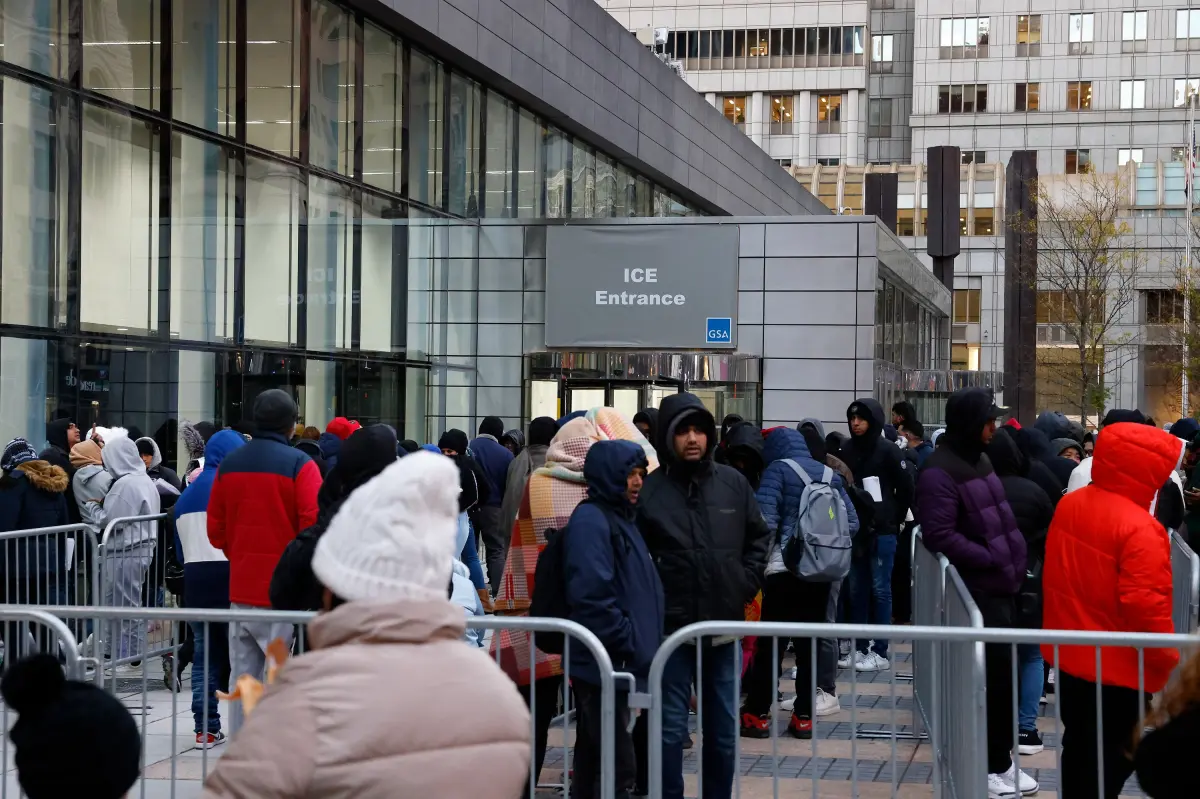
Indian professionals seeking permanent residency in the United States are now facing an extraordinary projected Green Card wait of 179 years, as stricter immigration policies and long-standing caps continue to squeeze the employment-based visa system.
The Green Card backlog has climbed to roughly 1.2 million applicants, according to a new report from the National Foundation for American Policy, with federal immigration rules limiting annual employment-based Green Cards to 140,000 and capping any single country’s share at 7%.
That formula has left applicants from heavily represented countries such as India and China facing waits that can stretch for decades, even when they qualify through skilled-worker categories.
The report estimates that a Chinese applicant in the EB-2 category — typically used by professionals with advanced degrees, including master’s degrees — could wait about 25 years for a Green Card.
For Indian professionals in the same pipeline, the projected delay is far more severe: about 179 years, according to the Virginia-based NFAP, a nonprofit research group focused on immigration and international trade policy.
By contrast, workers from the Philippines face a much shorter timeline, with waits measured in months rather than decades.
Even in the highly sought-after EB-1 category, which is designed for applicants with “extraordinary ability,” Indian nationals are looking at waits of around four to five years, while Chinese applicants face an estimated five-year delay.
NFAP warns that these extended Green Card wait times make it more difficult for US employers to recruit and keep foreign-born talent, while also placing heavy uncertainty on immigrant workers and their families.
“Many Americans don’t realize how challenging it can be to immigrate legally to the United States, even for the most highly skilled and innovative people in the country,” Stuart Anderson, executive director of the NFAP, told the San Francisco Chronicle.
“These are people who want to become Americans and are willing to wait years for the chance.”

For those holding temporary H-1B work visas, which are most often given to those in the tech sector, pending green card applications keep them mired in so-called “H-1B limbo,” requiring them to stay in specialty professions where their employer sponsors their application.
If an H-1B worker is laid off, they have just 60 days to find another job or leave the country, according to the outlet. The Trump administration says it intends to impose a $103,000 administrative fee for H-1B visa applications, complicating matters further as the federal government has curtailed the number of H-1B holders in the country.
Kevin Lynn, executive director of the D.C.-based Institute for Sound Policy, who opposes the H-1B visa system, claims the current setup allows US companies to hire foreign workers and pay them less than their US counterparts, arguing it negatively impacts American jobseekers.
“We don’t need these tech workers,” he told the Chronicle.
“These employment visa programs that have led to this logjam have negatively impacted American innovation and inventiveness. … If you don’t want to be in that backlog, don’t come to the United States, don’t participate. That’s a choice someone makes.”