
The Missouri Supreme Court has unanimously halted the state’s use of a newly drawn U.S. House map that would have benefited Republicans in the midterm elections, ruling that voters must first decide whether the plan should stand.
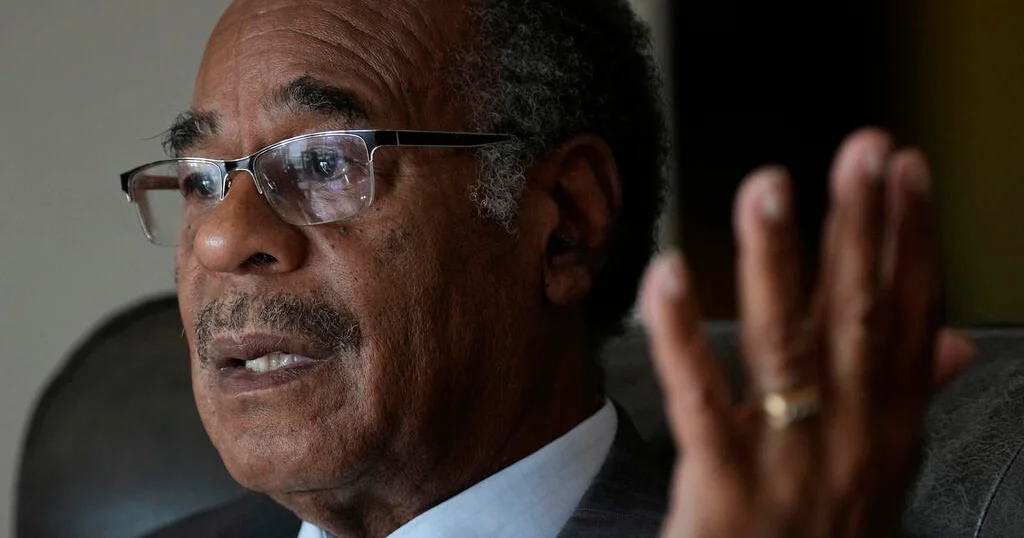
Thursday’s ruling delivers an uncommon defeat for Republicans in the escalating national redistricting battle as the party works to protect its narrow majority in the U.S. House. It also represents a major victory for veteran Democratic Rep. Emanuel Cleaver, whose Kansas City-area seat had been targeted under the new map in a way that would have made the district more favorable to the GOP.
Missouri Attorney General Catherine L. Hanaway indicated Thursday night that her office will appeal to the Supreme Court, writing on X: “We are confident that the federal courts will not allow every Missouri voter to be disenfranchised—which is what today’s decision does.”
President Trump, who has urged Republican-controlled states to create more GOP-leaning congressional districts before the midterms, criticized the ruling on social media. In a post, he called it “a Dark Day for ‘Justice’ in Missouri” and argued that “Missouri must be able to use the map that was in effect just a couple of months ago, in the Primary.”
The revised Missouri congressional districts were used in the August primaries. However, the state’s high court said the map cannot be used for the November general election — or in any future election — unless Missouri voters approve the districts enacted by the Republican-led Legislature.
The justices put the new congressional map on pause after residents submitted petition signatures calling for a statewide referendum on the redistricting law.
“The referendum petition was legal, sufficient, and timely, and the secretary incorrectly concluded otherwise,” the court wrote. The law creating the new districts, the justices said, “did not go into effect and will not go into effect unless and until approved by the voters.”
That means the congressional boundaries approved after the 2020 census — a map with six Republican-leaning districts and two Democratic-leaning districts —
“remains in full force and effect for the November 2026 general election.”
Missouri’s Constitution does not explicitly state that a referendum petition applies to a congressional redistricting measure passed by lawmakers. But the Missouri Supreme Court found that the constitutional language allowing voters to challenge “any act” of the Legislature includes congressional redistricting laws.
The ruling capped a year of political maneuvering and legal wrangling over the new districts.
After Mr. Trump urged Republicans to redraw congressional districts to their advantage, Missouri Gov. Mike Kehoe called lawmakers into a special session last year to dramatically reconfigure the 5th Congressional District, held by Cleaver.
Opponents submitted over 300,000 petition signatures in December seeking to put the map to a vote of the people. But Republican Secretary of State Denny Hoskins waited until primary election day in August to reject the petition. He asserted that the referendum process cannot be used for congressional redistricting. A lower court agreed, resulting in an appeal to the state’s highest court, which overturned Hoskins’ decision.
Attorneys representing Hoskins and Republican Party committees had argued it was too close to the general election to revert to the prior districts without causing confusion and chaos.
Cleaver, who was unopposed in the August primary, has carried the Kansas City-based district with at least 60% of the vote in each of the past two elections.
Cleaver had not posted campaign signs in many of the new rural areas, explaining that he was waiting for the Missouri Supreme Court’s decision. But he had vowed to continue his reelection campaign regardless of the outcome.
“We’re going to run, and we’re going to run hard, no matter where we are,” Cleaver said last month at the Missouri State Fairgrounds in Sedalia, which had been added to the revised 5th District.
Brattin, a Marine veteran and founding member of the conservative Missouri Freedom Caucus in the state Legislature, had questioned whether Cleaver could represent a wider district.
“I think his whole campaign strategy was hoping that the courts would do his bidding for him. I don’t think that he represents Missouri values,” Brattin had said at the State Fair.
Congressional districts typically are redrawn at the start of each decade, based on new census data. But Mr. Trump’s quest for a midterm election advantage triggered an unusual mid-decade redistricting battle that spread to more than a dozen states — and triggered a dozen lawsuits in Missouri alone. All told, Republicans had hoped to net as many as 10 additional seats nationally.
The Missouri Supreme Court ruling was one of only a few nationally to go against Republicans’ redistricting plans.
Prior to its latest ruling, Missouri’s top court already had rejected claims that the special session was illegal, mid-decade redistricting isn’t allowed and the new districts aren’t compact enough.
The group People Not Politicians spearheaded the referendum petition.
A couple hundred people chanted “Let us vote!” while rallying Wednesday outside the state Supreme Court. Grant Christensen, of Jefferson City, said he had signed the referendum petition to put the map to a vote.
“Gerrymandering is the same as voter suppression,” Christensen said. “Cutting up districts in order to steer them to vote one way or the other is not fair.”