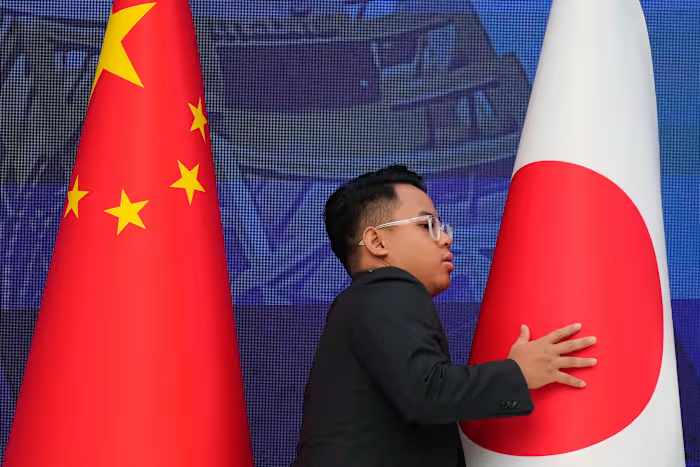

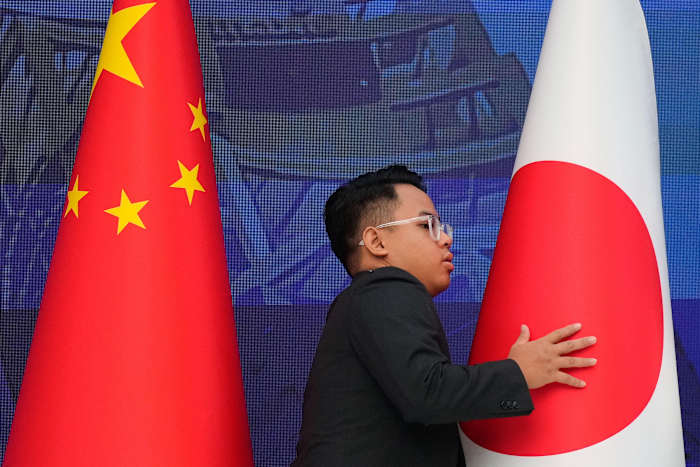
BANGKOK – Japan has lodged a protest over new Chinese restrictions that could sharply limit Japanese exports of a crucial chipmaking chemical, with Tokyo saying Tuesday it is assessing how the move may affect domestic companies.
China announced the curbs on imports of dichlorosilane from Japan, alleging that shipments of the compound, commonly known as DCS, breached anti-dumping rules and caused damage to Chinese producers.
Starting Tuesday, importers bringing the chemical into China from Japan are required to place cash deposits with Chinese customs at rates as high as 99.2%. The measure covers Japanese DCS exporters including Shin-Etsu Chemical and Denal Silane.
Beijing has described the action as provisional while its investigation remains underway, with a final determination to be issued at a later date.
The dispute comes amid heightened tensions between China and Japan following remarks in November by Japanese Prime Minister Sanae Takaichi, who angered Beijing by suggesting Japan’s military could become involved if China used force against Taiwan, the self-governed island that China claims as its own territory.
In Tokyo, Chief Cabinet Secretary Minoru Kihara, Japan’s top government spokesperson, objected to the restrictions and said the government would “respond appropriately” to prevent Japanese businesses from suffering unfair damage.
China’s commerce ministry opened the anti-dumping investigation into Japanese DCS as part of a broader set of measures targeting Japan. Beijing has also placed export controls on Japanese companies involving dual-use goods that may have military applications.
DCS plays an important role in semiconductor manufacturing, where it is used in chemical vapor processes to deposit thin layers of silicon, oxide and other films in logic and memory chips. Although the global DCS market is highly competitive, Japan remains the leading supplier of ultrapure DCS used in chip fabrication.
___
Yamaguchi reported from Tokyo.