
Municipal leaders across Connecticut are facing mounting resistance from residents over the use of automated license plate readers, with critics warning that the technology could create serious privacy risks.
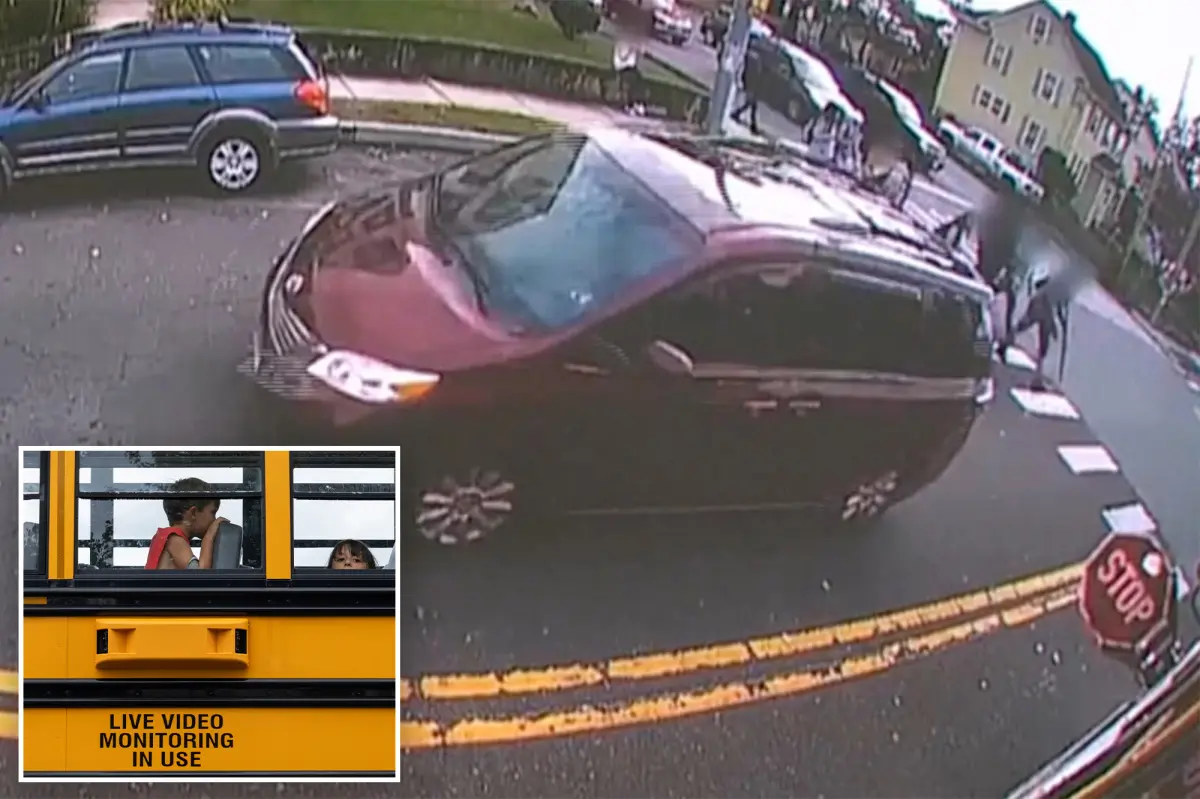
Even as some state and local officials urge a temporary pause to review potential policy guardrails, a number of communities are moving ahead with a different use of the technology: AI-powered cameras mounted on school buses.
At least several towns and cities — including Vernon, Bridgeport, Danbury, Shelton, Stratford, North Haven and New Haven — have entered agreements with BusPatrol, a company that equips school bus fleets with camera systems designed to record drivers who pass buses while their red warning lights are flashing.
BusPatrol technicians review the recorded incidents and send the footage to local police for enforcement.
The company’s cameras differ from some other license plate reader systems, including those operated by Flock Safety, because they are not constantly scanning traffic or monitoring roadways.
A BusPatrol spokesperson said the system activates “only when a school bus is stopped with its warning lights and stop arm engaged.”
Connecticut has permitted digital video to be used as evidence in such violations since 2011.
A change in state law in 2024 gave municipalities greater authority to create video monitoring programs and issue fines to violators.
And so far, they have caught quite a few.
In New Haven, which installed the technology on more than 300 buses earlier this year, cameras have already recorded 12,000 incidents.
Marc Petruzzi, chief of police in Vernon — which announced its rollout last month — said the town installed the cameras to avoid future tragedies.
“Passing a stopped school bus is one of the most dangerous things that a driver can do,” he said at a press conference announcing the initiative.
In the first three days of the program, BusPatrol cameras caught almost 100 motorists passing school buses, said David Owens, a spokesman for the town.
Still, some Connecticut residents are wary of the cameras — particularly when it comes to how the video they capture is stored and shared.
“I think AI cameras on school buses should be banned, just as all AI cameras in the state and in the country should be,” said Dan Piper, an organizer for CT Civil Liberties Defense Committee and teacher in the Hartford area.
Piper expressed concern over the possibility of video being shared with federal immigration enforcement agencies and connected to other databases that use AI for surveillance.
“When someone tells me that we’re going to have more cameras that are connected to private databases that use AI to search for people, we know that those companies are sharing that information,” Piper said.
A spokesperson for BusPatrol, said the company’s child safety systems are regulated by the state in which they’re installed. “BusPatrol retains information only for as long as it is needed for law enforcement review or required by law and is purged once the citation reaches its final disposition. By default, all data belongs to the school district,” he said in an emailed statement.
The school bus use case
It’s been illegal to pass a stopped school bus for decades in Connecticut, but state and local officials have struggled with enforcement.
Each year, thousands of people drive past stopped school buses.
In the last six years, there have been 12 fatalities and 23 serious injuries in Connecticut involving school buses, said Josh Morgan, communications director at the Department of Transportation.
It’s not clear how many of those incidents involved cars passing a bus with its lights flashing.
Connecticut lawmakers have established penalties for passing a school bus at several hundred dollars per offense.
In 2011, the state allowed local police and school districts to install cameras on buses to record incidents and to use that evidence against motorists accused of illegally passing a bus.
It set the fine for a first-time violation — regardless of whether it was caught on camera — at $450.
In 2024, lawmakers updated the statute to give municipalities the power to authorize video monitoring system via ordinance, and it set the fine for first-time violations caught on camera at $250.
The fine for violations caught by officers in-person is still $450.
But as cities and towns begin to deploy more bus cameras, residents in many communities in Connecticut are growing increasingly wary of any kind of automated license plate reading (ALPR) surveillance.
That’s because Connecticut has rapidly become the state with the most ALPR cameras per capita in New England, according to DeFlock, which tracks ALPR installations. Municipalities and businesses across the state have installed nearly 800 ALPRs to date.
Citizens’ concerns rose after reporting from CT Insider found that Connecticut ALPR cameras had been searched thousands of times by out-of-state agencies enforcing federal immigration and other states’ abortion laws.
In recent months, residents have turned up at town meetings around Connecticut to register their opposition to technology that could be used for surveillance by other states or federal enforcement agencies.
Piper is one of those residents.
“We have asked at town council meetings, do you have data that shows that the introduction of the cameras reduced crime? And they never can say that they do,” he said.
A Flock Safety spokesperson recently told Connecticut Public that at least half of the state’s police departments use some of the company’s services, including license plate readers and drones.
A Flock Safety spokesperson declined to comment on the overall number of cameras in Connecticut in an email to The Connecticut Mirror.
Last month, Gov. Lamont called for a 30-day pause on municipalities installing new automated license plate readers while the Connecticut Police Officers Standards and Training Council develops guidance for data retention and data sharing.
Lamont’s guidance addressed “school zone traffic enforcement safety devices, work zone speed control cameras, fixed ALPR devices, drones” but did not specifically call out school bus-mounted cameras.
Cathryn Vaulman, spokesperson for the governor, said in an email that the pause would allow “time to evaluate potential gaps in our existing legal protections and to give towns, police and the industry a chance to communicate the types of video technology and use cases more effectively.”