
The Department of War’s Office of the Assistant Secretary of War for Industrial Base Policy announced Monday that it will invest $450 million in The Elmet Group, a U.S.-owned company that produces tungsten and molybdenum materials and components through an integrated domestic operation. The investment was carried out by the War Department’s Economic Defense Unit, established in April 2026 to draw on private-sector financial expertise in confronting the economic leverage of foreign adversaries. The unit has three primary responsibilities:
- Protect Supply Chains: The unit secures critical materials like tungsten and rare minerals to avoid foreign dependencies.
- Deploy Capital: It helps structure large government investments using private market strategies.
- Target Adversaries: It focuses on countering economic pressure from China, Russia, Iran, and North Korea.
Assistant Secretary of War for Industrial Base Policy Mike Cadenazzi said the move demonstrates the department’s commitment to restoring America’s critical industrial capacity. “Expanding domestic tungsten processing will strengthen supply chain resilience, support high-quality manufacturing jobs, and reinforce the production base behind essential defense systems,” he said in a statement.
Tungsten is essential to a wide range of defense and industrial applications, including missiles, munitions, aerospace systems, propulsion, naval and undersea equipment, electronics, and advanced manufacturing. The investment is intended to establish a reliable U.S. tungsten supply and reduce the country’s current dependence on China.
What’s Going On?
The Trump administration is taking steps to address a vulnerability that officials and critics say Washington neglected for decades: the nation’s dependence on foreign powers for materials critical to national security. Strategic minerals and rare earth elements may no longer dominate daily headlines, but they remain central to U.S. defense and economic security.
When President Trump took office, the United States relied heavily on Russia and China for key parts of its ammunition and defense-material supply chains, as previously reported by RedState in “INSANE: The US Relies on China and Russia for Its Ammunition Supply.” The administration now says it is pursuing greater self-sufficiency, including through efforts to challenge China’s control of the antimony market in Alaska.
Concerns over rare-earth dependence intensified in October 2025, when China announced export controls covering rare earths refined within the country. The policy effectively warned buyers that sourcing these materials from China could limit their ability to resell them or market products containing them. The development prompted renewed debate over Chinese economic coercion, tariffs, and whether the United States should move more aggressively to decouple from China’s critical-minerals supply chain.
The Trump administration responded by creating a strategic reserve of raw materials, including through the $12 billion “Project Vault” plan. It has also begun investing directly in companies involved in mineral extraction, processing, and recycling. Those efforts include a Department of Energy commitment of $134 million toward recycling rare earth minerals and support for technologies designed to reduce China’s influence over critical resources.
For libertarians, direct government investment can evoke concerns about socialism or industrial policy. Supporters of the strategy, however, argue that public backing may be necessary to counter China’s efforts to preserve its dominance. Under that approach, China could flood the market with a material targeted by an emerging competitor, drive prices below sustainable levels, and force the newer company into losses. Once the competitor collapses, prices could rise again. By holding an equity position, the U.S. government would have a greater ability to help promising domestic producers withstand such pressure.
About the deal
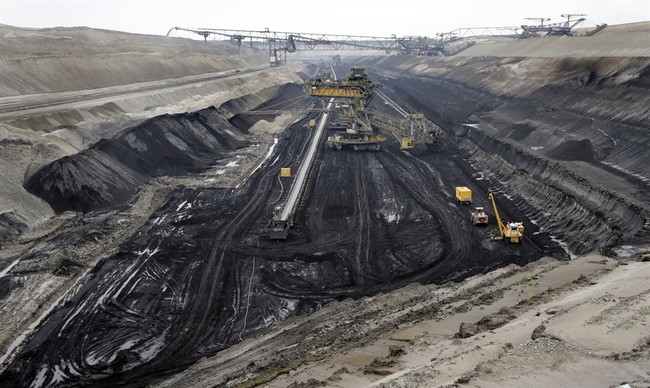
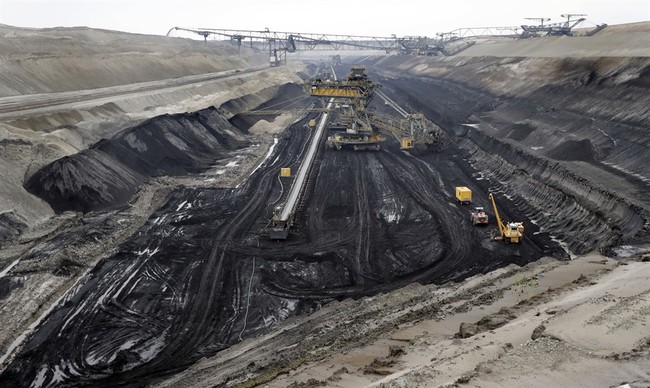
The agreement is designed to expand domestic mining, manufacturing, processing, and raw-material production. Elmet Group operations are expected to involve Maine, Michigan, and Ohio. The plan also sets aside $150 million to reopen the Springer Tungsten Complex in Nevada, an abandoned site estimated to contain roughly two million tons of tungsten ore.
Elmet Group has additionally secured a U.S. Defense Logistics Agency contract valued at up to $2 billion to help replenish the National Defense Stockpile. That agreement would provide the company with a substantial guaranteed revenue stream and, supporters say, make it harder for China to undermine the project through aggressive pricing tactics.
Getting real
Ralph Waldo Emerson is often credited with observing that “A foolish consistency is the hobgoblin of little minds.” By that measure, critics say, the response from some libertarian commentators has been remarkably consistent. The Cato Institute, frequently associated with calls for open borders and broad amnesty, appeared surprised that the U.S. government would intervene to protect domestic industry from foreign adversaries. The author said many of the reactions could not be shared because the accounts involved had blocked him, though he noted that the following post offered a representative summary. It is unclear whether the account is affiliated with Cato.
FMA Following Marx Again, what could possibly go wrong, again? pic.twitter.com/bNl7lf7yjh
— Justin Havens (@JustinHavens10) September 15, 2026
Even though Cato’s VP says this is 33 deals, professionals put the number higher. The value may be as much as $28 billion.
To be clear, none of these deals involve the U.S. government taking a majority stake in the enterprise. Typically, they involve equity, warrants, convertible securities, and golden shares. The latter gives the government a major say, if not an outright veto, in corporate governance.
The U.S. federal government has become one of the more active equity investors in strategic industries, and it has done so with remarkably little fanfare. Since January 2025, Washington has announced roughly $27.6bn across 37 deals involving equity or quasi-equity stakes in public and private companies. The stakes span semiconductors, critical minerals, quantum computing and energy, with the first two sectors alone accounting for more than 80 percent of total deal value.
The deals cover semiconductors and advanced computing; critical minerals extraction and processing; and steel, nuclear, and defense systems. And, of course, the most famous deal was the Pentagon buying Venezuela’s oil output: see Trump’s Oil Deal Is the Monroe Doctrine With a Term Sheet: 100-Year Rights and Beijing Locked Out – RedState.
Bottom line
The idea that we can rely on the “free market,” such as it is, to keep the nation’s supply of strategic, warfighting materials secure when about 80 percent of those materials come from our two major potential enemies is nonsense. After decades of sloth and neglect, the administration has chosen to ensure self-sufficiency by requiring American companies to produce those materials. The fact that Cato and libertarians, in general, are torqued over that decision not only shows that it is correct but makes it much sweeter.
Editor’s Note: Do you enjoy RedState’s conservative reporting that takes on the radical Left and woke media? Support our work so that we can continue to bring you the truth.