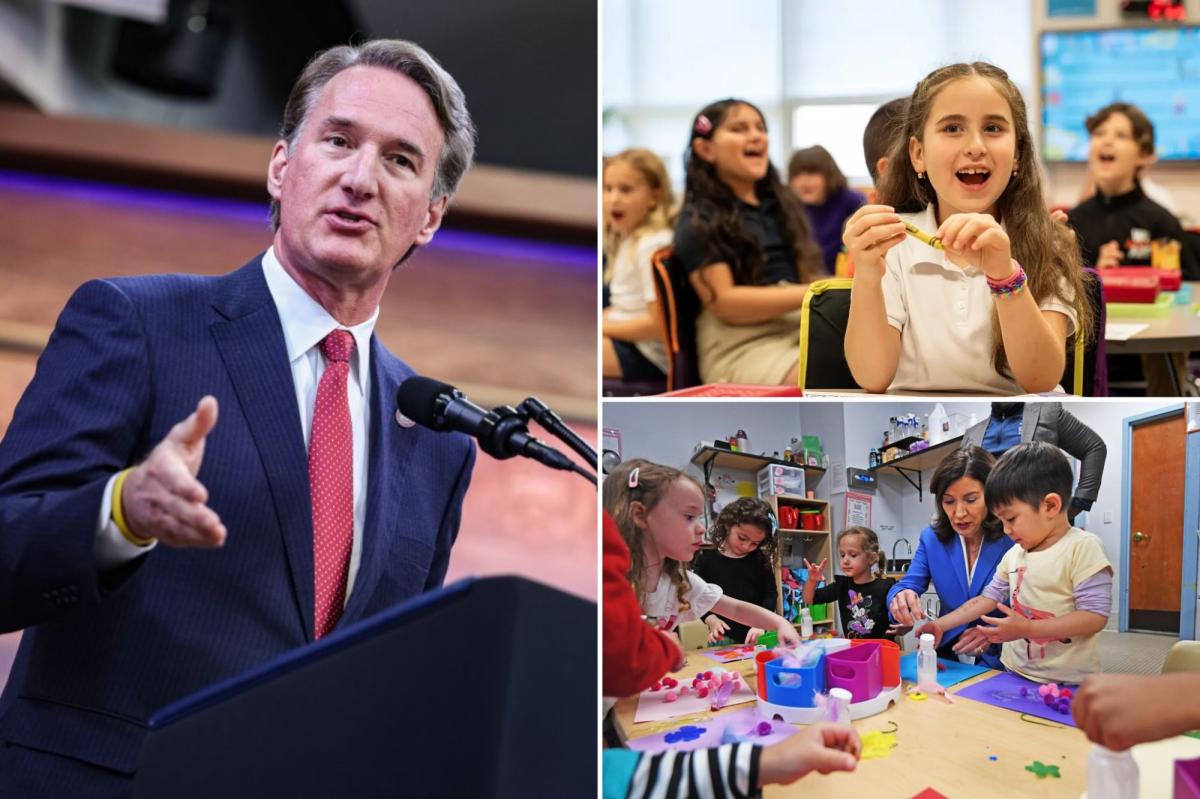

WASHINGTON — Former Virginia Gov. Glenn Youngkin’s school-choice organization is expanding its multimillion-dollar advertising campaign into several pivotal gubernatorial battlegrounds.
The second wave of ads will target competitive governor’s races in Georgia, Iowa and Nevada. The campaign seeks to build public awareness of the Education Freedom Tax Credit, known as “freedom scholarships,” which helps K-12 students cover private-school tuition, tutoring, after-school programs and transportation expenses for public-school students.
“It basically opens up the opportunity for families and students to make choices about their educational freedom or future,” Youngkin, who helped develop the program, told The Post.
The options, he said, could include remaining at a child’s current school, transferring to a private school with tuition assistance or receiving additional tutoring during the week or on weekends.
Created under the One Big Beautiful Bill Act, the EFTC provides a 100% federal tax credit to individuals who donate as much as $1,700 annually to scholarship-granting organizations.
Those organizations then distribute the funds through the freedom scholarship program.
The new advertising push marks the second phase of the campaign.
Last month, Youngkin’s group, Empowering America’s Parents, launched the first round of ads in Arizona, Michigan, Pennsylvania and Wisconsin — all battleground states led by Democratic governors.
Youngkin said the focus on Nevada, Iowa and Georgia reflects the need to keep the program in place after the upcoming elections. Although the current governors in those states have opted in, their successors will have to make the same decision to maintain participation.
“I think it’s really important for voters as they head into the fall to understand where the respected candidates stand, and particularly in states where there is an election,” he said.
An estimated 90% of U.S. schoolchildren could qualify for scholarships supported by the EFTC, although eligibility depends on whether individual states participate.
According to data from the Federation for Children, 31 states have either joined the EFTC or indicated that they intend to do so. The 20 jurisdictions that have not — including Washington, D.C. — are all led by Democrats.
Several Democratic governors, including Colorado’s Jared Polis and New York’s Kathy Hochul, have supported the program despite opposition from teachers’ unions and other influential groups.
Youngkin, the first governor to opt into the program, said some governors who have declined to participate are facing intense pressure from national teachers’ unions.
He also emphasized that the EFTC does not divert money from public education budgets.
Youngkin identified a lack of public awareness as one of the program’s biggest challenges.
“What we found is that virtually everyone we spoke with — polls show that this becomes a 70-30 issue with voters, 85-15 with women across the board, regardless of party — that they want this,” he said.