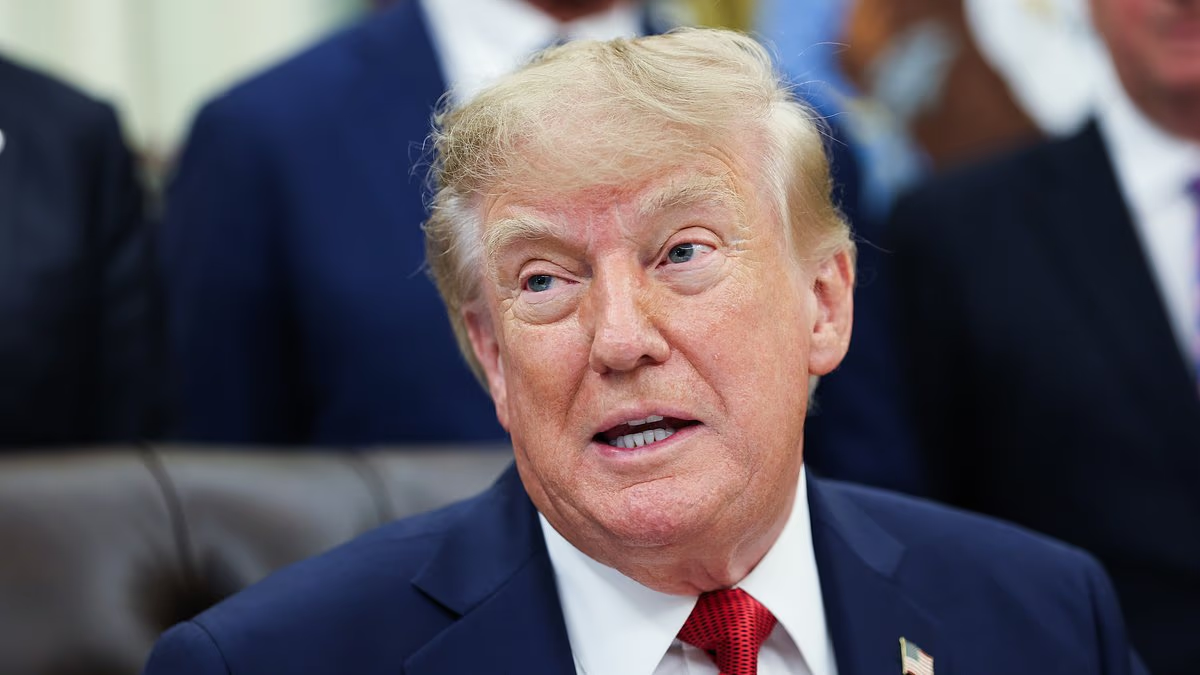

Surging gas prices, the ongoing war involving Iran and rising voter frustration with President Trump are putting Republican control of the House at increasing risk — while the Senate is also becoming more competitive.
Larry Sabato’s Crystal Ball now projects Democrats ahead in 208 House districts, compared with 203 for Republicans, while 22 races remain tossups. The latest update shifted eight contests toward the Democratic Party.
Democrats need to win 218 seats to take the House majority and elevate Minority Leader Hakeem Jeffries of New York to the speakership.
For much of the campaign, political analysts viewed a Senate takeover as the more difficult task. Republicans, however, are now being forced to defend seats in several states that were not previously viewed as major battlegrounds.
The University of Virginia political scientist’s Senate ratings give Republicans a slim 48-47 advantage. Prediction markets at Kalshi have become more favorable to Democrats, assigning them a 58% chance of winning the four seats required to gain control. Republicans currently hold the chamber by a 53-47 margin.
Kalshi’s forecast for Democratic control of the House has climbed to 90%.
Election analyst Charlie Cook wrote that the GOP’s most plausible outcomes now range from “bad” to “really bad” to “truly horrible.”
Republican leaders are paying attention. Vice President JD Vance traveled to Iowa on Friday and highlighted GOP Senate candidate Ashley Hinson, although the congresswoman notably skipped his event in Council Bluffs.
Hinson holds only a one-point advantage over Democrat Josh Turek in the RealClearPolitics polling average.
Vance had made a similar trip the previous week to Kansas, where Republican Sen. Roger Marshall is trailing megachurch pastor Adam Hamilton, 45% to 43%, in a new Emerson College survey of likely voters. The result falls within the poll’s 3.6-point margin of error.
“This poll finds Democrats with their best chance to win their first Senate seat in Kansas since 1932, in part driven by Democrat Hamilton’s appeal to independent voters,” said Spencer Kimball, the poll’s director.
The Cook Political Report did offer Republicans one piece of positive news, moving the New Hampshire Senate contest into its “toss up” category as former Sen. John Sununu seeks a political comeback.
Voters are now beginning to weigh in directly. Early voting opened Friday in Virginia and several other states, while North Carolina has already started mailing ballots.
The Republican Party’s growing distance from Trump was underscored by Rep. María Elvira Salazar of Florida, typically a strong White House ally. In a new television advertisement, she said the president’s immigration enforcement policies had “gone too far.” Trump said Friday that he disagreed with her position but stopped short of withdrawing his support.
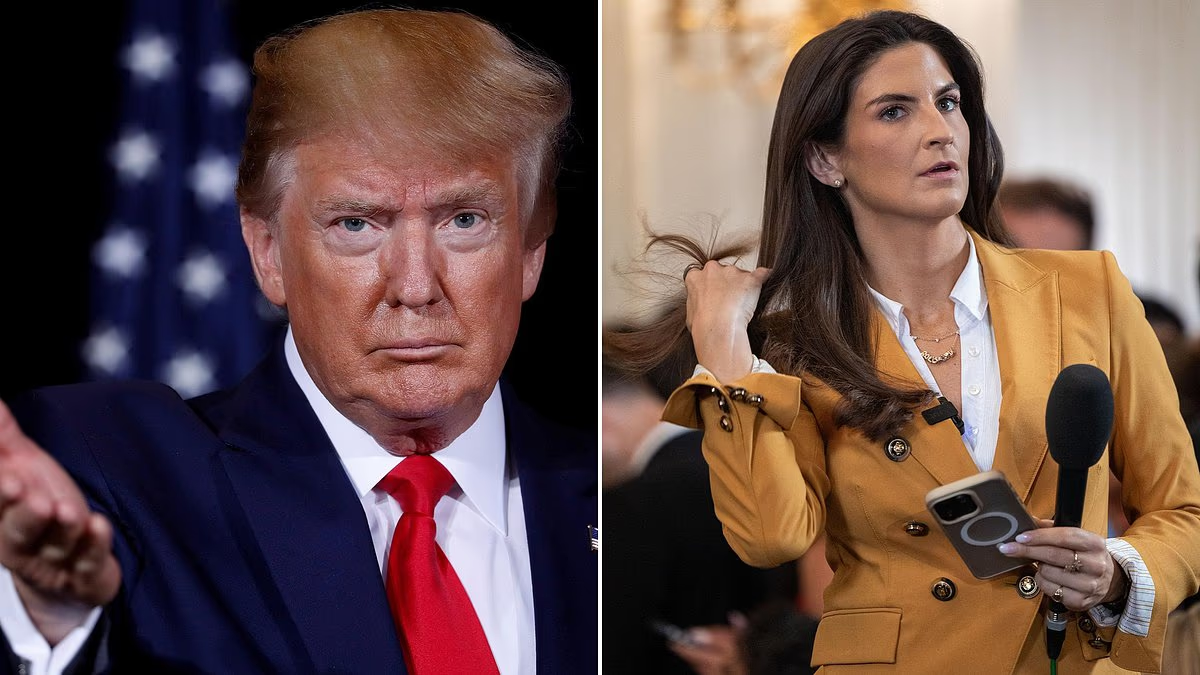
“She got a little bit soft on the border, I understand that,” Trump told reporters.
A surprising Marquette Law School poll released this week showed Democrats with a 13-point advantage when voters were asked which party they preferred in general. The survey also found that just 21% of registered voters approved of Trump’s handling of inflation.
“These are the kind of polling numbers that are fueling discussion of a potential ‘blue wave’ this November,” wrote Craig Gilbert, a fellow at the school’s Lubar Center for Public Policy Research.
Gilbert nevertheless warned that Republicans retain an “underlying edge in the playing field,” because many of the most important contests are unfolding in traditionally Republican territory.
House Republicans are continuing their effort to hold the majority and have already secured some projected gains through midterm redistricting. The National Republican Congressional Committee also reported a fundraising advantage over its Democratic counterpart, bringing in $89 million compared with $76 million, according to Axios.
MAGA Inc., the pro-Trump super PAC, has invested $10 million in Texas this month, backing Republican Ken Paxton in his contest against Democratic state Rep. James Talarico.
“We remain bullish in terms of holding the Republican Senate majority,” said one Republican operative.
“Republicans are capitalizing on their newfound coordinated-spending firepower and deploying resources to battle-tested candidates across a Senate map that continues to favor the GOP,” said Bernadette Breslin, national press secretary for the National Republican Senatorial Committee. “Come November, Senate Republicans will retire Democrats’ socialist slate.”