
A nonpublic 2024-2026 roadmap details Moscow and Tehran’s plans to expand financial, energy and industrial ties, opening new avenues for trade and cooperation as both countries face intensifying Western sanctions.
A Russian government document obtained and reviewed by News Outlet outlines efforts to take the Moscow-Tehran relationship well beyond traditional commerce. The plans include alternative payment channels, nuclear cooperation, production of Russian aircraft components in Iran, large-scale energy projects and transportation links extending toward the Persian Gulf.
The 44-page document, written in Russian and titled “Plan for Cooperation Between the Russian Federation and the Islamic Republic of Iran for 2024-2026,” is marked “For official use.” Russia approved it on Sept. 2, 2024. The roadmap assigns responsibilities to ministries, agencies and state-owned companies, with deadlines running through the end of 2026.
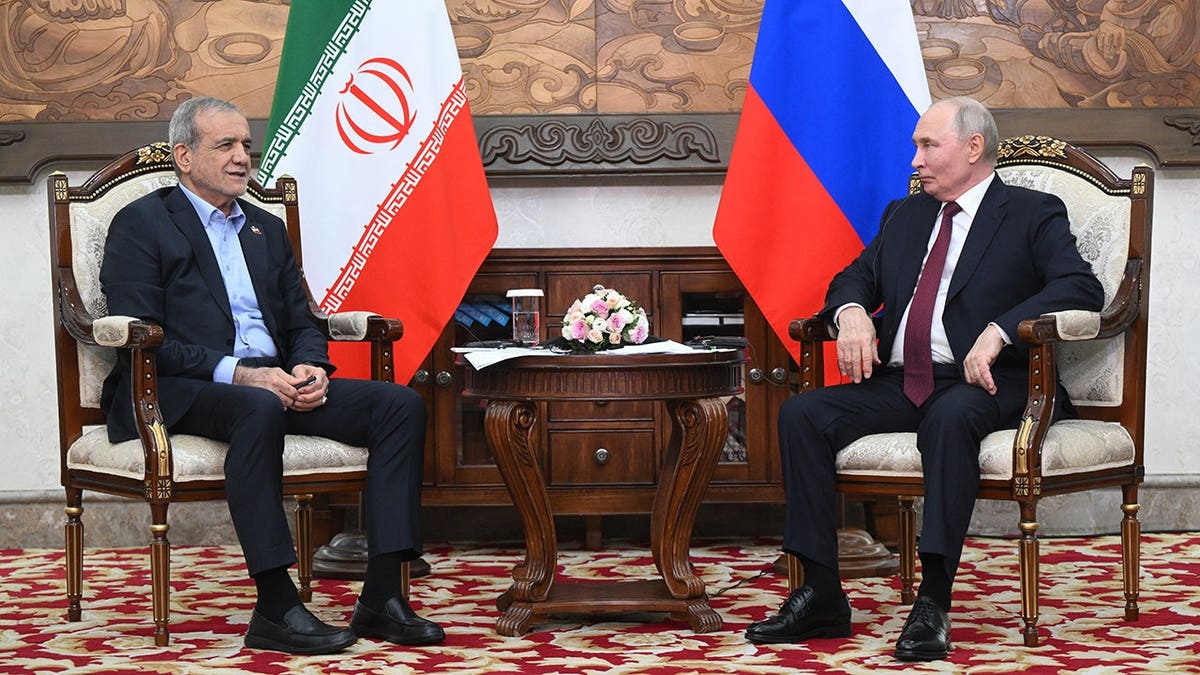
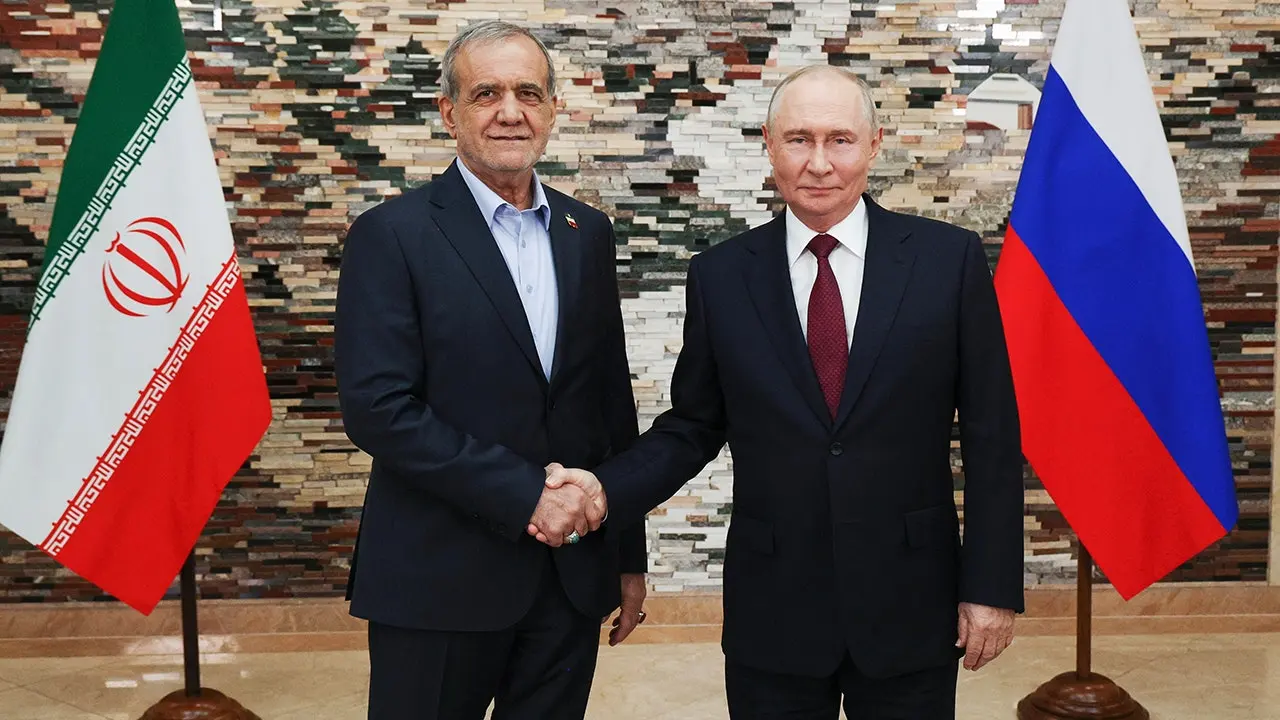
Russian President Vladimir Putin and Iranian President Masoud Pezeshkian talk during their meeting on the sidelines of the Shanghai Cooperation Organization in Bishkek, Kyrgyzstan, on Tuesday, Sept. 1, 2026. (Kristina Solovyova/Pool Sputnik Kremlin via AP)
The roadmap was created more than a year before the current war involving Iran and the United States. It therefore does not show which projects remain underway or how the conflict may have changed Moscow’s priorities.
Still, an independent review of the Russian-language document and subsequent public reporting indicate that several initiatives identified in the plan later moved forward or became reality.
Keti Korkiya, a research analyst in the Russia Program at the Foundation for Defense of Democracies, reviewed the document for News Outlet. She said its importance lies not in any individual project but in the broader framework Moscow was seeking to establish with Tehran.
“The roadmap is not revelatory: people paying close attention to the relationship between Russia and Iran will see many collaborations between the two countries that have been public for years,” Korkiya said in written analysis provided to News Outlet.
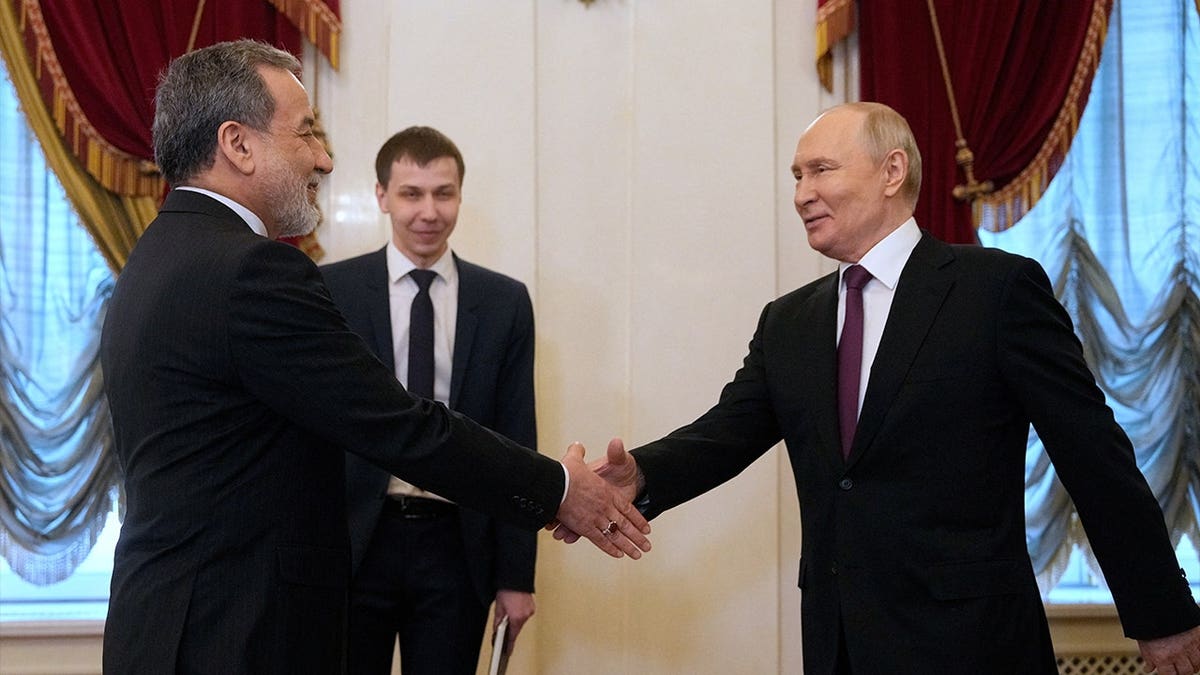
Russian President Vladimir Putin shakes hands with Iranian Foreign Minister Abbas Araqchi during a meeting at the Boris Yeltsin Presidential Library in Saint Petersburg, Russia April 27, 2026. (Dmitri Lovetsky/Pool via Reuters)
“What is more revealing is the architecture of the relationship Moscow is trying to build,” she said, highlighting financial systems, transport corridors, energy investment and aviation cooperation as mechanisms for reducing vulnerabilities caused by sanctions and broader Western economic pressure.
“These are nonpublic high-level documents that illustrate the comprehensive cooperation between Russia and Iran,” a European intelligence source who reviewed the material told News Outlet.
“It is also strategic, sensitive and highly politicized, focusing on areas like nuclear programs, energy trade and financial transactions that aim to evade the U.S. sanctions,” the source said.
A U.S. official, speaking on background in response to News Outlet’s questions about the financial provisions, said American sanctions had “severely isolated Russia and Iran from the international financial system.” Efforts by the two countries to establish alternative financial channels and other mechanisms for sanctions evasion were therefore “not surprising,” the official said.
The official added that Washington closely monitors attempts by sanctioned jurisdictions to create alternative cross-border payment systems and would work to disrupt mechanisms that enable sanctions evasion or illicit finance.
The Russian document does not itself use the term “sanctions evasion.” Instead, it repeatedly advocates greater use of national currencies, independent financial channels and measures to counter what Moscow calls “unilateral restrictive measures.”
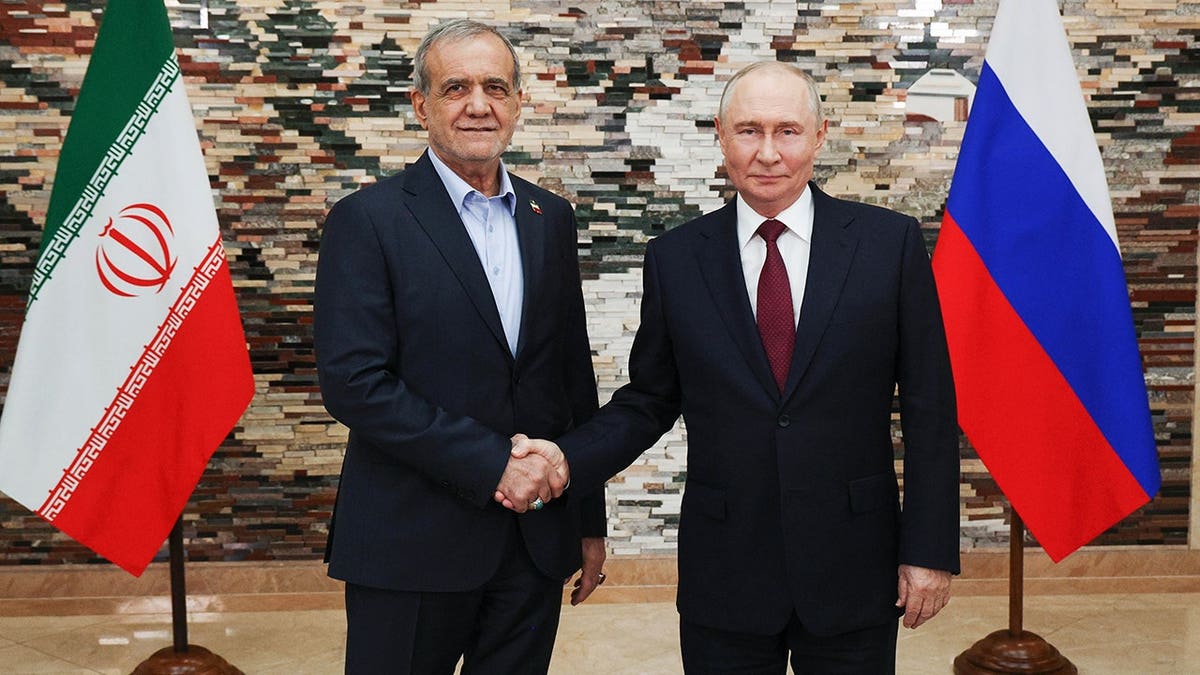
Russian President Vladimir Putin and Iranian President Masoud Pezeshkian pose for a photo during their meeting on the sidelines of the Shanghai Cooperation Organization summit in Bishkek, Kyrgyzstan, on Tuesday, Sept. 1, 2026. (Vyacheslav Prokofyev/Pool Sputnik Kremlin via AP)
BUILDING FINANCIAL CHANNELS OUTSIDE WESTERN SYSTEMS
The roadmap’s most explicit provisions focus on how the two countries planned to transfer money.
It set a goal of raising the share of bilateral trade settled in national currencies from 68% in 2024 to 71% by 2026, while also calling for an expansion of correspondent accounts denominated in those currencies.
The plan also assigns the Bank of Russia and the Central Bank of Iran responsibility for expanding the use of central bank digital currencies in cross-border settlements.
Another provision calls for “ensuring the use of independent systems for transmitting financial messages,” including connections between financial institutions and independent channels for exchanging financial information.
The document does not identify which messaging system would be used or explicitly state that the goal was to bypass SWIFT or U.S. financial controls.
Strategic moves by Russia to address its budget deficit may inadvertently devalue the ruble, analysts warn. (REUTERS/Dado Ruvic/Illustration/File Photo)
But some of that financial integration later became public.
In February 2025, Russian Deputy Prime Minister Alexei Overchuk said Russia and Iran had “practically completely” shifted bilateral settlements into national currencies using their own systems for transmitting financial and banking messages. Interfax, a Russian news agency, reported that the effort was part of a broader push toward independent payment infrastructure between the two countries.
Iran’s ambassador to Russia also said in February 2025 that Tehran and Moscow no longer needed SWIFT for bilateral banking relations and were using their own confidential bank-messaging systems. He said the initial phase of linking Iran’s Shetab payment network with Russia’s Mir system had begun the previous year.
Korkiya said the significance of those measures is cumulative.
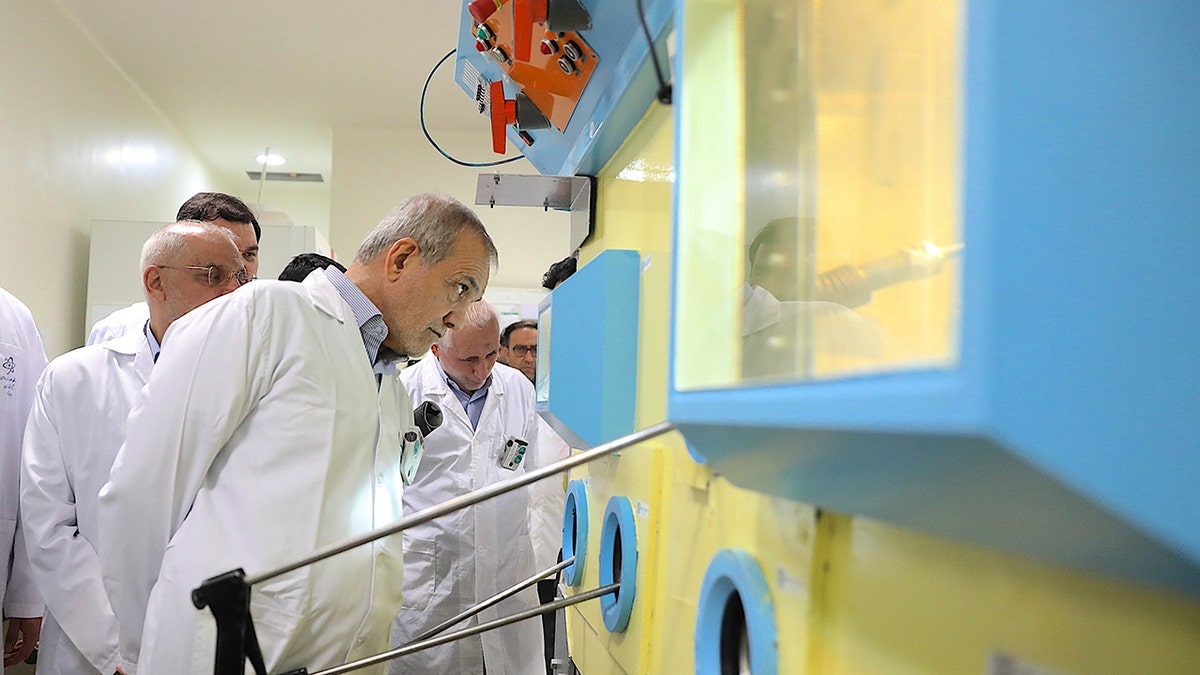
Iranian President Masoud Pezeshkian visits nuclear facilities in Tehran, Iran on Nov. 1, 2025. (Iranian Presidency / Handout/Anadolu via Getty Images)
“Individually, none of these initiatives is transformative,” she wrote. “Collectively, however, they amount to an attempt to remove single points of vulnerability and build redundancy into the Russia-Iran economic relationship.”
The financial effort is paired with a political one.
The roadmap calls for Russia and Iran to coordinate through BRICS and other international institutions against “unilateral trade restrictions,” while another provision proposes studying ways to counter “unilateral restrictive measures” and their impact on global markets.
Korkiya said that goes beyond simply finding workarounds.
“Especially interesting is that the roadmap also goes beyond practical sanctions workarounds and includes an effort to build an intellectual and diplomatic campaign against sanctions themselves,” she wrote, citing plans for expert communities, discussion platforms and an international forum focused on unilateral restrictions.
A U.S. official told News Outlet that financial institutions and intermediaries enabling sanctions evasion expose themselves to “significant sanctions risks,” adding that Washington would continue working with partners to “identify, expose and disrupt these networks wherever they emerge.”
The official also pushed back on the idea that alternative Russia-Iran systems could displace Western financial infrastructure.
“Russia and Iran can try to build alternative financial channels, but they cannot replicate the reach, liquidity or trust of the U.S. dollar and the international financial system,” the official said. “Their efforts will not weaken the effectiveness of U.S. sanctions.”

A person walks past a sign at a currency exchange, as the value of the Iranian Rial drops, in Tehran, Iran, December 30, 2025. (Majid Asgaripour/WANA (West Asia News Agency) via Reuters)
ROSATOM AND IRAN’S NUCLEAR SECTOR
The financial architecture sits alongside another strategically sensitive pillar of the relationship: civilian nuclear energy.
The plan assigns Russia’s state nuclear corporation Rosatom continued responsibility at Iran’s Bushehr nuclear power plant, including fuel and maintenance support for Unit 1 and continuing construction work associated with Units 2 and 3.
The cooperation did not remain solely on paper.
On Sept. 2, 2026, Rosatom said Russian specialists had begun returning to Bushehr, that Unit 1 was preparing for scheduled maintenance and partial fuel replacement, and that nuclear fuel had already been delivered to the site. Rosatom also said work was continuing on the plant and that additional Russian specialists were expected to arrive.
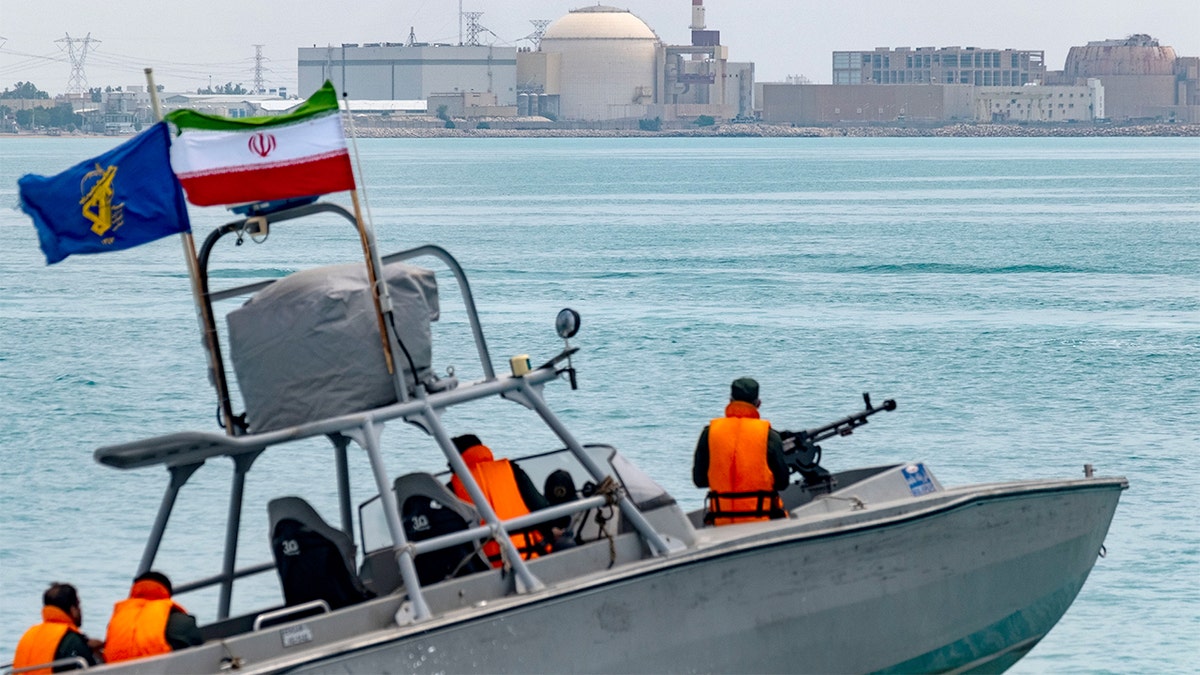
An Islamic Revolutionary Guard Corps speedboat sails in the Persian Gulf during an IRGC marine parade marking Persian Gulf National Day near the Bushehr nuclear power plant in Bushehr, Iran, on April 29, 2024. (Morteza Nikoubazl/NurPhoto via Getty Images)
Korkiya noted that the Bushehr Units 2 and 3 project predates the 2024 roadmap, meaning the document did not originate that cooperation but rather incorporated an existing strategic project into the broader Russia-Iran framework.
“Such strategies and protocols confirm that Russia and Iran are closely aligned countries, and Russia almost certainly continues and aims to increase its current cooperation with Iran also in 2026,” the European intelligence source said.
News Outlet sought comment from Rosatom on the document and the current status of its work in Iran.
ENERGY PROJECTS — WITH SOME FINANCING KEPT CONFIDENTIAL
The roadmap also identifies specific Iranian oil and gas fields where Moscow sought a role.
It names Shadegan, Kish and North Pars, assigning Russia’s Energy Ministry and unspecified “interested Russian companies” responsibility for advancing the projects.
Those companies are not named in the roadmap. For several projects, the financing column is marked “Confidential.”
There is evidence that at least one of the named projects advanced.
Interfax reported on Feb. 13, 2026 that Russian state-owned ZN-Vostok was developing Iran’s Shadegan oil field, while Iranian officials said Tehran hoped to expand Russian investment across additional oil and gas projects.
The roadmap sets milestones for Shadegan through the end of 2025, while work involving Kish and North Pars runs into 2026 and includes legal, commercial and project-analysis work.
That pattern appears repeatedly through the document: ministries, deadlines and strategic objectives are spelled out, while some of the participating companies or financing arrangements remain undisclosed.
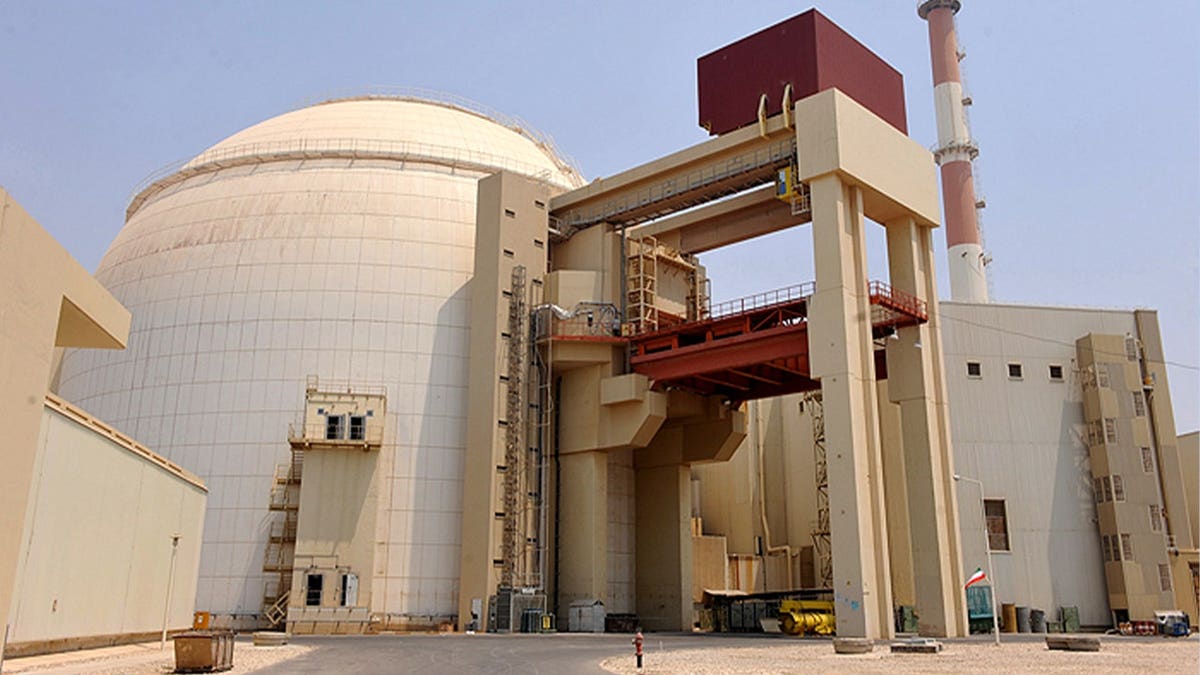
This handout image supplied by the IIPA (Iran International Photo Agency) shows a view of the reactor building at the Russian-built Bushehr nuclear power plant as the first fuel is loaded, on August 21, 2010 in Bushehr, southern Iran. (Photo by IIPA via Getty Images)
RUSSIAN AIRCRAFT PARTS — MADE IN IRAN?
One of the more unusual provisions goes beyond ordinary trade.
The roadmap calls for Russia to help establish production in Iran of individual parts and assemblies for Russian aircraft.
Russian authorities were instructed to determine which aircraft parts could be repaired or manufactured in Iran, identify Iranian companies capable of producing them, certify selected sites through Russia’s aviation regulator Rosaviatsiya and conclude a localization agreement.
The roadmap set a March 31, 2026 deadline for an agreement on localized production and a Dec. 31, 2026 target for launching prototype production.
Public evidence does show that aviation cooperation advanced in the related area of aircraft maintenance.
In February 2025, Rosaviatsiya’s chief said three Iranian companies had been approved to perform maintenance and airworthiness work on Russian-operated aircraft after an Aeroflot Airbus A330 underwent maintenance in Tehran.
The Russian government also publicly discussed deeper aviation-industrial cooperation with Iran that month, including aircraft manufacturing and joint work on jet engines for passenger aircraft.
But News Outlet has not independently verified that the more ambitious provision in the roadmap — manufacturing Russian aircraft components inside Iran — was implemented.
A TRADE ROUTE SOUTH
The document also lays out an effort to strengthen the physical transportation network linking Russia and Iran.
It calls for work on a proposed railway built to Russia’s 1,520-millimeter track gauge, stretching from Iran’s border with Azerbaijan toward Iranian ports on the Persian Gulf.
The proposal remained in the planning and negotiation stage in the roadmap.
Separately, Moscow sought to advance the Rasht-Astara railway, a roughly 162-kilometer missing link in the International North-South Transport Corridor.
That project subsequently moved beyond the purely conceptual stage.
Russia and Iran formally launched engineering surveys for the railway in May 2025, according to Russia’s Transport Ministry.
Korkiya said the project had still not reached full construction by late summer 2026, with Russian and Iranian officials continuing to work on the implementation and construction arrangements. She also identified another provision: Iranian investment in port infrastructure in Astrakhan, Russia.
The roadmap calls for a terminal there using Iranian investment, along with warehouses, a logistics park and grain and vegetable-oil facilities. Korkiya found that an Iranian-owned company later operated a terminal in Astrakhan with a railway spur and was building grain and vegetable-oil storage facilities that closely tracked the roadmap’s description, although the document does not identify that company by name and the match cannot be definitively established.
Taken together, the transport provisions point to an effort to build physical trade routes that are less dependent on traditional European corridors.
MEDIA, TECHNOLOGY AND “INFORMATION SECURITY”
The roadmap reaches well beyond finance and heavy industry.
It calls for content exchange, journalist training and joint media production, including at least two joint projects and ‘professional training’ for Iranian journalists.
It also calls for Russian technology companies to secure at least two contracts in Iran involving information and communications technology, including “information security,” telecommunications and the video-game industry.
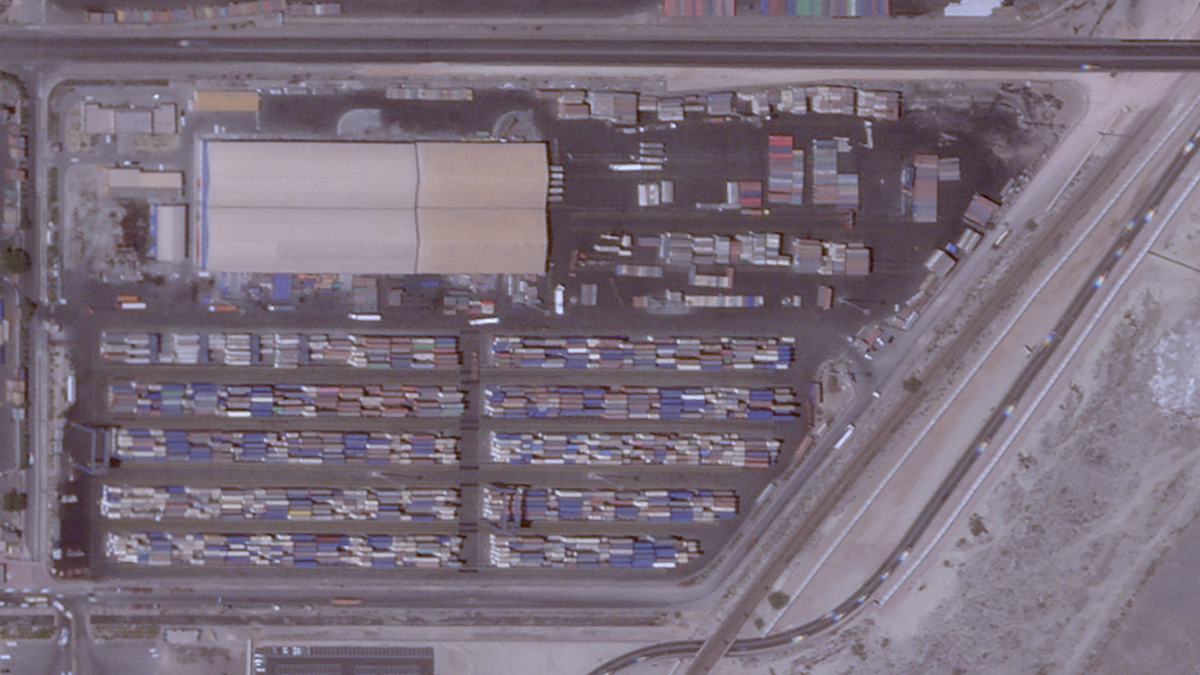
A satellite image shows Shahid Rajaee port in Bandar Abbas, Iran April 9, 2025. Planet Labs PBC/Handout via REUTERS THIS IMAGE HAS BEEN SUPPLIED BY A THIRD PARTY. MANDATORY CREDIT (Planet Labs PBC/Handout via REUTERS)
A PUTIN FAMILY CONNECTION AT THE TOP
The official overseeing the Russian side of the relationship also has a direct connection to President Vladimir Putin’s extended family.
Russian Energy Minister Sergei Tsivilev chairs the Russian side of the Permanent Russian-Iranian Commission on Trade and Economic Cooperation.
Tsivilev is married to Anna Tsivileva, a Russian deputy defense minister and the daughter of Putin’s late cousin, Reuters reported when Putin appointed her to the Defense Ministry in June 2024.
The European intelligence source argued that the connection reflects the political importance Moscow attaches to Iran.
“It should be emphasized that on Russia’s part, the economic cooperation with Iran is coordinated and managed by a representative of Vladimir Putin’s extended family,” the source said.
“This indicates that the Iranian matter is not just one of many bureaucratic issues in the agenda of the Russian government. But it holds significant value for the interest of the Vladimir Putin regime.”
“What is also notable is the degree of state coordination and institutionalization behind this effort,” she said, pointing to the involvement of central banks, ministries, regulators and state companies, as well as formal deadlines and confidential financing in some projects.
“That suggests Moscow is trying to turn what could otherwise remain a politically convenient partnership into something more durable and bureaucratically embedded,” Korkiya said.
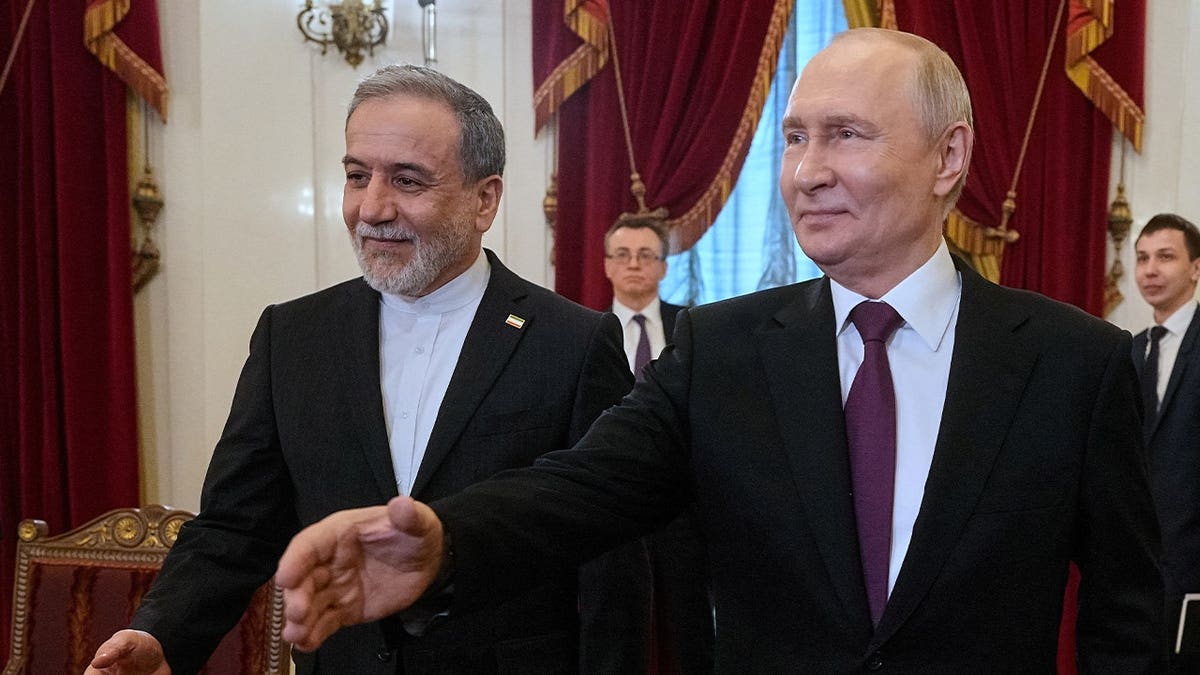
Russian President Vladimir Putin and Iranian Foreign Minister Abbas Araqchi attend a meeting at the Boris Yeltsin Presidential Library in Saint Petersburg, Russia April 27, 2026. (Dmitri Lovetsky/Pool via Reuters)
Russian and Iranian officials did not respond to multiple requests for comment from News Outlet. News Outlet also sought comment from Rosatom and from Russian officials responsible for Moscow’s participation in BRICS.