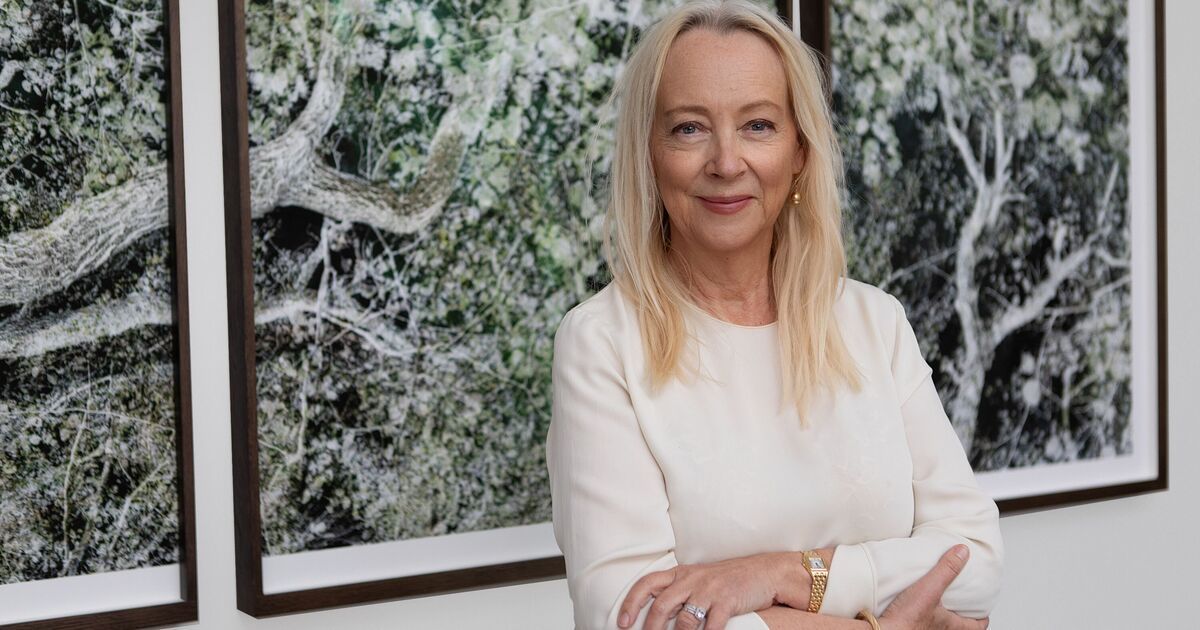


Lynda Gratton says ageing is about more than keeping the body healthy (Image: Matt smith)
I could feel my father walking beside me. I was following a familiar woodland path towards a plateau when, without warning, tears began streaming down my face. My dad had died many years before and I had believed I had finished grieving. But as I walked, his presence felt unmistakable, as though we were together again, just as we had been on so many walks in the past.
My father died from mesothelioma after being exposed to asbestos as a young engineer. I still have a photograph of him wearing an oxygen mask, with my two-year-old son on his knee as they look at a book together. The image has stayed with me: a grandfather and a little boy absorbed in a story while illness was already taking so much from him. Dad had become seriously ill more than a decade younger than I was at the time. He had been fit and active. As I walked, I realised I was approaching 70 and might have nearly 40 years ahead of me that he never got to experience.
This February, the little boy in that photograph became a father, and I became a grandmother. With the passing years, my memories of Dad have grown more poignant rather than fading. Having those extra years is an extraordinary gift, but it also brings a question: how should I use them? Much of my career has focused on work and working lives. I have written about why many people will need, and may want, to work for longer. Now I am increasingly interested in another question: what does it mean to live well for longer? The obvious starting point is taking care of our bodies.

Lynda with her parents and brother (Image: Courtesy Lynda Gratton)
I try to follow the advice most of us know: I aim to walk 10,000 steps on most days, get around eight hours of sleep, enjoy Pilates and avoid eating too many cakes. These are straightforward habits that I hope will give my future self the best possible chance. Yet healthy ageing involves far more than physical fitness. We can monitor our steps and improve our diets while overlooking the things that make a long life meaningful. To me, living well also depends on friendship, curiosity and having something to look forward to each morning. I am not the only person who believes relationships are central to a healthy life.
Power of warm relationships

Lynda highlights the importance of relationships (Image: Matt smith)
My friend Robert Waldinger, director of the Harvard Study of Adult Development, has spent almost 90 years tracking people and their families. Its clearest finding is that those who remained happiest and physically healthiest were the people with the warmest relationships. As Robert told me recently: “Relationships protect us and enhance our health.”
I see the truth of that in my friendship with Shirley, whom I met 60 years ago when we worked weekends as waitresses in a fish and chip shop in Keswick. She has shared every stage of life with me, including its changes, losses, celebrations and unexpected moments. Shirley understands what good friendship requires. She notices when someone becomes quiet, sends a message instead of waiting, and shows up when times are difficult. If someone asked how to build stronger friendships, Robert’s research would explain why they matter for our health. Shirley has shown me what they demand: attention, intention and a willingness to be present.
Begin with something small. Message someone you have not spoken to for a while. Turn one friendship into a regular part of your life through a weekly phone call, a monthly walk or a standing coffee date. And do more than send a birthday greeting. Ask how someone is really doing, and be willing to share how you are, too.
Energy, new skills and experience
Friendship is one of the strands that can hold a long life together. When I think about the others, I often return to the image of weaving. In my younger years, I made many of my own clothes. I have always loved fabric and stitching, and the way individual threads can be brought together to create something both strong and beautiful.
I imagine a fulfilling life as something woven from many strands over time. Some allow us to contribute, while others, such as friendship, give us strength. None remains equally strong at every stage of life. When people ask how to prepare for a longer future, they often expect a financial response. Money certainly matters, but a satisfying life cannot be built from a pension pot alone. Friendship is vital to me, but we also need meaningful ways to use our energy, skills and experience.
One of the strands in my own life is what I call “mastery” — the satisfaction of continuing to learn and create something valuable. It may come through employment, a craft, a hobby or a new responsibility. At 70, I still teach MBA students and executives, and I continue to write. What keeps both activities engaging is that neither involves simply repeating what I already know.
Every new group of students, every conversation and every piece of writing challenges me to listen carefully, learn something new and look at the world differently. A longer life gives us the opportunity to become skilled at the things that matter to us. Just as importantly, it allows us to become beginners again. What could mastery mean in your life? Start by asking yourself: what would I genuinely like to improve at? It could be a skill you left behind years ago, a course, a choir, new technology or mentoring someone younger.
Choose something that stretches you slightly beyond what you already know.
The pleasure is in continuing to grow

Living the 100-Year Life by Lynda Gratton is out now (Image: Bloomsbury)
Personal growth, however, does not always come from becoming more skilled. Sometimes it begins when we move beyond what feels familiar. I call that strand “adventure”, and it has always played a role in my life.
I am not talking about jumping from aeroplanes or climbing Everest. Adventure can mean entering an unfamiliar place, meeting people whose lives are very different from your own, trying something you have not yet mastered or simply saying yes to an experience that creates new possibilities.
Last year, I took 80 MBA students to Tokyo for a week to examine how Japan is responding to longer lives and artificial intelligence. We visited businesses, heard from people whose views on ageing and work differed from ours, and observed a society adapting to major demographic change.
For me, it was a genuine adventure: entering a new environment with my students, looking at the world through fresh eyes and allowing myself to be surprised.
One way I think about this is to imagine my future self looking back at me. She would certainly ask me to keep healthy and to make sure I was not lonely. But I think she would also ask: did you give me some stories to tell the grandchildren? So choose one small adventure: a place you have never visited,a class that makes you slightly nervous, a conversationwith someone outside your usual world, or a day doing something wholly unlike your normal routine. It is not aluxury. It is part of renewal.
Perhaps that is the lesson I took from my father. Weshould do what we can for our bodies, but none of us isoffered certainty. What we can do is pay attention to thelife we are building: to our health, certainly, but also to our friendships, our curiosity and the experiences that keep us open to what comes next.
I hope I have many years ahead of me. I hope to keep walking, sleeping, doing Pilates and, yes, occasionally eating cake. But I also hope to keep learning, laughing with old friends, making new ones and giving myself stories to tell my grandchildren. The extra years are not simply extra time; they are a chance to live differently.
Lynda Gratton is Professor of Management Practice at London Business School. Her new book is Living The 100-Year Life: How To Build a Career That Lasts And A Life You Love (Bloomsbury). You can hear more on Lynda’s Life Threads podcast and assess your own threads via the Threads Diagnostic at livingthe100yearlife.com