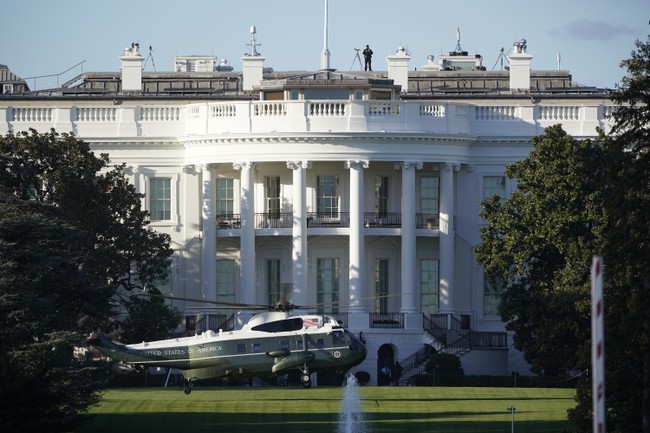

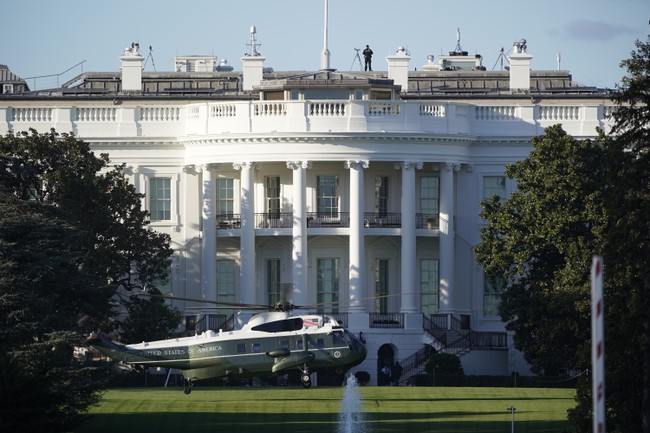
President Trump’s decision to install a granite helipad bearing the presidential seal on the White House South Lawn is, at its core, a practical infrastructure upgrade. Much of the attention, however, has centered not on the landing pad itself but on the administration’s simultaneous move to limit access for several established news organizations.
The operational rationale for the project is straightforward. For years, the presidential air unit has had to accommodate the newer, heavier VH-92A Patriot helicopters, which replaced the aging Vietnam-era fleet. Those aircraft produce substantial downward heat and force during landing.
The new South Lawn helipad is officially open 🚁 President Trump cuts the ribbon to mark its completion at the White House. https://t.co/XBMwqXxUGU
— The White House (@WhiteHouse) September 21, 2026
Repeated landings on the grass damaged the lawn and left sections of turf scorched. As a result, pilots often had to use alternate landing arrangements or leave the president at a more distant location.
The newly carved granite landing area offers a durable answer to that problem. It also brings Marine One closer to the residence, cutting the time required for the president to travel between the helicopter and the building while limiting exposure during arrivals and departures. In a heightened security environment, minimizing time in an exposed outdoor area is a standard precaution, not an indulgence.
.@POTUS takes part in the ribbon-cutting ceremony for the White House’s new helipad 🇺🇸 https://t.co/kJHuYPQGMR
— Margo Martin (@MargoMartin47) September 21, 2026
The project could also reduce the need for longer motorcade transfers, easing traffic disruptions and simplifying presidential movements through the surrounding area. Administrations from both parties have modified the White House grounds over time to meet changing technological and security demands, and this helipad follows that established pattern.
The dispute over press access, meanwhile, quickly became a parallel headline. After the administration restricted pool credentials for outlets including CNN, Politico and MS NOW, the affected organizations responded sharply and filed a joint lawsuit, arguing that the policy posed a broader threat to democratic norms.
Nearly a decade after its first flight, the Sikorsky VH-92 Patriot has departed the new White House helipad with POTUS aboard for the first time. Welcome to a modernized presidential transport operation. 😎🇺🇸💪🥳 https://t.co/HNX3Z588Nw
— Thenewarea51 (@thenewarea51) September 21, 2026
Conflicts over White House press credentials are not new. Past administrations have made decisions about credentialing, pool rotations and journalists’ physical proximity to the president. Reporters are entitled to challenge restrictions, but portraying every credentialing dispute as an unprecedented emergency can obscure the longer history of White House media access.
The contrast in coverage reflects a familiar media priority. A privately funded infrastructure project, supported through contributions from defense contractors and designed to address a clear engineering problem, has received less attention than the fight over press privileges. That emphasis can make the media dispute appear more important than the operational purpose of the helipad.
The presidency is also a working institution that depends on secure and dependable transportation. Replacing a frequently damaged grass landing area with a permanent granite surface for modern aircraft is a functional decision. Evaluating the project does not require either exaggerated praise or dramatic outrage.
The White House serves as the headquarters of the executive branch, not simply as a backdrop for the press corps. The new helipad is intended to make the short journey between Marine One and the residence quicker, safer and more controlled. The debate over which organizations receive pool access will continue, but it remains separate from the infrastructure question. Press credentials may change with each administration; the granite landing pad is a lasting response to the practical demands of modern presidential travel.
Editor’s Note: Critics argue that socialism is gaining influence within the Democratic Party and warn that the trend deserves closer public scrutiny.