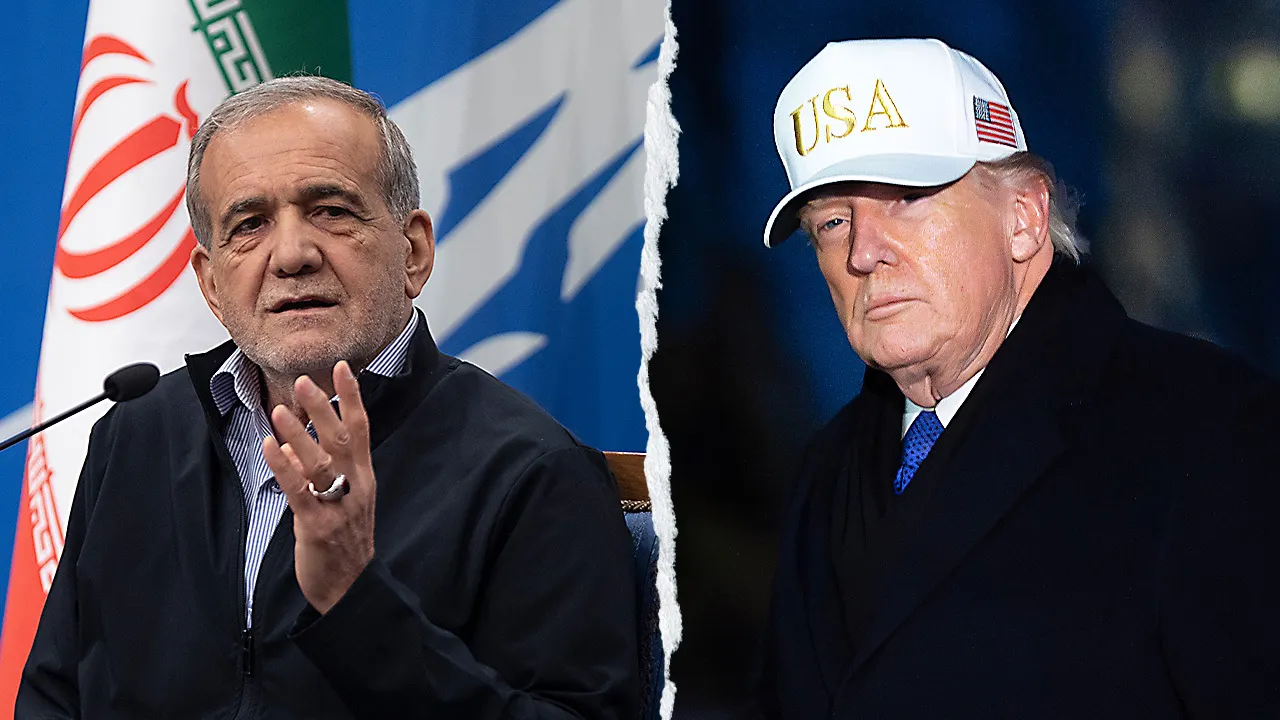
Iranian President Masoud Pezeshkian’s forceful criticism of the United States at the United Nations likely would have prompted little more than a knowing smile from President Donald Trump, who believes Washington remains in the stronger position, a foreign policy analyst told News Outlet Wednesday.
The comments followed dueling appearances by Pezeshkian and Trump at the U.N. General Assembly in New York. Speaking from the same podium less than a day apart, the two leaders exchanged harsh accusations as tensions between the United States and Iran continued to intensify.
“Trump understands that he holds the cards, and he may not have been paying close attention to the Iranian president’s remarks,” Behnam Ben Taleblu, a senior fellow at the Foundation for Defense of Democracies, told News Outlet.
In his address, Pezeshkian blamed the United States and Israel for attacks on Iran and presented Tehran as the target of foreign aggression.
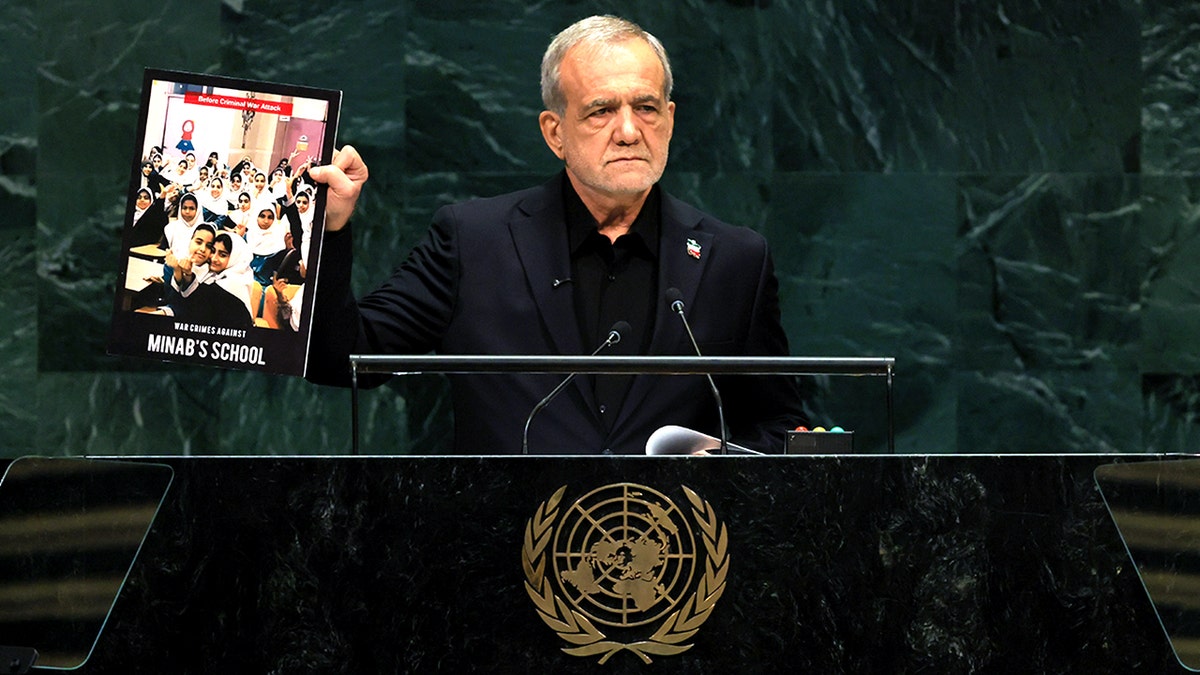
Iranian President Masoud Pezeshkian holds a picture, which he says is from the Minab school that was hit by an airstrike, as he addresses the 81st session of the United Nations General Assembly at U.N. headquarters Sept. 23, 2026, in New York City. (Spencer Platt/Getty Images)
“We have done nothing but defend ourselves. We are not terrorists,” Pezeshkian said.
“Our innocent citizens have been subjected to cowardly attacks and aggression against our nation. America and Israel attacked us.”
Taleblu said the Iranian leader’s claims likely would have elicited “a smirk or a smile or a chuckle” from Trump, describing Pezeshkian’s remarks as particularly striking given what he called the Iranian government’s record.
Pezeshkian spoke after Trump used the U.N. platform to justify the U.S. confrontation with Iran and warn that Tehran must either reach an agreement or risk even greater devastation.
“Or do I annihilate the Islamic Republic, and do it quickly, never giving them a chance to kill and destroy people and countries again?” Trump said Tuesday.
Even with the unusually sharp language, Taleblu said neither speech represented a major surprise when viewed against the countries’ established foreign policy positions.
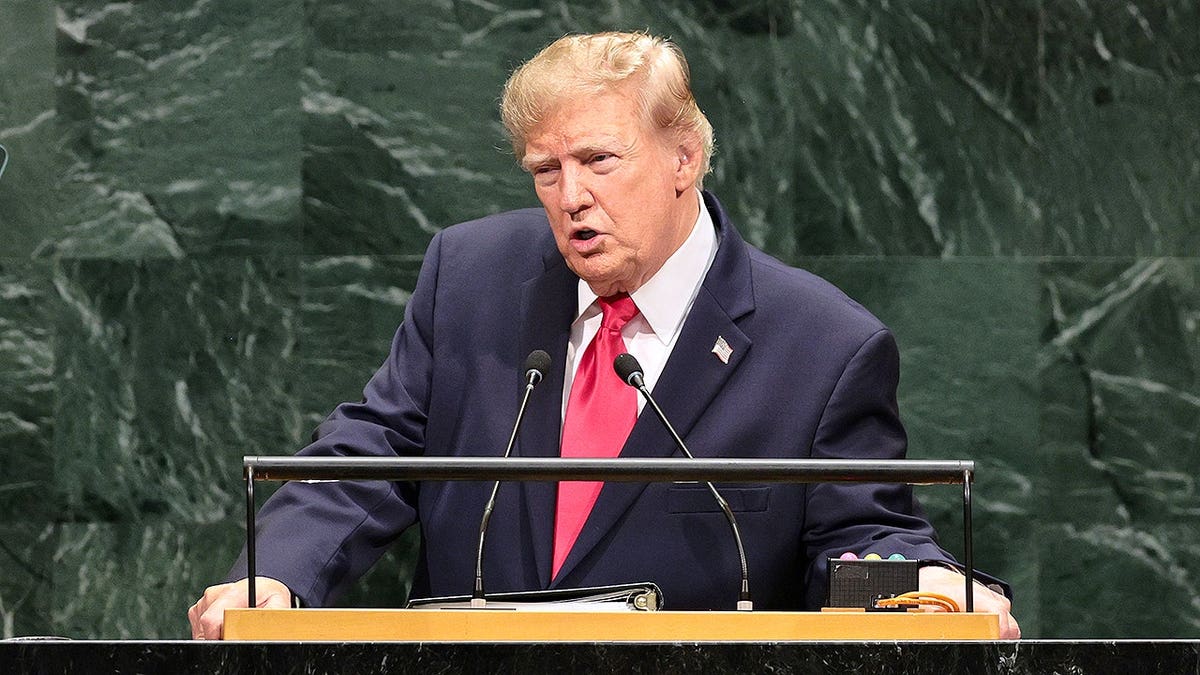
President Donald Trump addresses the UNGA in New York City. (Michael Santiago/Getty Images)
“To a significant extent, both President Trump’s and President Pezeshkian’s speeches at the 81st U.N. General Assembly were predictable,” Taleblu said.
He said that predictability reflected the current relationship between the two nations and the relatively consistent direction of their policies toward one another.
Still, the public confrontation has not entirely closed the door on diplomacy. Behind the scenes, Washington and Tehran appear to be exploring whether negotiations remain possible.
Trump said Tuesday that U.S. special envoy Steve Witkoff and Jared Kushner held approximately three hours of discussions with Iranian officials on the sidelines of the General Assembly. He described the exchanges as productive.
Witkoff later explained that the talks took place indirectly, with mediators carrying messages between the American and Iranian delegations.
Reports identified Iranian Foreign Minister Abbas Araghchi as Tehran’s representative in the discussions.
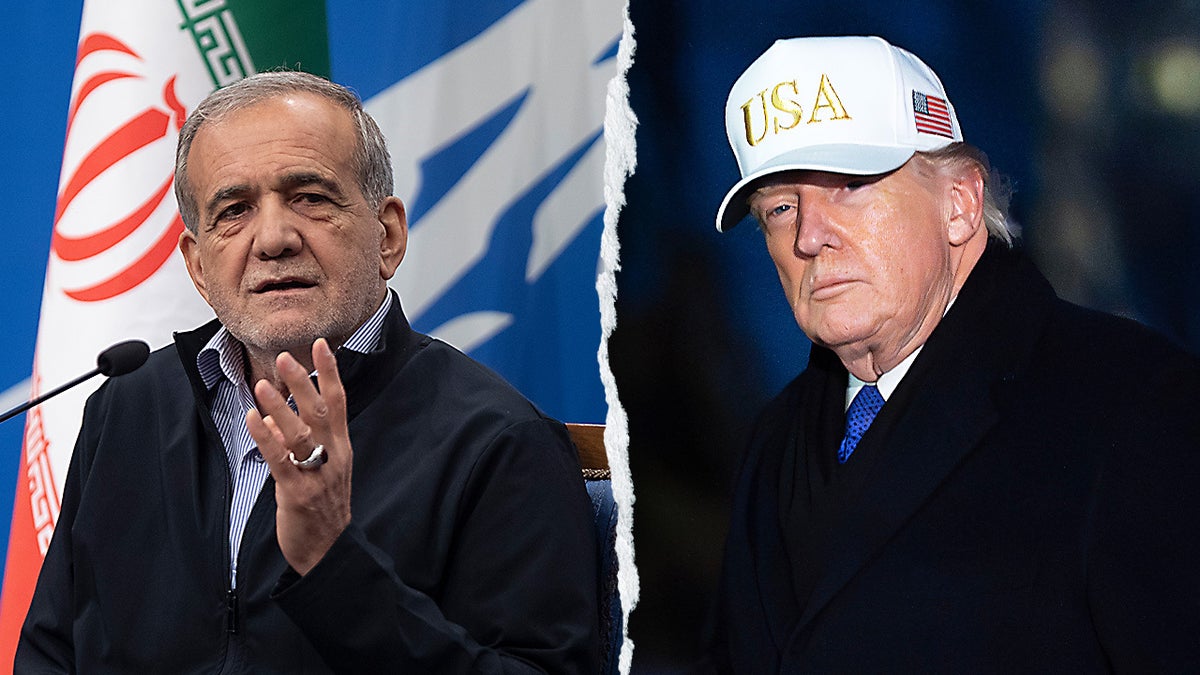
Iranian President Masoud Pezeshkian and President Donald Trump (Majid Saeedi/Getty Images; Jose Luis Magana/AP)
According to Taleblu, both governments are trying “to make time a weapon on their side” while shifting responsibility for the next decision—escalation or renewed engagement—onto the other side.
But Taleblu went on to characterize Pezeshkian’s broader message as an attempt to cast Iran as a victim through an anti-American, anti-Israel and anti-imperialist framework.
“It seemed to be more of a global South, anti-American, anti-Israeli, kind of anti-colonial, anti-imperialist message that he was looking to kind of paint the Islamic Republic as the victim,” Taleblu said.
“In reality, the long-serving victim in this entire crisis is the Iranian people because of the policies of the Islamic Republic.”
The competing messages — confrontation from the U.N. podium and diplomacy behind the scenes — highlighted the unresolved tensions between Washington and Tehran as officials explore whether negotiations can produce an off-ramp from the conflict.
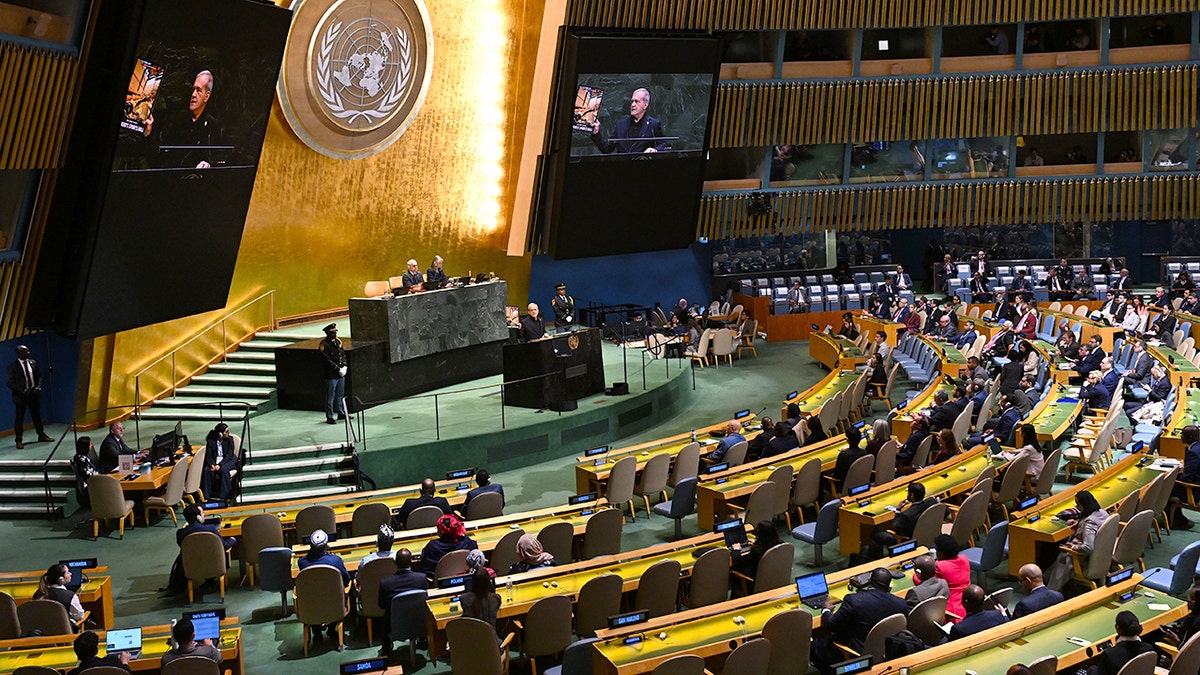
Iranian President Masoud Pezeshkian addresses the 81st session of the United Nations General Assembly at U.N. Headquarters Sept. 23, 2026, in New York City. (Alexi J. Rosenfeld/Getty Images)
“Despite the tough talk at the podium, both sides still feel like they need to signal an interest in talks, even though they’re both trying to use talks to shape an outcome that is more conducive to their interests,” Taleblu said.
Pezeshkian also told the General Assembly that Tehran would not surrender to military pressure while signaling that Iran remained open to diplomacy.
“I think the Iranians are trying to signal an interest in talks, but they may run into a brick wall quite soon if they foot-drag or delay or don’t meaningfully provide any kind of substantive change in their policy,” Taleblu said, citing Iran’s positions on the Persian Gulf, the Strait of Hormuz and its nuclear program.
“Ultimately, if the positions remain the same, the fact that they’re oscillating between shooting and talking doesn’t mean much because the red lines haven’t actually moved.
“Of course, the Trump administration is looking for a political win here.”