US and Iranian negotiators are considering a phased cease-fire agreement that could reopen the Strait of Hormuz and lead Washington to lift its economic blockade against Tehran, according to multiple reports.
Representatives of the two countries met on the sidelines of the United Nations General Assembly on Thursday to discuss a framework resembling the memorandum of understanding reached in mid-June, sources told Reuters.
The negotiating teams reportedly believe a step-by-step agreement may be the only path forward, as neither side is willing to give up its leverage before the other.
“One way forward would be to solve the crisis in stages. The first would be to end the blockade and reopen Hormuz,” a senior Iranian official told Reuters.
A US official told The Post that the discussions had been “positive” and “constructive,” adding that Washington was negotiating from a position of strength while continuing to escort ships through the Strait of Hormuz.
Although senior Iranian officials have publicly ruled out concessions to the United States, a White House official said Tehran’s willingness to negotiate indicated that the country was feeling the economic impact of the US blockade and sanctions.
“Iran is desperate for a deal, President Trump holds all the cards and will make whatever decision is best for the United States,” the US official said.
MORE ON THIS: Alleged Mistress Alleigha Botner Testifies in Caleb Flynn Case
Iranian officials rejected that assessment, saying Tehran was prepared for every possible outcome, including war, if negotiations fail to produce an agreement.
“Our fingers are on the trigger,” an Iranian official told Reuters. “The Americans know what they need to do but, because of their excessive demands, the chances of diplomacy resolving this are extremely low.”
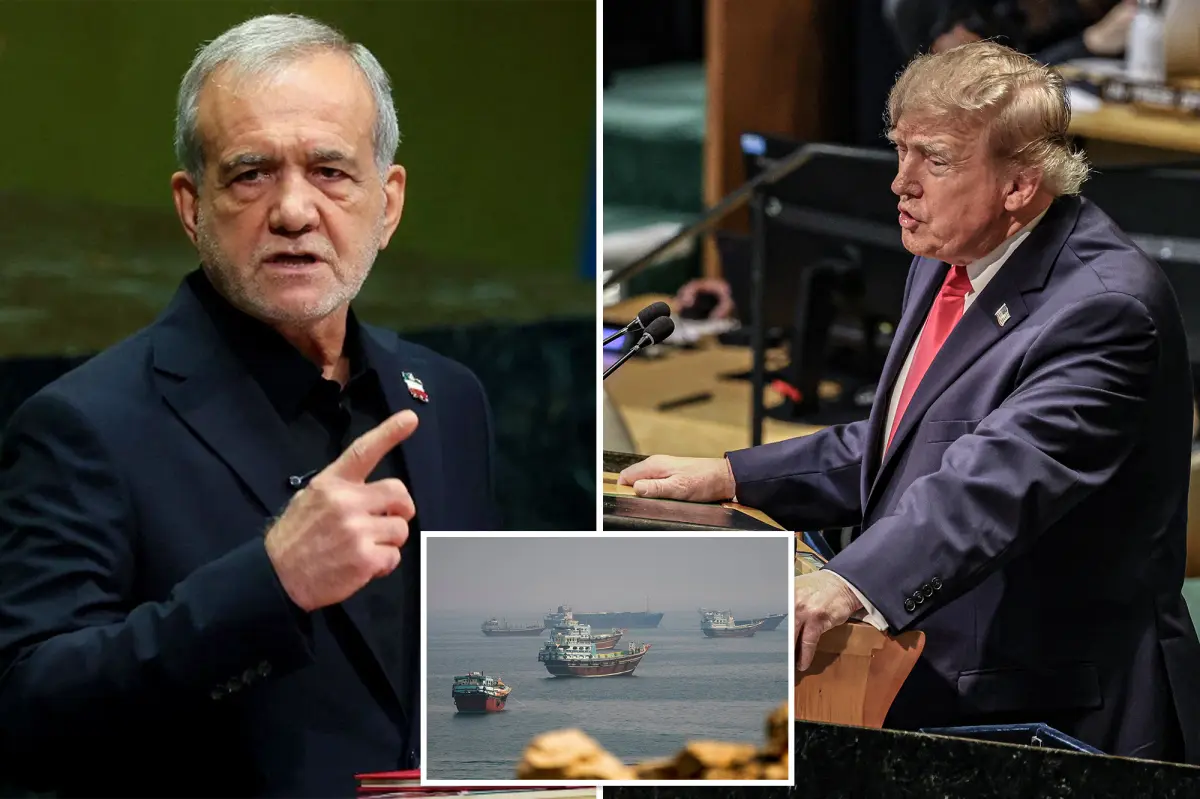
The talks followed comments from Iranian Foreign Minister Abbas Araghchi, who told reporters in New York that he had proposed a new, seven-day plan to reopen the Strait of Hormuz if the United States met certain conditions.
Iranian President Masoud Pezeshkian also said the strategic waterway would remain closed until US sanctions and the naval blockade were lifted.
Trump, meanwhile, warned earlier this week that he could choose to “annihilate” Iran as peace negotiations appeared to be faltering.
Despite the threats and recent Houthi attacks on Saudi Arabia, reports of potential peace negotiations helped ease a sharp rise in oil prices on Friday.
Brent crude futures fell 1.1% to $105.46 on Friday morning, while West Texas Intermediate declined by a similar percentage to $93.56.
With Post wires