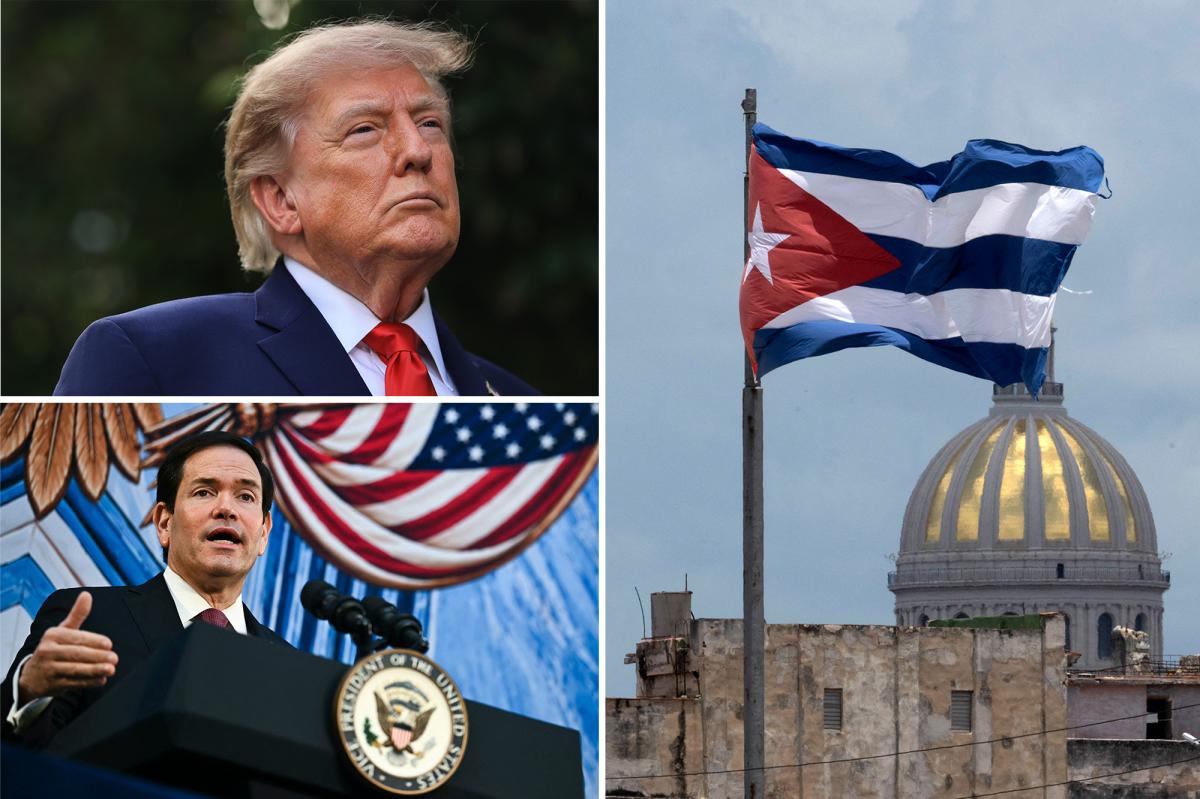
The Army Reserve has asked commanders whether military police, medical personnel and other support units could be made available as early as late December to support potential military action involving Cuba, according to a new report.
An internal Army message reviewed by CBS News requested an update by Friday on the readiness of those forces, which could be “possibly needed in 90-120 days.”
Although the message does not identify Cuba, multiple US officials told the outlet on condition of anonymity that the communist island is the focus of the military planning.
The document does not state how many troops might be required, where they could be deployed or which operation they would support.
It also provides no indication that any of the units have been sent overseas.
Among the formations reportedly included in the Army Reserve inquiry is a support battalion responsible for coordinating transportation, maintenance, fuel and other supply requirements.
CBS also reported that the message sought information about an engineer battalion and a medical brigade, including a forward surgical detachment capable of providing emergency trauma care.
A spokesperson for US Southern Command, which oversees military operations across Central and South America and the Caribbean, told CBS News that “due to operational security concerns, we do not disclose details or comment on US operational movements or potential deployment timelines associated with current or future operations, contingencies, or planning.
“However, US Southern Command continuously coordinates with the Joint Force to assess a range of potential requirements across its [area of responsibility] in support of assigned missions.”
Since the beginning of President Trump’s second term, Washington has pursued a more assertive approach in the Western Hemisphere under what officials have called the “Donroe Doctrine.”
Before this week’s United Nations General Assembly, the Trump administration imposed sweeping sanctions on Cuban entities and officials, including military research and development organizations linked to the country’s nickel industry.
On Tuesday, Trump told UNGA delegates that his administration was seeking “fundamental change” in Cuba. He predicted that Havana’s current government “will fall” and declared that “freedom will be coming to Cuba,” prompting the Caribbean delegation to walk out of the chamber.
Cuban President Miguel Diaz-Canel has pledged to resist any US attack while accusing Washington of “aggression” and “economic warfare” over efforts to block oil imports to the island.
In March, during the early stages of the war with Iran, Trump told reporters in the Oval Office that he would have “the honor of taking Cuba.”
“Taking Cuba in some form, yeah,” he said at the time. “Taking Cuba. I mean, whether I free it, take it — I think I could do anything I want with it, if you want to know the truth.”