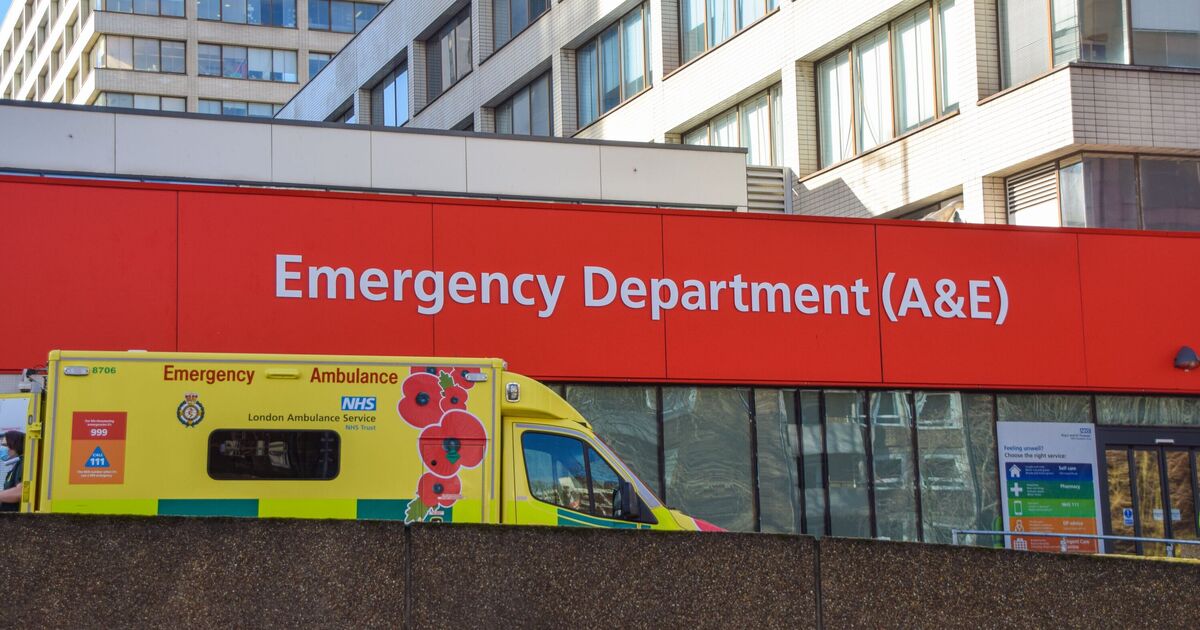


Martha’s Rule will be extended to all hospital A&E departments across England (Image: Getty)
NHS England has confirmed that Martha’s Rule will be introduced in every hospital A&E waiting area in England, giving families a direct way to request an urgent medical review.
Martha’s Rule gives patients, relatives and NHS staff in busy A&E departments round-the-clock access to a dedicated phone number. They can use it to trigger an urgent assessment when a patient’s condition appears to be worsening and they believe their concerns are not being heard. The scheme was introduced after the death of 13-year-old Martha Mills, who developed sepsis while being treated at King’s College Hospital NHS Foundation Trust in south London in 2021. She had been admitted after suffering a pancreatic injury in a bicycle fall.
A coroner ruled in 2022 that Martha would probably have survived had she been moved to intensive care sooner. Her parents, Merope Mills and Paul Laity, said warnings about their daughter’s deteriorating health were repeatedly dismissed.
The latest plans will extend Martha’s Rule, which is already being introduced across inpatient wards, to hospital A&E departments throughout England. The move is designed to make it simpler for patients, families and staff to request a second opinion when they fear a condition is worsening.
NHS England announced the nationwide expansion this week. The phased implementation is due to be completed by March 2028.
The decision follows a pilot programme involving seven NHS trusts, which examined whether Martha’s Rule could operate safely and effectively in the fast-paced environment of A&E.
During the eight-month pilot, which ran from September 2025 to March 2026, 69 calls were made to Martha’s Rule phone lines. NHS England said some of the patients involved were subsequently taken for urgent surgery or transferred to intensive care.
Professor Aidan Fowler, NHS England’s national director of patient safety, said: “A&Es see some of our most vulnerable patients, so the ability to raise concerns about deterioration quickly and trigger a rapid review of care is essential.
“Martha’s Rule is already having a transformative effect in making our acute care even safer, and by expanding Martha’s Rule into A&Es, we are giving even more patients, their families and NHS staff a critical new lifeline to help improve care and save more lives.
“Early testing has shown that Martha’s Rule can work well in busy A&Es and builds on the evidence from our adult and children’s wards, where thousands of calls have been made by patients, families and staff to date – with many leading to changes in treatment and potentially life-saving interventions.”
Martha’s Rule is now available at 221 acute adult and paediatric inpatient sites, with the inpatient rollout expected to finish in 2026/27. As part of the phased expansion, hospitals are also expected to introduce the system in A&E, maternity and neonatal units by March 2028.
Figures for July 2026 show that Martha’s Rule recorded its highest monthly number of calls so far, with 1,678 made during the month. Between September 2024 and July 2026, patients, relatives and NHS staff made 19,177 calls in total.
The scheme requires staff to use a structured process to gather information from patients and their families about a patient’s condition at least once a day. It also encourages patients, relatives and carers to alert the care team if they notice any change in someone’s health.
Martha’s Rule also offers a route to an urgent clinical review when a patient’s condition deteriorates and the patient or their loved ones believe the response has not been adequate. NHS staff can request a review by another team if they are concerned that the necessary action is not being taken.
Patients and relatives can find out whether Martha’s Rule is available at their local hospital by checking the NHS trust’s website or speaking to hospital staff.
Health and Social Care Minister Baroness Merron said: “Martha’s Rule is about making sure patients and their loved ones are heard when they raise concerns about their care.
“Expanding it to A&E will give patients, families and staff another way to speak up when they are worried that someone’s condition is getting worse, ensuring concerns are acted on quickly. This is part of our wider efforts to put patient safety at the heart of the NHS.”