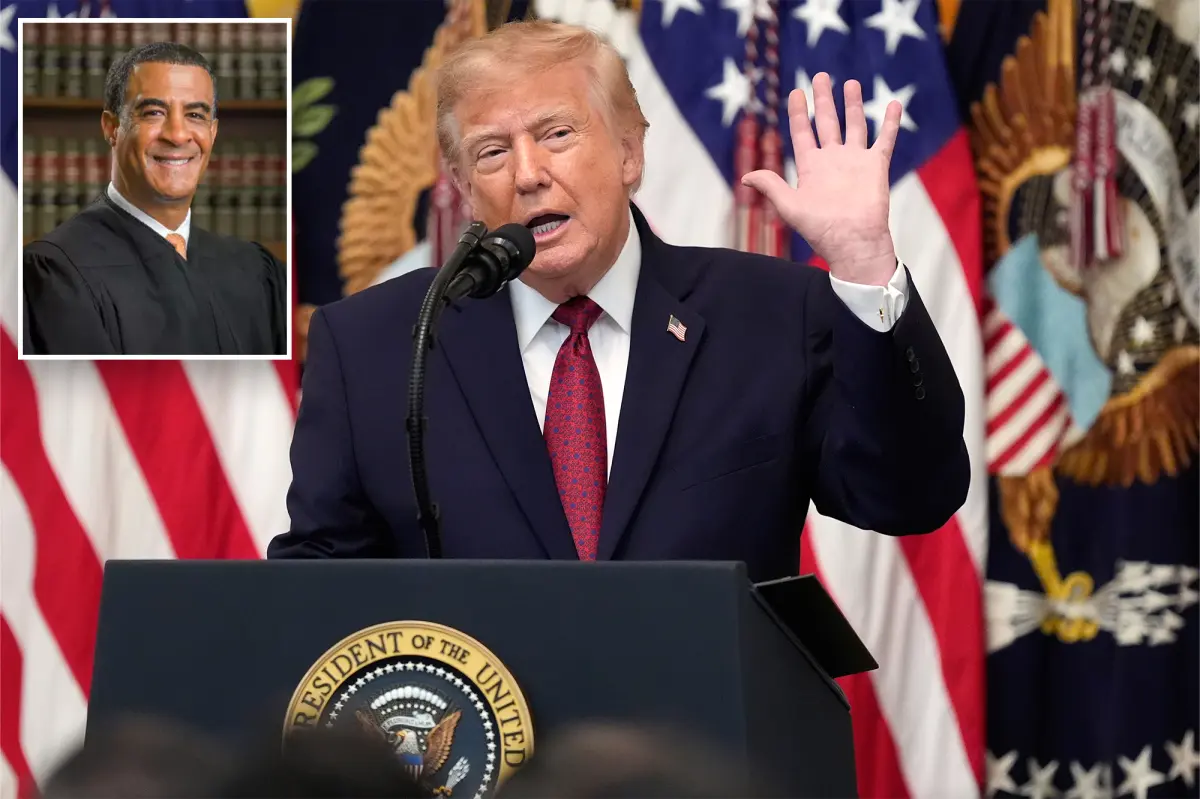

A federal judge on Wednesday became the second to halt President Trump’s controversial $100,000 charge on new H-1B visas for highly skilled foreign professionals.
US District Judge Haywood Gilliam of Oakland, California, found that US Citizenship and Immigration Services and the State Department had not completed the required rule-making steps before putting the fee into effect.
Gilliam, who was appointed by President Barack Obama, granted a request from a group of unions, businesses and nonprofit organizations seeking to suspend the charge while their lawsuit, filed in October, moves forward.
The fee had already been put on hold temporarily in June by a federal judge in Boston in a separate lawsuit filed by 20 states. In July, a federal appeals court based in Boston declined to lift that order.
Meanwhile, the Department of Homeland Security proposed a permanent fee of roughly $103,000 in August. Once finalized, that measure is also expected to face a legal challenge.
That future case, however, is likely to raise different questions from the current lawsuits, which center largely on whether the president had the authority to impose the fee on his own.
Trump’s original $100,000 charge was scheduled to expire on September 21, but the president recently extended it for an additional year.
The White House did not immediately comment on the judge’s decision.
ALSO READ: Best Friends Show How Support Can Be Lifesaving During Cancer Chemotherapy
Democracy Forward, the progressive legal organization representing the plaintiffs, welcomed the ruling. Steve Bressler, an attorney with the group, said the decision helps protect “a system that was thrown into chaos overnight.”
The US Chamber of Commerce, the nation’s largest business advocacy group, has brought a separate lawsuit against the fee. It is appealing a ruling that rejected its argument that Trump lacked the legal power to establish the charge.
The H-1B visa program enables American employers to recruit foreign professionals trained in specialized fields. Technology companies are among the program’s biggest users.
Each year, the program makes 65,000 visas available, along with 20,000 additional visas for workers holding advanced degrees. Those visas are generally issued for periods ranging from three to six years.
Trump’s order dramatically increased the price of securing an H-1B visa. Previously, employers typically faced total fees of about $2,000 to $5,000, depending on the circumstances.
To justify the new charge, Trump cited federal immigration law granting the president authority to limit the entry of foreign nationals whose presence could harm US interests.
He has argued that companies misused the H-1B system by replacing American employees with lower-paid foreign workers.
The administration has also introduced tougher screening for H-1B applicants and proposed changing the selection system to give preference to candidates with more advanced skills and higher salaries.